.svg)
Easy management guide: simplify your workflow in 2026

Workflows in 2026 are more tangled than ever, with remote teams, language barriers, and tech overload piling on the pressure. This guide cuts through the noise and gives you proven strategies for easy management, so you can finally tame your workflow and get back on track.
Inside, you will find practical solutions to common workflow headaches, the core principles of easy team management, step-by-step simplification tips, the best tools for 2026, real-world success stories, and a peek at future trends.
Ready to reclaim your time and sanity? Let us dive in and start simplifying today.
Why are modern workflows so complex in 2026?
Workflows in 2026 are more tangled than ever. As businesses grow and adapt, keeping things simple can feel impossible. Remote and hybrid teams, language barriers, and stricter regulations all add layers to every process. The promise of easy management seems out of reach for many leaders.
The key drivers of this complexity? First, the rise of remote and hybrid setups means teams rarely share the same space, or even time zone. Add in multilingual staff, and suddenly even simple instructions can get lost in translation. Regulatory demands have also intensified, with more compliance checks and shifting industry standards. On top of that, tech overload is real.
Businesses now juggle dozens of apps, making it hard to keep everyone on the same page. According to recent industry surveys, 80% of businesses report their workflows are more fragmented than five years ago.
When workflows get complicated, pain points multiply. Teams face miscommunication, duplicated work, and information silos that slow everything down. Morale takes a hit as employees get frustrated by unclear processes.
As workflow consultant Sarah Lin notes,
“Complex workflows cost companies up to 30% in lost productivity.”
That’s a massive drain on both time and energy.
Global operations and diverse teams add even more challenges. Companies that operate across borders need to manage different languages, cultures, and regulations.
For example, in hospitality, coordinating multilingual staff to deliver seamless guest experiences is a daily struggle. Construction and service industries face similar issues, often needing to align remote crews, comply with local rules, and communicate across languages. To see how hospitality teams tackle these hurdles with easy management strategies, check out this guide on managing multilingual hospitality workflows.
Workflow fragmentation happens when tasks, updates, and data are scattered across too many channels, making it tough to track progress or hold anyone accountable.
The result? Productivity drops, deadlines slip, and teams feel disconnected. Without easy management, businesses risk falling behind competitors who have already streamlined their processes. The good news: understanding these challenges is the first step to finding practical solutions that simplify your workflow for the future.
What are the core principles of easy management?
Modern businesses are under pressure to do more with less, and easy management is the answer for teams looking to simplify chaos. By focusing on just a few core principles, organizations can cut through complexity and achieve workflow clarity. Let’s break down the fundamentals that make easy management possible.
Centralization
Managing everything from a single dashboard is the backbone of easy management. When all information, tasks, and updates are in one place, miscommunication drops and accountability rises. Teams spend less time chasing details and more time getting work done.
Clarity
Visual cues, clear instructions, and standardized processes make easy management user friendly for everyone. Using checklists, flowcharts, and templates reduces confusion, especially for multilingual or cross-border teams.
Automation
Easy administration relies on automating repetitive tasks and communication. Setting up automated reminders, status updates, and approvals means less manual work and fewer missed steps. According to AI-driven workflow automation trends, automation is crucial for streamlining processes in 2026.
Real-time updates
Instant notifications and live dashboards keep everyone aligned. Easy management ensures teams react quickly to changes, preventing bottlenecks and reducing delays.
Flexibility
Workflows must adapt to hybrid, remote, and on-site teams. Easy administration supports process tweaks for different contexts without extra friction.
"Easy management is about removing friction at every step.”
— David Kim, Digital Operations Expert
Comparison table: Traditional vs. Easy Management
|
Principle |
Traditional Workflow |
Easy Management |
|---|---|---|
|
Centralization |
Scattered tools |
Single dashboard |
|
Clarity |
Vague instructions |
Visual, standardized |
|
Automation |
Manual processes |
Automated tasks |
|
Real-time updates |
Delayed communication |
Instant notifications |
|
Flexibility |
Rigid procedures |
Adaptable workflows |
How do these management principles benefit your team?
- Quick onboarding for new hires
- Fewer mistakes and duplicated tasks
- Higher morale and engagement
- Easier tracking of progress and accountability
Example: Construction before and after easy management
A construction company used paper checklists and scattered chats, causing errors and missed deadlines. After adopting easy management with a centralized, visual dashboard, daily coordination improved dramatically. Staff now access instructions in their language, update progress in real time, and managers oversee everything in one place. Learn how workflow management for construction teams puts these principles into practice.
Embracing these core principles transforms how teams work. With easy management, you build a foundation for clarity, speed, and confident collaboration—no matter how complex your business.
How can you simplify your workflow step by step?
Ready to make easy management a reality? Here’s a practical, four-step approach you can apply immediately, no matter your industry or team size. Each phase delivers clarity, cuts wasted effort, and builds a foundation for sustainable improvement.
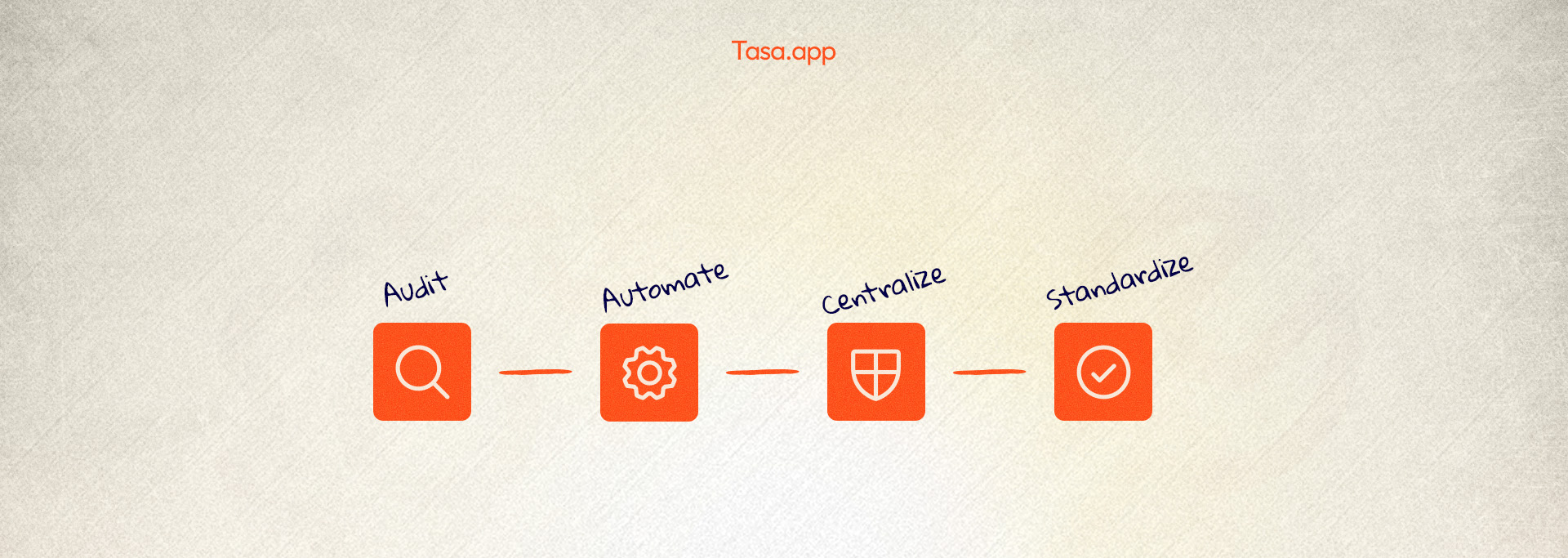
Step 1: Audit your current workflow
The first step to easy team management is identifying what’s slowing you down. Gather your team and map out each process using flowcharts or mind maps. Visualizing handovers, approvals, and communication points exposes hidden bottlenecks.
Checklist for an effective audit:
- Where do tasks stall or get repeated?
- Who needs to sign off, and is it always necessary?
- What info gets lost or delayed?
- Are tools or platforms overlapping?
For example, a hospitality team might discover that shift handovers lack clarity, leading to missed cleaning tasks. By involving frontline staff, you’ll spot real-world issues that managers alone might miss.
Step 2: Eliminate unnecessary steps and automate
Once you’ve mapped your workflow, it’s time to trim the fat. Identify manual, repetitive tasks that drain time and can be automated. Think about reminders, reporting, or scheduling—these are prime candidates.
Common automation targets in 2026:
- Sending shift or cleaning reminders
- Generating recurring checklists
- Auto-updating task statuses
- Notifying managers of urgent issues
Adopting automation tools that integrate with your existing systems is crucial for easy management. Cleaning teams, for example, streamline their daily routines using specialized task management for cleaning teams apps, freeing up energy for higher-value work.
Step 3: Centralize communication and task tracking
Centralization is the backbone of easy management. Using a unified platform to track tasks, share updates, and gather feedback prevents errors and missed deadlines.
Benefits include:
- Fewer lost messages and miscommunications
- Real-time visibility for everyone
- One dashboard for all languages and locations
Imagine multilingual teams using a single dashboard to coordinate schedules and report issues. Here’s a sample centralized workflow diagram:
|
Task |
Assigned To |
Status |
Feedback |
|---|---|---|---|
|
Room Cleaning |
Maria |
In Progress |
Photo uploaded |
|
Inventory Check |
Ahmed |
Done |
Checklist complete |
Centralized systems keep everyone on the same page, boosting both accountability and morale.
Step 4: Standardize processes and use templates
Standardization means building repeatable, reliable systems—the core of easy management. Create templates for recurring tasks like onboarding, reporting, or inspections.
Benefits:
- Saves time on setup
- Ensures compliance and quality
- Makes training new staff easier
A construction team, for example, uses digital checklists for safety inspections, guaranteeing nothing is missed. Here’s a quick look at top workflow templates for 2026:
|
Template Name |
Use Case |
|---|---|
|
Shift Handover |
Hospitality |
|
Cleaning Checklist |
Facilities |
|
Safety Inspection |
Construction |
|
Incident Reporting |
All industries |
Adopting these templates slashes errors and helps teams focus on what matters most.
Which tools make workflow management easy in 2026?
Choosing the right tools can make or break your easy management strategy. In 2026, the best solutions go beyond simple task tracking—they’re designed for global, fast-moving teams who face language barriers, tech overload, and constant change. Let’s break down what to look for and which platforms deliver real results.
What features should you look for in modern tools?
Modern workflow software must put easy management first. Look for solutions that help your team stay aligned, no matter their language or location.
- Multilingual support: Instantly translate tasks, messages, and instructions.
- AI-driven translation: Automate language barriers so everyone understands.
- Picture-based instructions: Visual cues cut confusion, especially for non-native speakers.
- Real-time collaboration: Teams update, comment, and confirm tasks on the go.
- Mobile access: Manage tasks anywhere, from job sites to offices.
- Integration: Seamlessly connect with your payroll, HR, and scheduling apps.
- Security: Protect sensitive data and meet compliance requirements.
These features are the backbone of easy management, helping teams avoid missteps and keep projects on track.
How does Tasa.app simplify workflow for multilingual teams?
Tasa.app is built for easy management, especially in multilingual, high-turnover industries. Its picture-based instructions and AI-powered translation cover over 100 languages, making onboarding and daily task handoffs effortless.
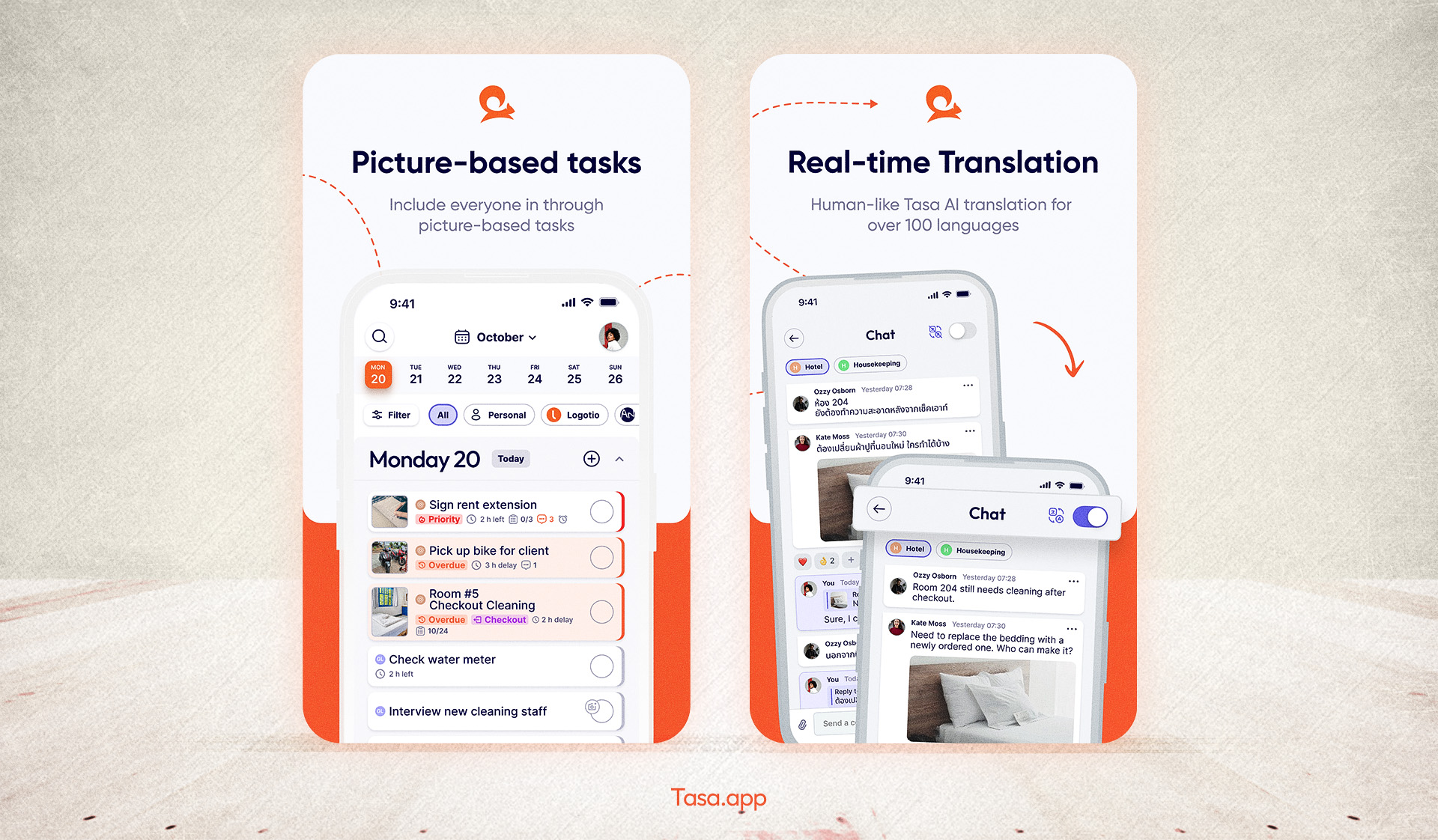
Staff confirm tasks visually, reducing miscommunication and missed steps. The interface is clean, so even staff with limited tech experience can jump right in.
Consider a cleaning company with non-native employees: Tasa lets supervisors assign tasks with photos and instant translations. This saves time, boosts accountability, and ensures nothing gets lost between shifts. For more on how Tasa’s solutions fit different industry needs, explore Tasa.app use cases, eliminate confusion and perfect how your team work.
What are other leading workflow tools for 2026?
Besides Tasa, several platforms help organizations achieve easy management. Asana’s automation and template features are strong, while Monday.com shines with visual dashboards and flexible integrations.
Here’s how the top tools compare:
Latest News



Have questions?
.svg)
Team management, simplified.
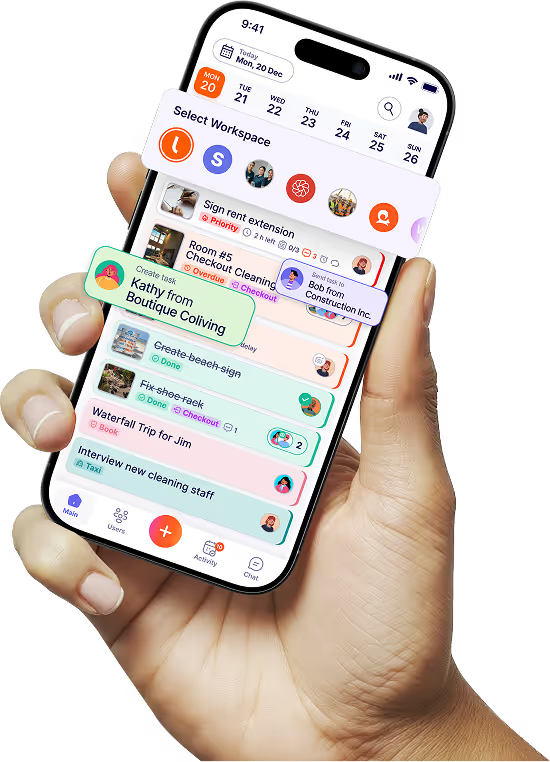

“It affects my personal life a lot. I can manage my team and my work remotely, so I have more time being a mother.”
