.svg)
7 ways multilingual teams drive business success in 2026
The workplace has transformed dramatically over the past decade. Not long ago, most businesses operated with local teams, rarely interacting beyond their own borders. Fast forward to 2025, and the landscape looks entirely different. Over 28% of professionals now work remotely, according to Statista, and hybrid models are the norm for global organizations. This shift has made multilingual teams not just common, but essential for business operations.
As companies expand across continents, multilingual teams have become a core asset rather than a specialty. The ability to communicate in multiple languages is now a strategic advantage. In fact, research highlights that organizations investing in language skills consistently outperform their peers in global markets. For a deeper dive into the economic impact, see The Business Case for Language Skills in 2025.
In this article, you'll discover seven transformative ways these teams unlock new opportunities, drive creativity, and build stronger organizations.
What are the ways multilingual teams drive business success?
Let’s break down the seven most transformative ways these dispersed teams fuel growth, resilience, and a genuine competitive edge.
1. Enhanced innovation through diverse perspectives
Innovation thrives when diverse minds tackle a problem from multiple angles. Dispersed teams bring together employees with distinct linguistic and cultural backgrounds, unlocking a wider range of ideas and creative solutions.
Research consistently links multicultural teams to higher innovation rates.
For instance, a Harvard Business Review study found that companies with diverse teams were 45 percent more likely to report growth in market share.
This is no accident: when people think in different languages, they often approach challenges in unique ways, sparking fresh insights.
Global tech firms illustrate this well. Consider a company launching products tailored to local markets. Their multilingual teams help them understand cultural nuances, ensuring each product resonates with its intended audience.
Language diversity also helps reduce groupthink. When everyone feels safe to contribute, teams avoid echo chambers and discover unexpected solutions.
McKinsey’s research highlights that psychological safety—a sense of being able to speak up without fear—directly boosts innovation.
Effective leaders play a key role. They encourage inclusive brainstorming, ensuring every voice is heard. They also recognize when language barriers might hinder creativity and invest in tools or training to bridge those gaps.
Inclusive practices, like rotating who leads meetings or using visual brainstorming boards, further support a culture of innovation.
2. Improved communication and collaboration
Clear, effective communication is the backbone of any successful organization. Multilingual teams excel by developing robust protocols that bridge language gaps and build trust across borders.
Leading companies invest in language training, translation tools, and adapted vocabulary to ensure everyone is on the same page. For example, standardized operating procedures (SOPs) in multiple languages help reduce miscommunication and streamline workflows.
A recent Preply report found that multilingual teams experienced a 60 percent reduction in manual communication tasks. This frees up time and energy for actual collaboration. Real-time translation and AI tools have become indispensable, allowing seamless conversations without costly delays.
Visual aids and picture-based instructions are also game changers. They make complex concepts accessible to everyone, regardless of language proficiency. Regular feedback loops and clear documentation further strengthen team cohesion.
Case in point: a global logistics firm implemented multilingual feedback channels and saw a dramatic drop in costly errors. By empowering employees to clarify instructions and ask questions in their preferred language, the company improved both accuracy and morale.
For a deeper dive into how multilingual communication is reshaping global teams, How Multilingual Communication Builds Global Teams in 2025 offers additional insights.
3. Greater access to global markets
Expanding into new markets requires more than just a translated website. Multilingual teams are the secret weapon for companies aiming to localize products, services, and customer experiences.
These teams bring in-house language expertise, allowing businesses to deeply understand local cultures and preferences. As a result, they can adapt offerings to fit regional needs, which is essential for building trust and loyalty with international customers.
The numbers speak for themselves. Multilingual organizations often report higher overseas revenue growth compared to their monolingual peers. Native speakers play a critical role in negotiating deals, navigating regulations, and interpreting subtle cues that would otherwise be missed.
Consider a SaaS provider entering Asia. With a multilingual team, they can localize user interfaces, offer customer support in native languages, and respond quickly to region-specific feedback.
Regulatory compliance is another area where multilingual teams shine. Understanding local laws and documentation requirements helps companies avoid costly mistakes.
On the sales front, having staff who can communicate fluently with clients worldwide gives companies a clear edge. It’s not just about speaking the language—it’s about truly understanding the market.
4. Increased employee engagement and retention
A sense of belonging is crucial for employee engagement, and dispersed teams foster this by embracing inclusive language policies. When companies communicate in multiple languages, they send a clear message: every employee matters.
Statistics back this up. Workplaces that support multilingualism report higher retention rates and stronger employee loyalty.
Dayana Abuin Rios, an expert in organizational culture, notes;
“Multilingual access sends a message of value and respect.”
Onboarding and training are more effective when delivered in employees’ native languages. This boosts confidence, accelerates learning, and reduces costly turnover. HR communications, benefits information, and safety protocols all become more accessible, further supporting staff at every level.
Cultural celebrations and recognition also play a role. Multinational corporations often highlight employees’ heritage, fostering pride and connection within teams.
Morale and advocacy naturally rise when employees feel seen and heard. Engaged staff are more likely to recommend their company to others, strengthening employer branding.
5. Stronger problem-solving and decision-making
Multilingual teams approach challenges from a variety of cultural and linguistic perspectives, leading to better decisions and stronger problem-solving. Cognitive diversity is a proven asset, especially when tackling complex or high-stakes situations.
Studies show that teams with diverse backgrounds are less likely to overlook risks or fall into groupthink. They surface blind spots others might miss and weigh options more thoroughly.
For instance, during a crisis affecting multiple regions, an international team can quickly assess the situation from different viewpoints. This holistic approach enables faster, more effective responses.
Structured debate and consensus-building are key. Leaders create spaces where every opinion is valued, and disagreements are seen as opportunities for growth. This not only improves outcomes but also builds trust.
Of course, language differences can sometimes cause friction. Successful teams address this by setting ground rules for discussions and using visual aids to clarify complex topics.
Leadership is critical here, too. A strong leader knows how to harness the diverse strengths of their team, ensuring that every voice contributes to the decision-making process.
The result? More resilient, agile organizations that are ready for whatever comes their way.
6. Real-time adaptability and agility
In a world where change is constant, adaptability is a core strength of multilingual teams. They thrive in fast-paced environments by leveraging asynchronous communication and overlapping work hours.
Teams distributed across time zones coordinate seamlessly, using digital tools to keep projects moving. Preply recommends at least four hours of daily overlap for effective collaboration—a standard adopted by many global organizations.
Rapid pivots during global events, such as supply chain disruptions or shifts in market demand, are possible because multilingual teams can share updates and make decisions around the clock.
Digital platforms with real-time translation features further enhance agility. These tools ensure that critical information is never lost in translation, enabling teams to respond quickly to new challenges.
Flexible workflows are also a hallmark of successful multilingual teams. By adapting schedules and processes to fit local needs, they minimize delays and keep customers satisfied.
Project speed and responsiveness are directly tied to this adaptability. Multilingual teams don’t just react—they anticipate, innovate, and lead.
7. Building a resilient and inclusive company culture
A truly resilient company culture is built on inclusion and psychological safety. Multilingual teams set the standard by normalizing diverse voices and creating space for everyone to contribute.
McKinsey’s research shows that inclusive climates boost team performance and innovation. Rituals like cross-cultural team-building activities, multilingual meetings, and shared celebrations foster connection.
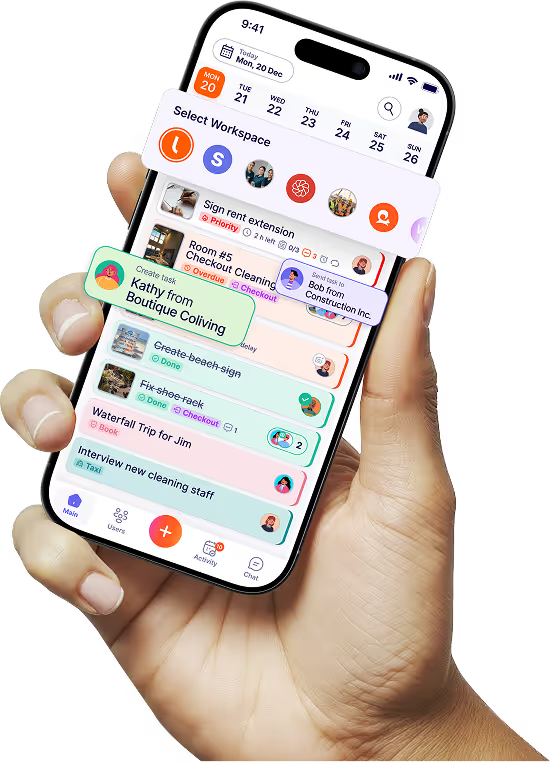
Tasa.app help remote multilingual teams build rapport, even across continents. Companies often hold “language days” or encourage employees to share traditions, deepening bonds and understanding.
Documenting processes and meetings in multiple languages ensures no one is left out. This transparency strengthens trust and accountability.
Leadership plays a vital role here, modeling inclusive behaviors and encouraging open communication. As a result, employer branding improves, making it easier to attract and retain top international talent.
In the end, multilingual teams are more than a business strategy—they’re the foundation of a thriving, future-ready company.
How to overcoming communication barriers: solutions and tools for multilingual teams
Navigating communication barriers is one of the most persistent challenges facing multilingual teams. Whether you’re running operations across continents or managing a diverse local staff, miscommunication can impact productivity, trust, and results.
What are the common barriers in multilingual teams?
Multilingual teams often face three main obstacles:
- Misinterpretation: Nuances get lost, leading to errors or confusion.
- Jargon overload: Industry-specific terms can trip up even fluent speakers.
- Language proficiency gaps: Not everyone is equally comfortable in the working language.
These barriers can slow down projects and create friction in otherwise capable teams.
What are the practical strategies for clear communication?
To boost clarity, multilingual teams should:
- Invest in language training for both staff and managers.
- Standardize vocabulary with glossaries and plain-language guides.
- Document everything: Clear, visual SOPs help everyone stay on track.
Consistent feedback loops and open dialogues encourage team members to voice concerns early, reducing misunderstandings before they snowball.
What are the tools for clear communication?
Modern teams use technology as their communication backbone. AI-powered translation tools, real-time captions, and interpreting platforms break down language walls instantly.
For example, Microsoft Teams offers live translation, while Interprefy and Preply support virtual interpreting and language learning.
Here’s a quick comparison of leading tools for multilingual teams:
Latest News



Have questions?
.svg)
Team management, simplified.

“It affects my personal life a lot. I can manage my team and my work remotely, so I have more time being a mother.”
