.svg)
Gestión de equipos en mercados en desarrollo frente a mercados emergentes: su manual operativo

Navigating the global business landscape requires more than just understanding economic terms on a spreadsheet.
For entrepreneurs, expats, and managers, the difference between developing countries and emerging markets translates directly into your daily reality: the tools you need, the challenges you face, and the strategies that will ensure your team succeeds.
This guide moves beyond academic definitions to provide your operational playbook. We’ll explore how the core economic differences between these markets impact practical team management, communication, and project execution.
You’ll learn how to adapt your approach and leverage modern tools to build productivity and accountability, whether you’re in a fast-paced emerging economy or navigating the complex realities of a developing nation.
What do the economic classifications mean for your daily operations?
While institutions like the World Bank and IMF use metrics like GDP per capita and the Human Development Index to classify economies, these numbers tell a story about your work environment.
- Developing countries often face significant infrastructure gaps, weaker institutional frameworks, and a larger informal employment sector. For a manager, this might mean unreliable internet, complex local business customs, and teams with diverse literacy and tech-skill levels.
- Emerging markets show stronger growth, more developed infrastructure, and greater integration into global trade. Operationally, you’ll encounter faster business cycles, a more competitive talent pool, and higher expectations for process sophistication from both your team and clients.
Your management system must be as adaptable as you are. In a developing market, it needs to overcome structural gaps. In an emerging market, it must enable speed and scalability.
Understanding this context isn't just for investors—it's the first step in choosing the right methods to lead your team effectively.

The manager's reality: How market conditions shape core challenges
The economic profile of your location directly creates specific managerial hurdles. Here’s how the classic challenges manifest on the ground.
Communication and alignment
In both market types, you likely manage a multilingual, multicultural team. However, the root cause differs.
- In developing countries, you may be integrating team members from different educational and linguistic backgrounds, where clear, jargon-free communication is critical.
- In emerging markets, your team might be highly educated but under intense time pressure, where efficient, rapid alignment is key to capitalizing on opportunities.
A generic messaging app leads to lost instructions and confusion. What you need is a centralized system that ensures clarity for everyone, regardless of their native language or reading level.
Accountability and quality control
Verifying work quality is a universal challenge, but the stakes and methods differ.
- Developing Countries: With potential gaps in formal training and infrastructure, providing explicit, visual standards and obtaining simple proof of work becomes non-negotiable to maintain quality.
- Emerging Markets: The pace is faster. You need real-time verification and seamless handoffs to keep projects moving without sacrificing standards for speed.
Without the right process, managers resort to micromanagement or face costly rework. The solution is a workflow where verification is built-in, not an afterthought.
How do you train and scale processes effectively?
Your ability to scale hinges on replicating best practices across your entire team.
- Developing countries: Written manuals may be ineffective. Training must be intuitive, visual, and easily repeatable.
- Emerging markets: Training focuses on onboarding into your specific company processes quickly to maintain agility.
Strategic tool comparison: Choosing the right system for the job
To overcome these challenges, you must move beyond generic tools. The right system acts as a force multiplier, tailored to the market's demands.
| Operational Challenge | Traditional Approach (Email, WhatsApp, Paper) | Adapted Approach (Tasa) |
|---|---|---|
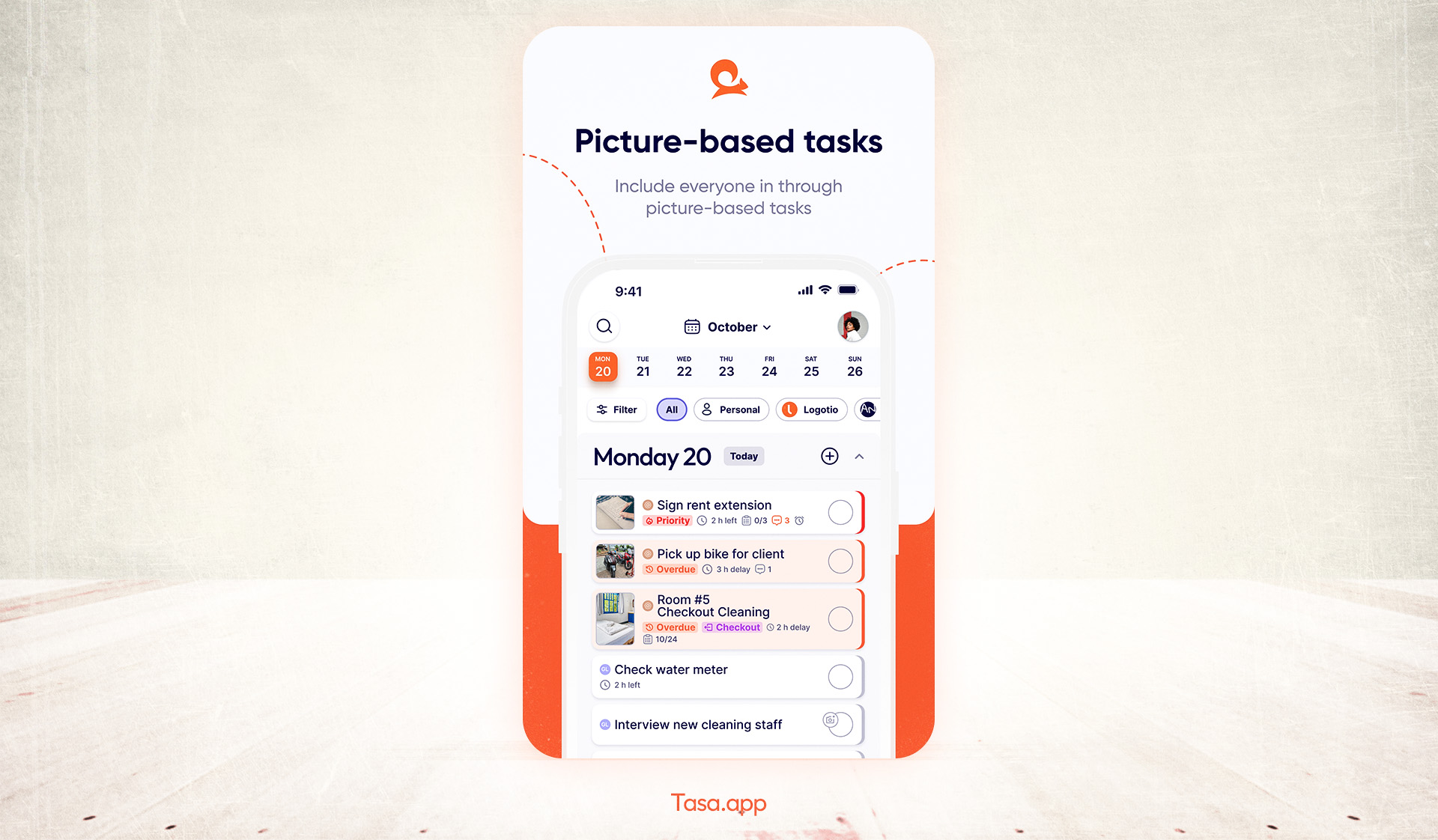
| Giving Clear Instructions | Long text threads or voice notes. Instructions get lost, translation is separate. | Visual, picture-based tasks created in seconds. Complex jobs become clear checklists. |
| Verifying Completed Work | Minimal proof of work done, leading to disputes or site visits. | Team members submit photo proof with one tap. You have an auditable record of completion. |
| Bridging Language Gaps | Using multiple translation apps, leading to fragmented communication. | Built-in, real-time translation in task chats. Everyone communicates in their preferred language. |
| Onboarding & Standardizing | Time-consuming in-person training that doesn't scale. | Reusable visual templates for common tasks (cleaning, maintenance, setup). New hires can start immediately. |
| Managing Without Constant Internet | Communication breaks down until connectivity returns. | Offline-capable mobile apps let teams view tasks and sync updates when back online. |
This comparison shows that the optimal tool doesn't just manage tasks—it is designed for the real-world constraints of global teams. For a deep dive into building these teams, read the guide on how multilingual teams drive business success.
Your actionable playbook: Tailored strategies for each market
Operating in a developing country: Focus on clarity and resilience
Your strategy should prioritize overcoming infrastructure and training gaps.
- Standardize with visuals: Replace every lengthy written process with a visual checklist. This is proven to reduce errors and speed up training exponentially.
- Build an audit trail: Make photo-based verification mandatory for key tasks. This builds trust with remote stakeholders and provides crucial data on ground-level progress.
- Decentralize authority: Equit your local leads with simple tools they can use independently. This reduces bottlenecks and empowers your team, a principle supported by management research from sources like Harvard Business Review.
Tools designed for this environment, like app for expats, turn these strategies into a simple, daily workflow, directly addressing the core pain points of remote management.
Operating in an emerging market: Focus on speed and integration
Here, your playbook should leverage better infrastructure to drive growth.
- Integrate your tech stack: Choose tools that connect with others (like calendars or messaging platforms) to create seamless workflows and eliminate data silos.
- Empower with real-time data: Give your team access to live information and priorities. This enables quick decision-making and adaptability in a fast-moving environment.
- Scale your processes: As you grow, your management system must grow with you without requiring constant re-training. Look for platforms that are intuitive yet powerful enough for complex operations.
For sectors like hospitality or construction that are booming in many emerging markets, a tailored tool for hospitality teams or construction teams can become the central hub for this rapid, integrated operations.
Your actionable playbook to implement these strategies
Operating in a developing country: Build clarity and resilience
Your strategy should prioritize overcoming infrastructure and training gaps with systems that build independence.
1. Standardize with visuals, step-by-step.
- Step 1: Document the ideal outcome with photos or a short video.
- Step 2: Break the process into a checklist where each step is one clear image.
- Step 3: Test it with a local team member and refine any confusing steps.
Pro Tip: Tools like Tasa turn this into a shareable digital checklist in minutes. Start with Tasa for expats to see how.
2. Build an unbreakable audit trail.
- Make photo verification mandatory for key tasks. This builds trust with remote stakeholders.
- Pitfall to Avoid: Accepting blurry or irrelevant photos. Define "photo standards" as part of the task.
- This approach is supported by management principles of transparency and data-driven decision making.
3. Decentralize authority to empower local leads.
- Equip your local supervisors with simple tools they can use independently.
- This empowers your team and reduces bottlenecks, a best practice highlighted in leadership research.
Pro Tip: Use your tool's comment feature to have leads answer routine questions. This builds their authority and frees you from being the constant "answer bot."
Operating in an emerging market: Enable speed and integration
Leverage better infrastructure to drive growth through connected, smart systems.
1. Integrate your tech stack strategically.
- Connect your core operations tool with others like calendars or accounting software.
- Watch Out: "Integration fatigue." Don't force your team to use 10 apps. Choose a core platform that handles most workflows.
2. Empower your team with real-time data.
- Provide access to live dashboards showing task completion, inventory levels, or deadline calendars.
- This enables quick, informed decision-making at all levels.
3. Scale processes with templates, not retraining.
- Create templated workflows for repeatable projects.
- For example, don't assign "clean room 101" from scratch. Assign a saved "Standard Turnover" template, cutting setup from minutes to seconds.
Key concept: The first 30 days plan with Tasa
Weeks 1-2:
Listen & Document. Observe current processes without changing them. Document workflows in pictures.
Week 3:
Build & Pilot. Create your first visual checklist for one repetitive task. Train your team about it.

Week 4:
Implement & Verify. Run the new system fully. Require photo proof and review the audit trail daily to catch issues early.

How do you troubleshoot common problems?
Even the best system needs adjustment. Use this guide to diagnose issues.
Últimas noticias



¿Tiene alguna pregunta?
.svg)
Gestión de equipos simplificada.


"Afecta mucho a mi vida personal. Puedo gestionar mi equipo y mi trabajo a distancia, así que tengo más tiempo para ser madre."
