.svg)
8 inspiring expat business ideas to launch In 2026

The world has never been more interconnected, and in 2026 the landscape for global entrepreneurs is full of fresh possibilities. For those ready to launch an expat business, shifting trends and new markets make this an ideal time to turn bold ideas into reality.
This article uncovers practical expat business ideas, blending tech-driven ventures with culture-rich hospitality concepts. You’ll see how to turn your skills and background into a sustainable company abroad, with examples and strategic angles you can adapt.
Key Takeaways:
- The eight most practical concepts in 2026 are service businesses built on local teams: cleaning, property and Airbnb management, small hospitality, field services, retail, family support, and hybrid remote ventures.
- Recurring, repeatable work (cleaning, turnovers, maintenance) is the easiest to systematize and the most forgiving for a first-time founder abroad.
- You can start lean: cleaning, field services, and Airbnb turnover coordination get going with $10,000 or less; cafés and small hotels typically need $100,000 or more.
- Managing a local team in another language is the number one operational bottleneck; picture-based task tools like Tasa solve it without requiring a shared language or strong reading skills.
- Panama, Mexico, and Thailand top the Expat Insider 2026 ranking, with Spain and Portugal leading in Europe.
Inspiring expat business ideas to launch in 2026
Below are eight expat business ideas tailored to today’s global realities. Each one taps into real expat struggles and opportunities, and can be run lean from almost anywhere.
1. Cross-cultural culinary ventures
Food is one of the most powerful ways to share culture and a classic foundation for expat business ideas.
Concepts:
- A restaurant, bakery, or café bringing your home-country cuisine to your host country.
- A food truck or pop-up series testing dishes before committing to a full venue.
- Meal kits or catering that target both locals and fellow expats.
- Cooking classes that teach traditional recipes to curious locals.
The key is to go beyond average foreign restaurant and lean into a specific angle:
- Regional specialties from your home region.
- Fusion concepts that combine local ingredients with your culinary traditions.
- Experience-based formats like chef’s tables, tasting nights, or story-driven dinners.
Success here depends on understanding local regulations, sourcing, and marketing but the reward is a business rooted in community and culture.
2. Local cleaning and housekeeping services
Running a cleaning company or housekeeping service abroad is a classic expat move and still one of the most practical.
Concepts:
- Apartment and villa cleaning for expats and tourists
- Housekeeping services for small hotels, guesthouses, or co‑living spaces
- Turnover cleaning for Airbnb or short-stay rentals
The challenge is coordination, not demand: high staff turnover, multiple locations, and language differences make it easy for quality to slip.
Where Tasa helps:
- Picture‑based checklists for each property or room type
- Photo proof of “before/after” work for every job
- Simple mobile app and QR login for cleaners with limited tech or literacy
- Separate workspaces for each client or building
3. Property management & Airbnb operations
Many expats manage rentals on behalf of absent owners or run their own portfolio of short‑stay properties.
Typical services:
- Guest check‑ins and check‑outs
- Cleaning and laundry coordination
- Maintenance and repairs
- Stocking essentials and welcome amenities
The work is very task‑heavy and time‑sensitive. Miscommunication with cleaners, handymen, or reception staff leads directly to bad reviews.
Where Tasa helps:
- Turnover templates with visual standards for each unit
- Maintenance tasks with photos and due dates
- Multilingual instructions for local staff
- Real‑time visibility into which units are “ready” or still in progress
This turns a messy, WhatsApp‑driven operation into a system you can run remotely with confidence.
4. Small hospitality businesses: hostels, cafés, & guesthouses
Opening a small hostel, café, guesthouse or another hospitality business is a popular dream for expats and a very real opportunity in growing tourist hubs.
Daily reality:
- Rotating shifts and part‑time staff
- Back‑of‑house routines (prep, cleaning, inventory)
- Front‑of‑house tasks (opening, service standards, closing)
- Frequent training as staff come and go
Where Tasa helps:
- Standard operating procedures as picture‑based tasks
- Shift‑specific checklists (morning, afternoon, closing)
- Instant onboarding for new staff using visual tasks instead of thick manuals
- Photo checks for key standards (buffet setup, room readiness, table layouts)
Instead of constantly re‑explaining, you run the operation from a clear, shared task system.
5. Local service businesses with field teams
Think of:
- Construction or renovation crews
- Handyman and repair services
- Pool cleaning and garden maintenance
- Pest control or HVAC services
As an expat owner, you might not be on‑site every day, but your reputation depends on how your local teams perform.
Where Tasa helps:
- Job cards with photos, locations, and step‑by‑step instructions
- Photo verification from the field so you see completed work
- Multilingual task descriptions so local crews understand requirements
This makes it much easier to scale from “you doing everything” to multiple crews collaborating.
6. Retail and small supermarkets in emerging neighborhoods
Opening a mini‑mart, specialty store, or small supermarket is another strong expat business idea, especially in developing or fast-growing neighborhoods.
Day‑to‑day needs:
- Daily opening and closing routines
- Shelf stocking and facing
- Temperature and food safety checks
- Promo and merchandising execution
Where Tasa helps:
- Department‑specific workspaces (bakery, deli, produce, etc.)
- Visual tasks for facing, stock levels, and promo displays
- Photo logs for audits and health inspections
- Repeat patterns for daily/weekly routines so nothing gets missed
This is exactly the kind of repetitive, standards‑driven work that benefits most from structured time and task management.
7. Family support and domestic services
Some expats build businesses around supporting other expat families:
- Domestic staff agencies (nannies, drivers, housekeepers)
- Elder‑care or home‑visit services
- Childcare and after‑school activity coordination
Trust and reliability are everything in these services.
Where Tasa helps:
- Shared task lists for families and domestic staff (chores, routines, errands)
- Photo proof for key tasks (school pickups, deliveries, completed chores)
- Multilingual instructions for helpers who don’t share the family’s main language
- Simple mobile interface that works even for non‑tech‑savvy staff
This can become a strong selling point: not just providing staff, but providing a system that keeps everyone aligned.
8. Remote / hybrid service businesses (with a local twist)
Beyond physical businesses, plenty of expat‑friendly ideas are digital or hybrid:
- Coaching and consulting (life, business, fitness)
- Localized digital marketing or content services
- Remote agencies with small local support teams
These often start as solo operations but quickly involve:
- Assistants or contractors in the host country
- Partners or clients in other time zones
- Repeating back‑office and client tasks
Where Tasa helps:
- Turning messy back‑office work into repeatable checklists
- Coordinating hybrid teams (some remote, some local)
- Managing time and task management in a shared, visual system
As you grow, Tasa helps you avoid drowning in “who’s doing what, when” chaos.
What are the tools expat businesses need for success
Many offline businesses rely on general communication tools, which struggle when managing multilingual, literate and local teams where language barriers slow down execution.
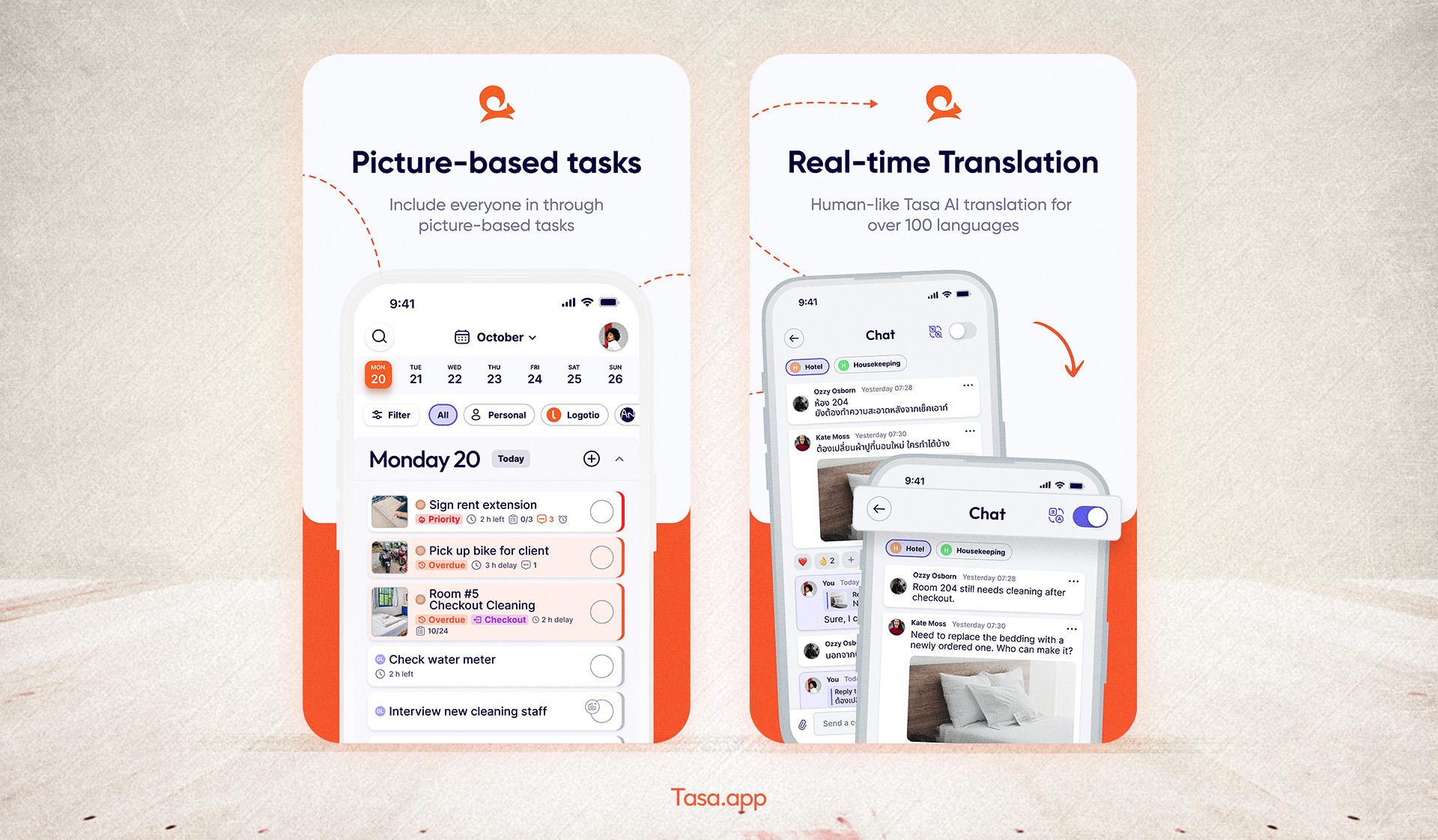
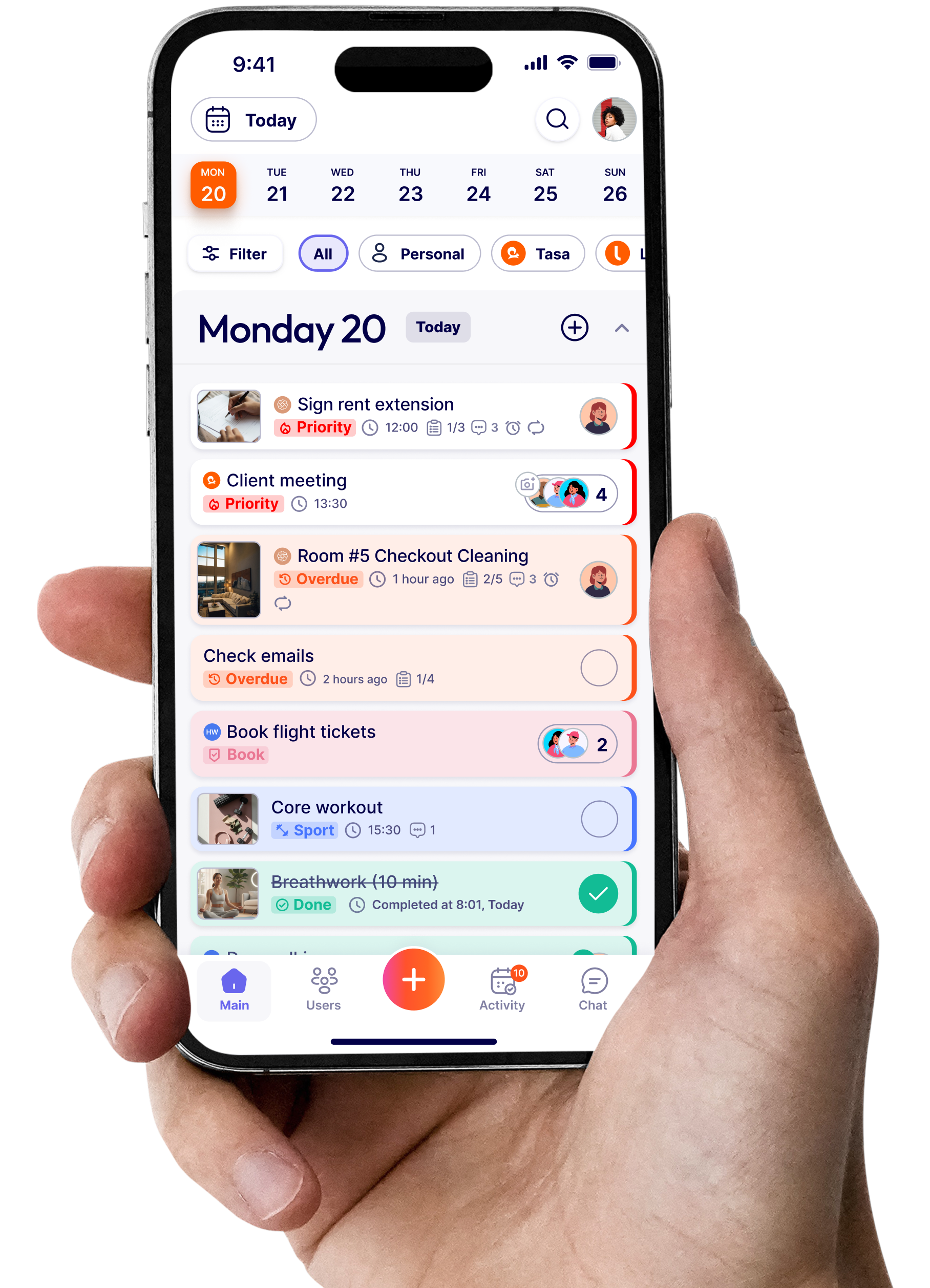
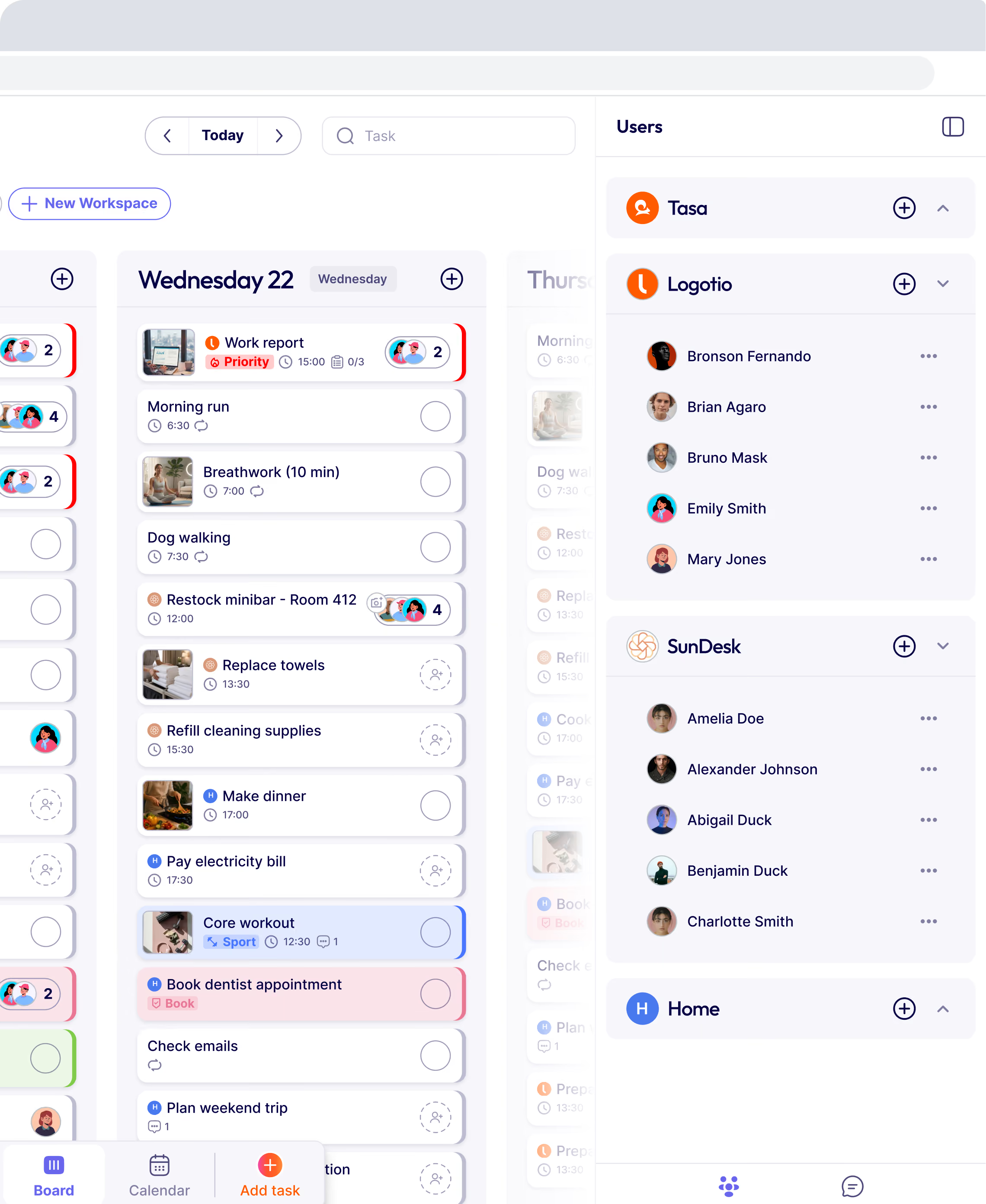
Tasa is built for this reality. It improves multilingual communication across frontline teams using quality assurance features such as picture-based tasks, AI translation, and picture & video for confirmation, so tasks are clearly understood and completed without confusion.
This ensures managers and expats can monitor progress in real time and keep local teams aligned.
Discover how Tasa can improve communication for your local business.
Practical foundations for expat businesses
Great expat business ideas need solid execution.

Three areas require special attention when you’re building abroad:
Local regulations and compliance
- Understand business registration, licenses, and sector‑specific rules.
- Keep key documents digitized and organized.
- Get local legal/accounting advice early, even if just for a setup consultation.
Banking, payments, and taxes
- Choose bank accounts and payment processors that work well cross‑border.
- Track income and expenses in multiple currencies.
- Stay aware of tax obligations in both your home and host countries.
Networks, mentors, and support
- Join local business associations and expat groups.
- Use co‑working spaces and startup hubs to meet partners and clients.
- Seek mentors who understand both the local market and the expat journey.
The stronger your foundations, the more room you have to experiment with new expat business ideas and grow without constant fire‑fighting.
From idea to execution
You don’t need to launch the perfect expat business on day one. You do need to:
- Pick one clear idea that fits your skills, your host country, and your appetite for risk.
- Test it small with real customers (online, offline, or both).
- Use simple, robust tools to keep operations and communication under control across borders.
From there, you can expand offers, add locations, and even combine multiple expat business ideas into a broader portfolio.
Which expat business ideas are predicted to boom in 2026?
The ideas above share one pattern: they answer demand that grew after 2020 and is still accelerating in 2026. Remote-work migration turned mid-sized cities into expat hubs, which lifted demand for cleaning and turnover services, small hospitality, and property management at the same time. Short-stay regulation in many markets pushes hosts toward professional, documented operations, which favors managed services over casual operators.
Labor mobility keeps local teams multilingual, which raises the value of systems that work across language barriers in business. And in growth markets, neighborhood retail and domestic support services grow simply because the expat and local middle class grows. None of these ideas depends on a trend cycle; they follow the movement of people, which is the most predictable force there is.
What business has a high success rate for expats?
There is no public registry of expat-owned business outcomes, so treat any headline "success rate" number, including the 90% figure that circulates from franchise marketing, with caution. What is well documented is which kinds of small operations survive most often.
US Bureau of Labor Statistics data shows roughly a third of small businesses close within two years and about half within five, across all industries; the survivors cluster around three traits: low fixed costs, recurring demand, and owners who live close to their customers.
By that logic, the highest-survival expat businesses in this list are cleaning and housekeeping services, Airbnb turnover and property care, and field services like handyman work or pool maintenance. You can start them from a phone and a first client, overhead is minimal, demand repeats weekly, and quality spreads by word of mouth in expat communities.
Food concepts and small hotels are the riskiest on this list: high setup cost, licensing, and a market that punishes average execution. A practical rule among founders who have done it: start a business with low overhead first, learn the local market for a year, then open the café or hostel with capital and knowledge instead of hope.
What are the best expat business ideas to start with $10,000 or less?
Most concepts on this list are within reach at this budget, because service businesses rent almost nothing. What the money buys changes by concept:
- Cleaning or housekeeping service: equipment, supplies, insurance, and a month of marketing. The biggest investment is building trust, not capital.
- Airbnb turnover coordination: almost nothing. You are selling reliability to hosts; you can even start by subcontracting cleaners before hiring your own.
- Field services (handyman, pool, garden): tools and a vehicle, often used. Certifications, where required, are cheap relative to revenue.
- Coaching or consulting with a local flavor: a laptop and a niche. This can start at effectively $0.
At this budget the constraint is your own time: every hour spent chasing tasks over WhatsApp is an hour not spent winning the next client. This is the stage where a task system pays for itself fastest, because founders abroad manage by phone across languages, and Tasa's free personal plan plus a hundred free team tasks covers exactly this starting phase. Before you spend the money, read the registration rules for your host country, because legal structure and licensing costs vary more between countries than any other line item.
What profitable expat business can I start with $100,000?
Six figures changes the menu: you can buy a location, equipment, and someone else's time. Where that capital works hardest:
The risk at $100,000 is not the idea, it is the operations layer. Every one of these businesses runs on daily routines executed by local staff, and the difference between profit and loss shows up in details: rooms actually guest-ready, shelves actually faced, checks actually done.
Owners who install a picture-based operations system in week one manage by evidence instead of assumption. It is also the stage where local compliance gets serious: labor law, tax registration, and health rules deserve a local accountant and lawyer from the start.
Which countries are best for expat entrepreneurs?
The InterNations Expat Insider 2026 survey, covering 7,786 respondents of 162 nationalities across 31 destinations, ranks Panama first for the third year in a row, with 87% of expats reporting happiness with life abroad, followed by Mexico and Thailand, with Spain and Portugal leading Europe in the top ten (source: InterNations Expat Insider 2026). Rankings measure ease of living, not ease of doing business.
For an entrepreneur, three local questions matter more than any ranking: how simple is it to start a business and get licenses, how hard is it to employ local staff legally, and does your target market actually pay for what you plan to sell.
A country that is lovely to live in but slow to grant a trade license can starve a good concept; a less glamorous market with light regulation and strong demand can make a modest one profitable. Choose the country for the business first and the lifestyle second, or find the place where both align.
The personal plan is free. Team features start with one hundred free tasks. Download Tasa app and create your first picture-based task in sixty seconds.
Latest News


Have questions?
.svg)
Team management, simplified.

“It affects my personal life a lot. I can manage my team and my work remotely, so I have more time being a mother.”