Many aspiring entrepreneurs and professionals are frustrated by the flood of options and the uncertainty of what actually works in the fast-moving digital economy.
A remote business offers location independence, scalability, and the ability to tap into global markets. But with so many ideas out there, finding the right path can seem overwhelming.
In this article, you will discover eight innovative remote business opportunities for 2026. Each model is built on emerging trends, expert insights, and real-world examples. Whether you want to launch or pivot, you will find actionable steps to help you thrive in this new era.
What Are Remote Business Opportunities?
A remote business is a company designed from the ground up to operate online, serving customers, managing teams, and delivering value with no need for a physical office.
Unlike traditional work-from-home jobs, remote business owners build systems, create assets, and scale globally. This model is about running the show, not just doing tasks for others.
Key Characteristics of Remote Business Opportunities
What sets an online business apart? Here are the essentials:
Location independence: Operate from anywhere, serve clients worldwide.
Scalability: Grow revenue and impact without adding overhead.
Digital-first operations: Rely on cloud tools, automation, and online communication.
Global market access: Tap into new audiences, cross borders with ease.
How Remote Business Has Changed
Before 2020, remote business was rare and often limited to tech-savvy founders. The pandemic changed everything. By 2025, the landscape is transformed. Cloud platforms, AI, and new collaboration tools make it possible for anyone to launch and scale. According to Global Remote Work Statistics 2025, remote entrepreneurship has surged, and digital nomadism is on the rise.
Current Trends and Pain Points
The explosion of virtual business brings new challenges:
Choice overload: Too many business models, not enough clarity.
Sustainability: Finding models that last, not just quick wins.
Cross-border communication: Language barriers, cultural gaps.
Virtual agencies and global micro-businesses are thriving, but founders struggle to stand out.
Remote Business vs. Freelance vs. Small Business
Model
Startup Cost
Scalability
Flexibility
Income Potential
Required Skills
Remote Business
Low-Medium
High
High
High
Digital ops, mgmt
Freelance Gigs
Low
Low
High
Medium
Niche/expert skills
Traditional SMB
High
Medium
Low
High
Ops, sales, finance
Remote business is not just a trend. It is a powerful way to build something lasting, even in uncertain times.
Why 2026 Would be a Game-Changer for Remote Entrepreneurs
Emerging Trends Shaping Remote Business
Globalization is pushing companies to adopt multilingual communication, opening doors for businesses that can bridge language and cultural gaps. The creator economy is booming, giving rise to micro-entrepreneurs who monetize skills, content, and personal brands in ways never seen before.
Outcome-based work is becoming the norm, shifting the focus from hours clocked to results delivered.
According to the Multilingual task management for expats, businesses leveraging digital tools for global teams see up to a 28% boost in productivity. The global virtual assistant market alone is projected to reach $8.6 billion by 2028.
For example, AI-driven translation and visual instruction tools now enable remote business owners to manage teams across continents, regardless of language barriers. This unlocks markets previously out of reach and future-proofs operations for the digital age.
Key Challenges and How to Overcome Them
Despite the promise of internet commerce, challenges remain. Communication breakdowns can derail projects, especially when working across cultures and languages. Productivity often dips without in-person oversight, and remote accountability is tough to enforce.
Legal, tax, and compliance issues grow more complex as you serve clients worldwide. The digital marketplace is crowded, making it harder to stand out and attract loyal clients.
To overcome these hurdles:
Use visual communication and multilingual tools to bridge gaps.
Automate repetitive tasks for consistency and efficiency.
Choose platforms that specialize in remote team management.
Invest in ongoing training to keep up with evolving tech.
“Digital business success in 2025 hinges on mastering both technology and human connection. Leaders who prioritize clear communication and automation will outpace the rest.” — Jamie Lin, remote work strategist
Opportunities for Different Audiences
Online business models in 2025 are not one-size-fits-all. Solopreneurs thrive with productized services and consulting, while small teams can scale agencies or SaaS-powered offerings. Digital nomads and expats find opportunities in industries like hospitality, education, and cross-border consulting.
Niche sectors, such as remote learning design or specialized virtual assistance, are ripe for disruption. A case in point: a remote-first agency scaled globally by providing multilingual onboarding and task management for expat teams, overcoming both language and operational barriers.
Remote Business vs. Freelance Gigs vs. Traditional Small Business
Criteria
Remote Business
Freelance Gigs
Traditional Small Business
Startup Cost
Low
Very Low
High
Scalability
High
Limited
Moderate
Flexibility
Very High
High
Low
Income Potential
High
Variable
Variable
Required Skills
Digital, Ops
Niche
Broad
Key Concepts
Embrace automation to free up creative energy.
Prioritize clear, visual communication for global teams.
Focus on customer experience and outcome-based value.
2026 is the tipping point. With the right strategies, online business owners can finally build resilient, scalable ventures that thrive across borders, languages, and industries.
8 Innovative Remote Business Opportunities for 2026
Below, you will discover eight remote business models curated for 2026. Each one is designed to cut through the noise, leverage the latest trends, and offer a clear path to a sustainable, future-proof remote business.
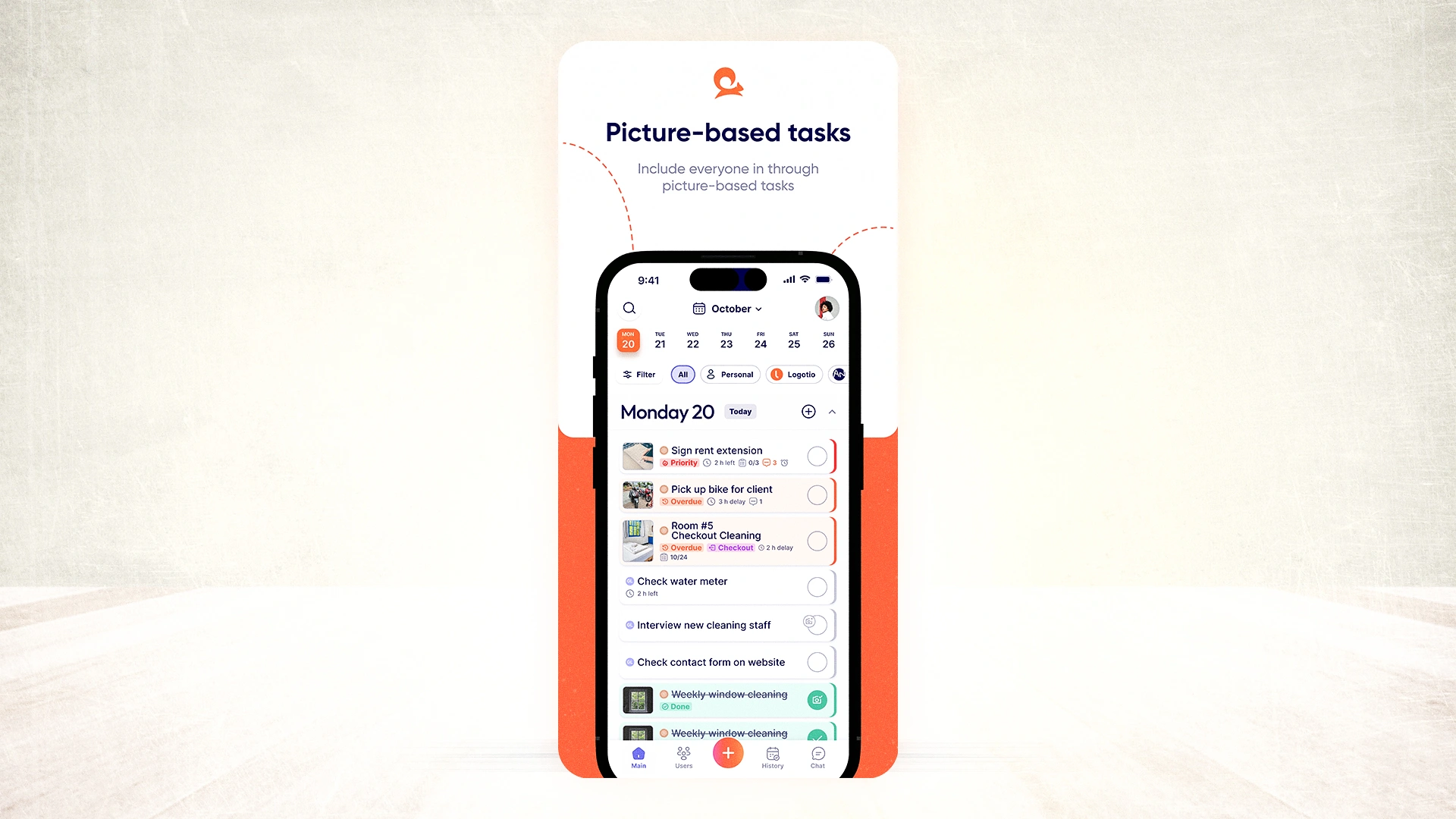
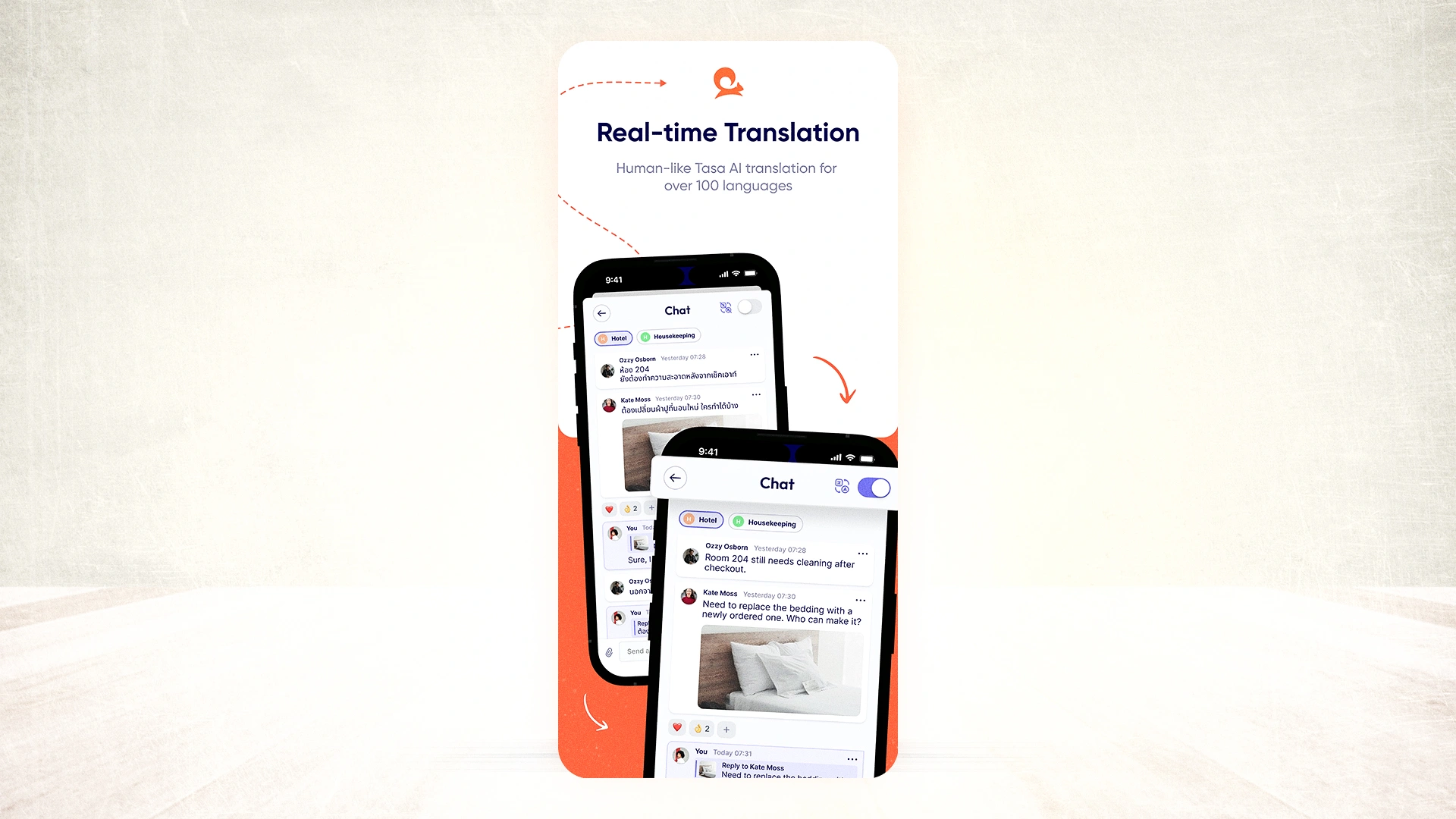
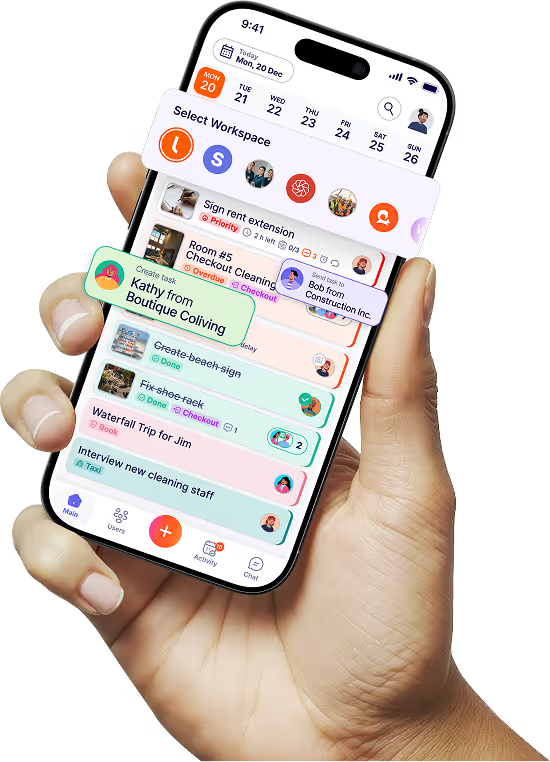
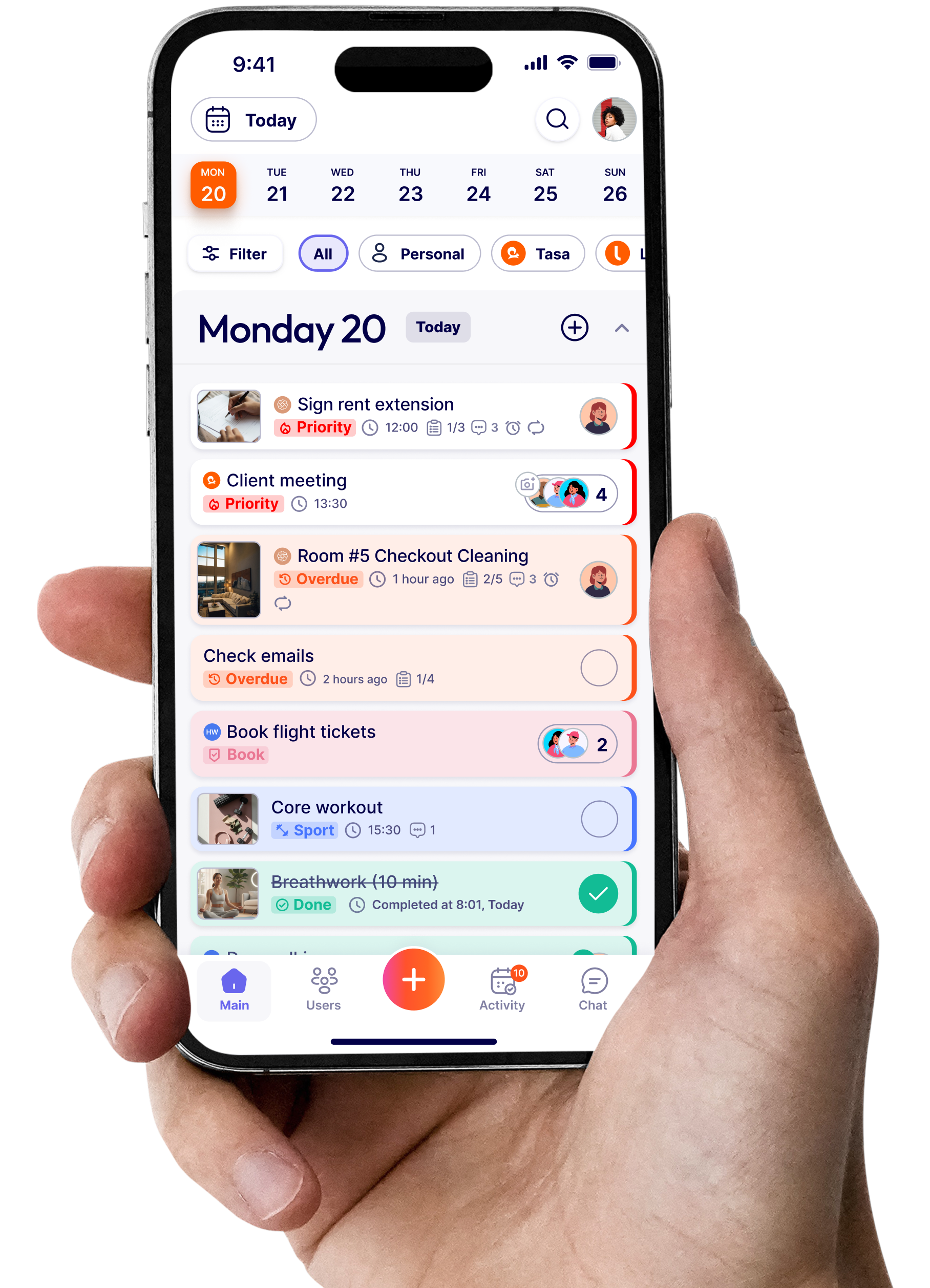
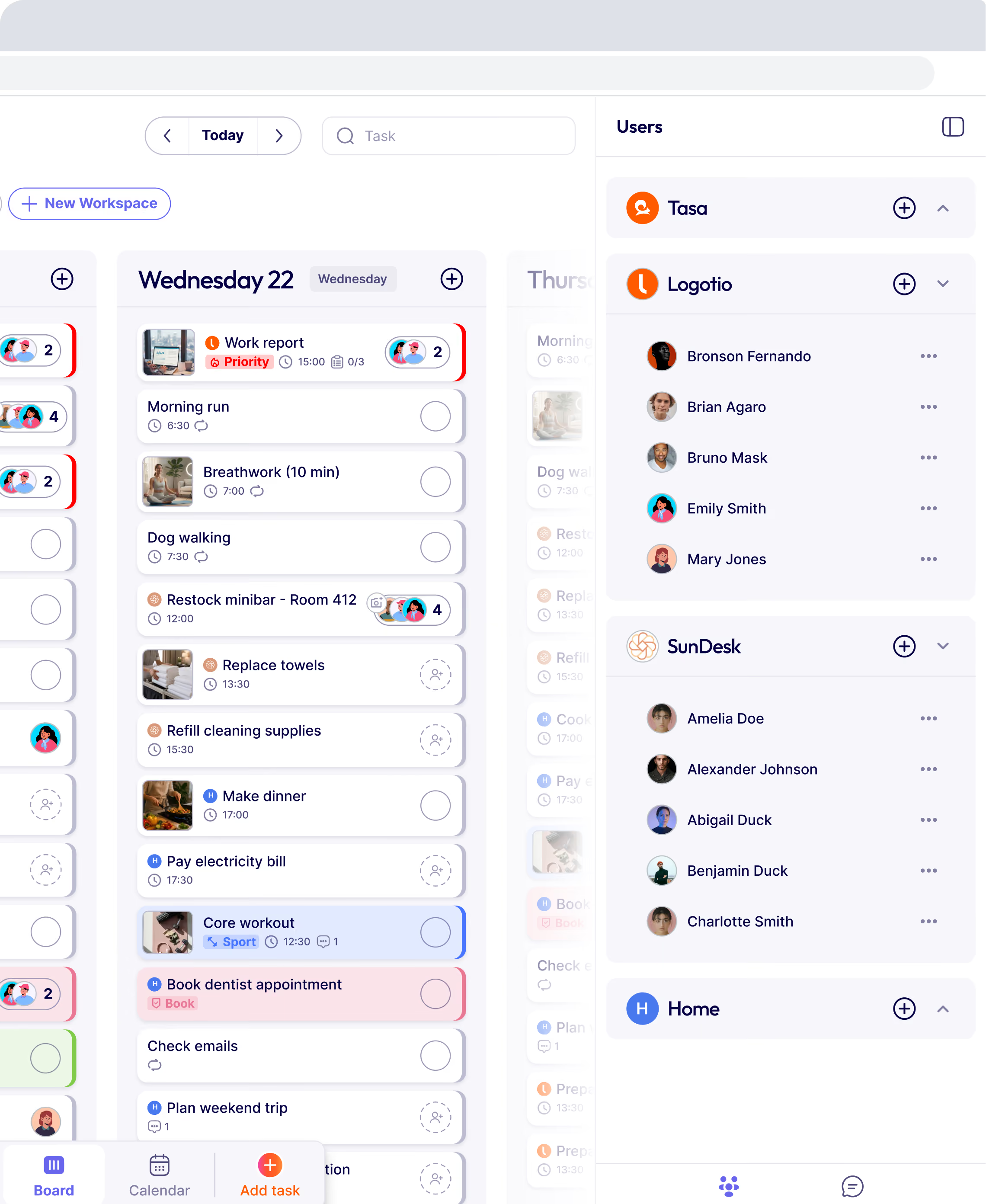
Struggling to manage teams spread across languages and countries? This remote business solves a problem millions face: communication breakdowns between global staff. With AI-driven translation and picture-based task instructions, you can bridge language and literacy gaps in industries like hospitality, construction, and cleaning.
Key Features:
Real-time translation for chat, tasks, and updates
Visual task instructions for teams with mixed literacy
Privacy-first data handling
Effortless onboarding for new hires
Imagine running a digital business that coordinates hotel staff across three countries, even when they do not share a common language. AI-powered platforms boost productivity by 28 percent and reduce manual back-and-forth by 52 percent. Over 1 billion people globally face language or literacy barriers, making this a high-demand opportunity.
Leading Task Management Tools
Tool
Real-Time Translation
Visual Instructions
Industry Fit
Tasa
Yes
Yes
Hospitality, Cleaning
Trello
Limited
No
General
Asana
Limited
No
General
Want to see how this looks in action? Check out Remote solutions for hospitality teams for a real-world example of multilingual remote business management.
Pros: High demand, scalable, solves a real pain point Cons: Requires some client tech adoption
2. Virtual Assistance Agencies Specializing in Niche Industries
Generic virtual assistance is crowded, but niche expertise would be a game-changer for remote business in 2026. Build a VA agency focused on sectors like legal, real estate, medical, or tech startups. The global VA market is growing by 22.3 percent annually, and clients want specialists who understand their industry.
Core Services:
Scheduling and admin support
Client communication
Industry-specific compliance tasks
For example, a remote business offering legal virtual assistance can serve both US and EU firms, handling specialized documentation and filings.
Pros: Predictable recurring revenue, high client stickiness Cons: Requires ongoing team training and management
3. Digital Marketing Micro-Agencies
Tired of competing with giant agencies? Micro-agencies are thriving in the remote business landscape by focusing on niche audiences and outcome-based marketing. Launch a boutique agency with a remote team, delivering SEO, paid ads, or influencer campaigns for tightly defined markets.
Key Features:
Automated analytics and reporting dashboards
Retainer-based pricing for stable cash flow
Flexible team structure
A remote business might specialize in digital marketing for eco-brands, running influencer campaigns and tracking ROI through data-driven tools.
4. Creator Economy Consulting & Content Production
The creator economy is exploding, with over 50 million people now identifying as creators. A remote business in this niche offers consulting, brand strategy, content production, and platform management for influencers, coaches, and brands.
Service Highlights:
Monetization strategies for multiple platforms
Content repurposing (e.g., turning podcasts into video or text)
Personal brand development
Picture a remote team guiding coaches to launch YouTube channels, create online courses, and build loyal audiences. Creative fulfillment is high, but you must stay on top of platform changes.
Pros: Creative work, growing demand Cons: Need for up-to-date digital skills
Key Insight:
Repurpose every piece of content to multiply your reach and revenue.
Education is going digital, and the e-learning industry is forecasted to hit $400 billion by 2026. Start a remote business designing interactive courses or providing online tutoring for specific audiences like expats or K-12 students.
Features:
Gamified lessons and adaptive learning paths
Multilingual support for global students
AI-driven lesson plan customization
A tutoring agency built as a remote business can scale quickly using AI to automate lesson creation and progress tracking.
Pros: High demand, especially in emerging markets Cons: Requires instructional design expertise
6. Subscription-Based Knowledge & Community Platforms
People crave connection and exclusive knowledge. Build a remote business around paid membership communities or knowledge hubs for topics like remote work, wellness, or industry trends.
Revenue Streams:
Monthly or annual subscriptions
Premium content and live events
Networking and job boards
A remote business platform for digital nomads might offer legal resources, job leads, and weekly webinars. Community platforms now see twice the engagement of traditional social media.
Pros: Recurring revenue, high engagement Cons: Requires constant content updates and active moderation
Key Concept:
Create “micro-networks” for trust, retention, and word-of-mouth growth.
7. Remote SaaS Productized Services
Turn specialized software into a remote business by offering SaaS-powered services such as automated bookkeeping, HR onboarding, or workflow automation to SMEs globally. The trend toward “service as a product” is accelerating, especially in emerging markets.
Features:
Subscription pricing for predictable income
Seamless integrations with client tools
White-label options for agencies
Imagine a remote business that automates payroll and compliance for startups worldwide, slashing admin time and error rates.
Pros: High margins, recurring revenue Cons: Requires technical skill and ongoing support
Industry Insight:
Productized services keep client churn low and satisfaction high.
8. Remote Wellness & Personal Development Coaching
Mental health and personal growth are top-of-mind, especially for remote workers. Launch a digital business as a wellness or productivity coach, delivering digital sessions, resources, and community support.
Service Options:
One-on-one or group coaching
Accountability tracking and progress dashboards
Resource libraries and peer communities
The global online coaching market is growing at 13 percent each year. A remote productivity coach can serve expats and distributed teams, helping manage stress and boost performance. In fact, 78 percent of remote workers report higher stress levels, so solutions are in demand.
Pros: High impact and fulfillment Cons: Need certification and trust-building with clients
Tip:
Leverage digital accountability tools to keep clients engaged and progressing.
These eight models offer more than just a path to income. Each remote business empowers you to work globally, scale flexibly, and stay relevant in a rapidly shifting economy. Pick one that fits your skills, and start building a remote business that stands the test of time.
How to Choose the Right Digital Business Model for You
You might have scrolled through endless business model lists, only to end up more confused than when you started. The fear of wasting time, money, or energy on the wrong idea is real. Let’s break down a clear process to help you move from stuck to starting with confidence.
Self-Assessment & Market Fit
Before you dive into any digital business, take a step back. Ask yourself: What are my core skills and passions? Do I thrive solo, or do I love leading teams?
Understanding your strengths is the first step toward choosing a sustainable remote business.
Look at market demand. Use keyword research tools and competitor analysis to spot gaps. If you’re multilingual, a remote business focused on international task management could be a natural fit.
Assess startup costs and scalability. Some models need only a laptop and internet, while others require a team or specialized software.
Quick checklist for market fit:
List your top 3 skills and interests.
Research demand using Google Trends or SEMrush.
Compare startup costs for each remote business idea.
Evaluate required tech and platforms.
Matching your unique profile to the right remote business is the foundation for long-term success.
Building Your Virtual Team & Tech Stack
Most online business models thrive on the right team and tools. Decide which roles are essential—operations, marketing, client management, or tech support. For solo founders, automation can replace many manual tasks.
Choose digital platforms that boost collaboration and accountability. For example, remote coaches can streamline client check-ins and progress tracking with an Accountability app for remote coaches. This ensures you deliver value, even across time zones.
Top collaboration tools for online business for 2026:
Setting up an online business means dealing with legal and financial details that cross borders. Structure your business entity early—this protects your assets and simplifies taxes. Handling payments and contracts with international clients can be tricky. Use digital invoicing and e-signature tools to stay organized.
Protect your intellectual property and client data with secure platforms. As one industry expert says, “Remote legal compliance is the new business moat.” Prioritize privacy and data protection from day one.
Case Study
A remote-first agency structured as an LLC in Estonia reduced tax headaches by 30 percent and scaled faster by automating contracts and payments.
Key Legal Musts for Remote Business:
Register your business entity in a remote-friendly jurisdiction.
Use contracts tailored for cross-border work.
Stay updated on tax laws in your client’s country.
Choosing the right remote business model is not about luck—it’s about strategy, self-awareness, and the right support systems. With these steps, you can build a future-proof business that fits your life and goals.
Expert Insights, Case Studies & Key Concepts
Feeling overwhelmed by endless remote business advice? You’re not alone. Many aspiring founders and professionals hit roadblocks: uncertainty about what actually works, fear of tech overload, and the challenge of standing out in a crowded digital landscape. This section delivers clarity, real-world proof, and actionable insights to help you confidently shape your remote business journey.
Industry Expert Quotes
Online business is evolving faster than ever, and industry leaders are taking notice. According to Dr. Alex Kim, remote work strategist, “The next wave of remote business will be powered by AI, automation, and hyper-specialization—solopreneurs can now compete globally with lean teams and smart tools.”
A recent report, The Solo Revolution: AI-Enabled Individual Entrepreneurship, highlights how artificial intelligence is transforming what’s possible for solo founders and small teams. This shift means founders can automate routine tasks, focus on high-value strategy, and tap into new markets with unprecedented speed.
Comparison Table: Remote Business Success Factors
Factor
Traditional Biz
Remote Business
Freelance Gigs
Startup Cost
High
Low–Medium
Low
Scalability
Moderate
High
Low
Flexibility
Low
High
High
Income Potential
High
High
Medium
Skill Depth
Broad
Specialized
Specialized
These insights show that remote business offers unique advantages, especially when paired with the right technology and mindset.
Case Study
Let’s look at a real-world example that brings remote business innovation to life. Consider a virtual agency managing cleaning teams for hotels and offices in multiple countries. By using digital tools for cleaning businesses, they streamlined multilingual communication, assigned tasks visually, and reduced missteps by over 50%.
Key takeaways from this remote business case study:
Embracing visual and translation tools breaks language barriers.
Automating repetitive admin frees owners to focus on growth.
Standardized digital processes boost client trust and retention.
What sets top performers apart? They proactively invest in systems that scale, not just tools that “get by.” This approach is the foundation of a resilient remote business.
Core Concepts for Remote Success
Remote-First Mindset: What Matters Most
Prioritize automation to save time and reduce errors.
Make communication crystal clear, using visuals when possible.
Focus every remote business decision on customer experience.
Actionable tips:
Use multilingual, picture-based task apps for global teams.
Productize services to scale faster.
Build feedback loops to continuously improve.
A successful remote business isn’t built overnight. It’s the result of intentional choices, the right tech stack, and a relentless focus on value. These core concepts will keep your remote business agile and future-ready.
Beyond a great idea, what do the most successful expat businesses have in common?
They systemize their operations to overcome the inherent friction of distance. They don't just have a business plan; they have a replicable execution system. This often involves using a central platform to create standardized workflows for client onboarding, product delivery, and team communication, making the business resilient and less dependent on the founder's constant direct involvement.
What is the biggest operational mistake new expat entrepreneurs make?
Underestimating the chaos of managing a cross-border team from day one. The excitement of a new idea often overshadows the gritty reality of coordinating tasks across time zones, languages, and cultures. Implementing a visual task management system from the outset is no longer a luxury, but a necessity for maintaining clarity and ensuring your vision is executed correctly, no matter where your team is located.
What's the most cost-effective way to manage operations for a bootstrapped expat business?
Your most valuable investment is in systems, not just software. Start with a free tool that doesn't create bad habits you'll have to unlearn later. Tasa.app's free plan allows you to build a culture of visual accountability from day one, ensuring that even as a solo entrepreneur or tiny team, your workflows are clear, verifiable, and ready to scale without a massive upfront investment.
How can I ensure my remote team in another country is executing tasks to my standard?
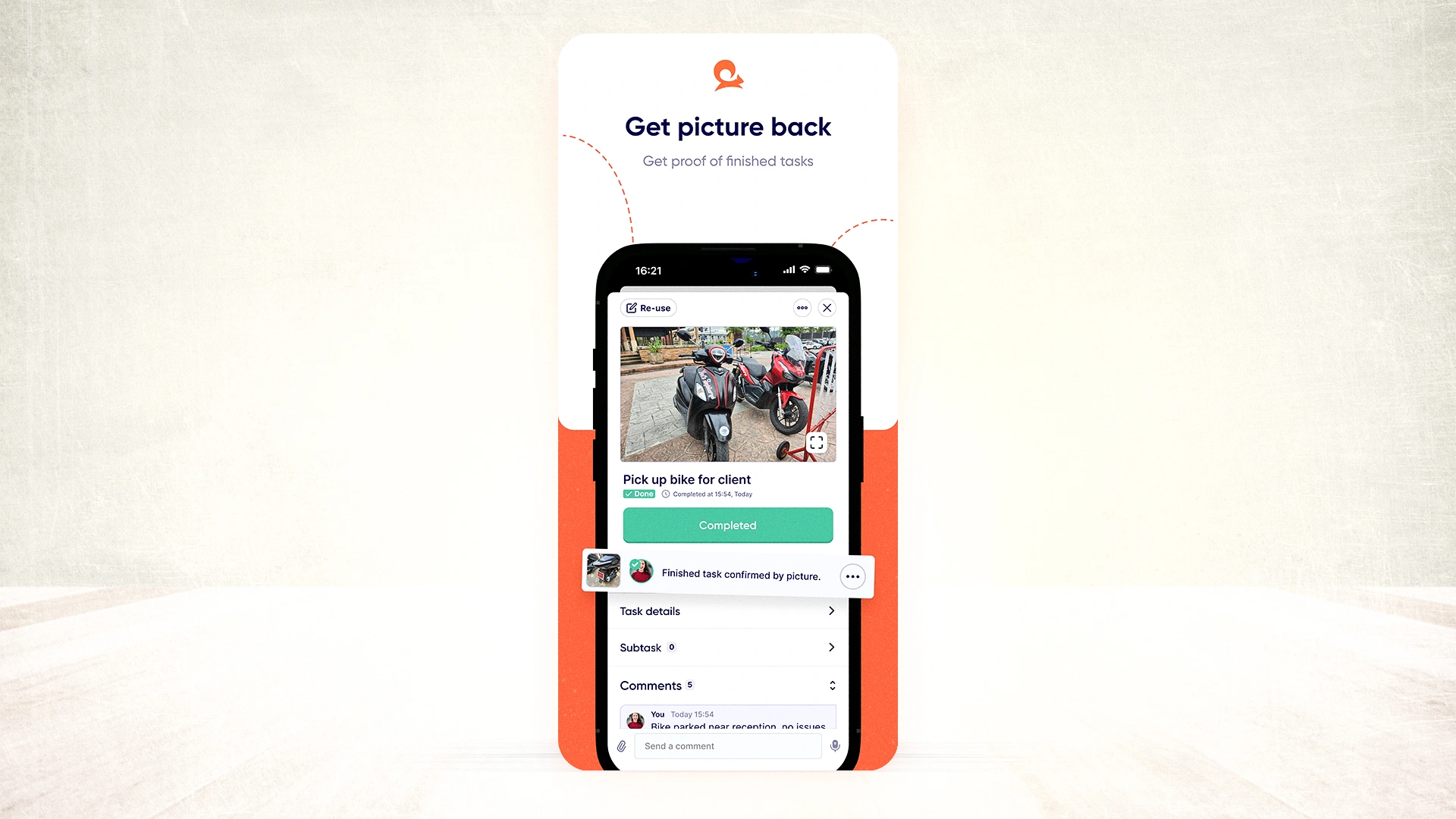
You need a system that replaces physical oversight with verifiable accountability. The most effective method is using a platform that requires visual proof of completion. This allows you to see that the product was manufactured to spec, the social media post went live as designed, or the customer delivery was completed, building trust and ensuring quality across distances.