.svg)
Airbnb turnover cleaning: faster turnovers & happy guests
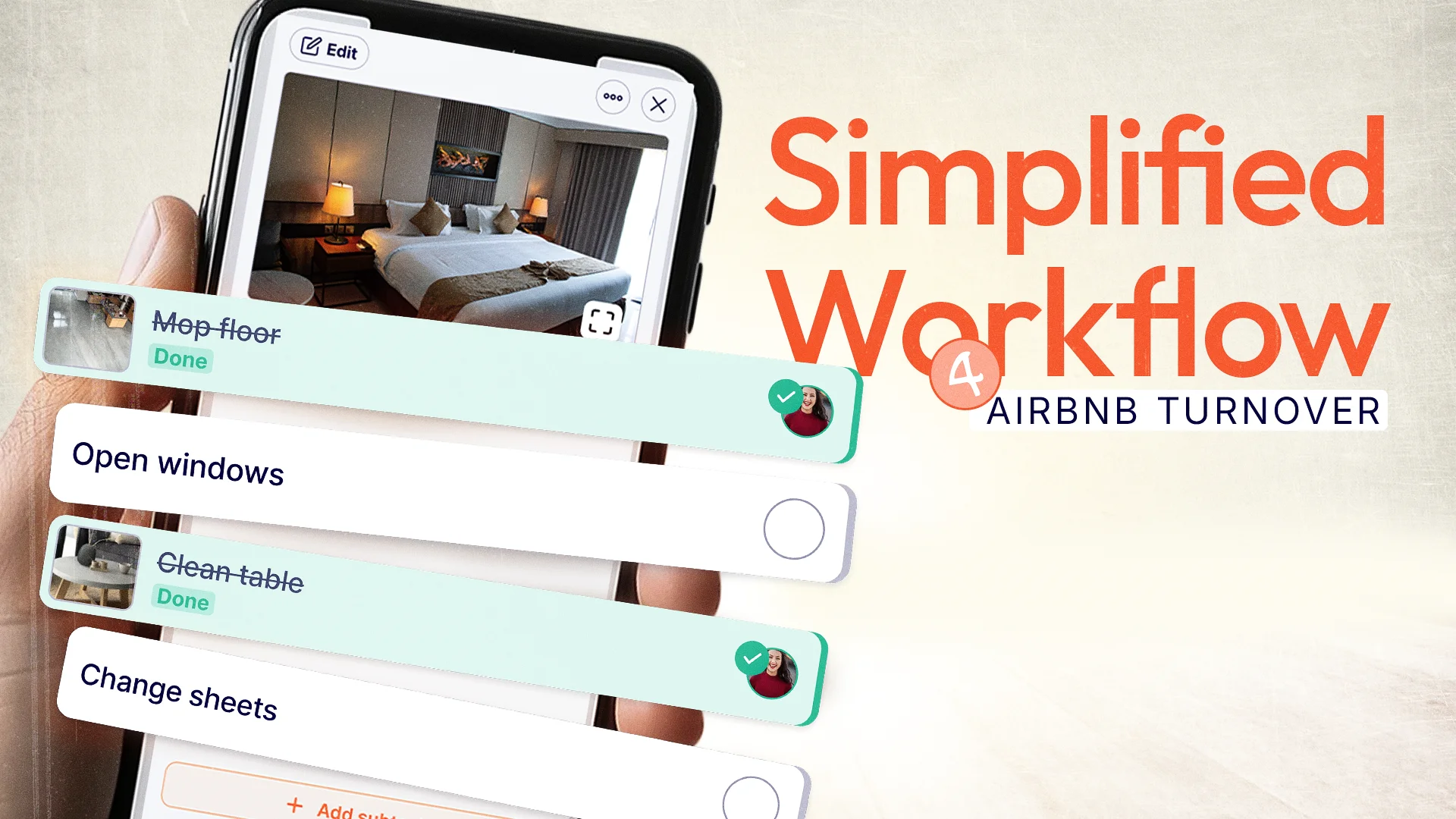
The link between Airbnb turnover cleaning quality and guest reviews is strong. Guests notice cleanliness immediately, their first impression is largely shaped by how the property looks and smells when they walk through the door.
Cleanliness is mentioned in over 60% of positive reviews and nearly 40% of negative reviews. A single turnover that misses something can tank your rating for weeks.
Key Takeaways:
- Guests form their first impression within 90 seconds of walking through the door, cleanliness makes or breaks that moment.
- Airbnb turnover cleaning is a complete guest-ready transformation, it's beyond basic housekeeping.
- Properties with consistent cleanliness standards earn higher ratings, more bookings, and premium pricing.
- Visual task instructions eliminate language barriers and ensure every cleaner follows the same standard.
- Photo verification of completed turnovers gives remote hosts proof of quality without visiting the property.
- Standardized workflows with picture-based checklists reduce training time and maintain consistency across multiple properties
What is Airbnb turnover cleaning?
Airbnb turnover cleaning is the complete process of preparing a short-term rental property for new guests after the previous guests have checked out. It goes far beyond basic housekeeping.
This is not the same as your weekly home cleaning or even a standard deep clean. Turnover cleaning is a time-sensitive, guest-ready transformation that includes cleaning, sanitizing, restocking, inspecting, and documenting every room in the property.
When done correctly, the guest walks into a property that feels fresh, cared for, and welcoming.
How turnover cleaning differs from regular house cleaning
Regular house cleaning focuses on removing dirt and making a home feel tidy. Airbnb turnover cleaning is about resetting a space to a good standard for a paying guest.
Here are the key differences:
Turnover cleaning also includes tasks that regular cleaning doesn't cover: replacing linens, restocking supplies, setting up amenities, and inspecting for damage.
It's a complete reset, not just a clean.
How professional teams reduce turnover delays
Professional cleaning teams reduce turnover time through efficiency and standardization.
Why professionals are faster:
- They follow a standardized process every time
- They know exactly what to do without hesitation
- They use the right tools for each task
- They work in teams (one person handles bathrooms, another handles bedrooms)
- They have the right supplies ready
How to make turnovers faster:
- Create a standardized checklist - no one needs to think about what to do next
- Use visual instructions - photos show what "done" looks like
- Schedule efficiently - cleaners start immediately after checkout
- Stock supplies in the property - no time wasted fetching supplies
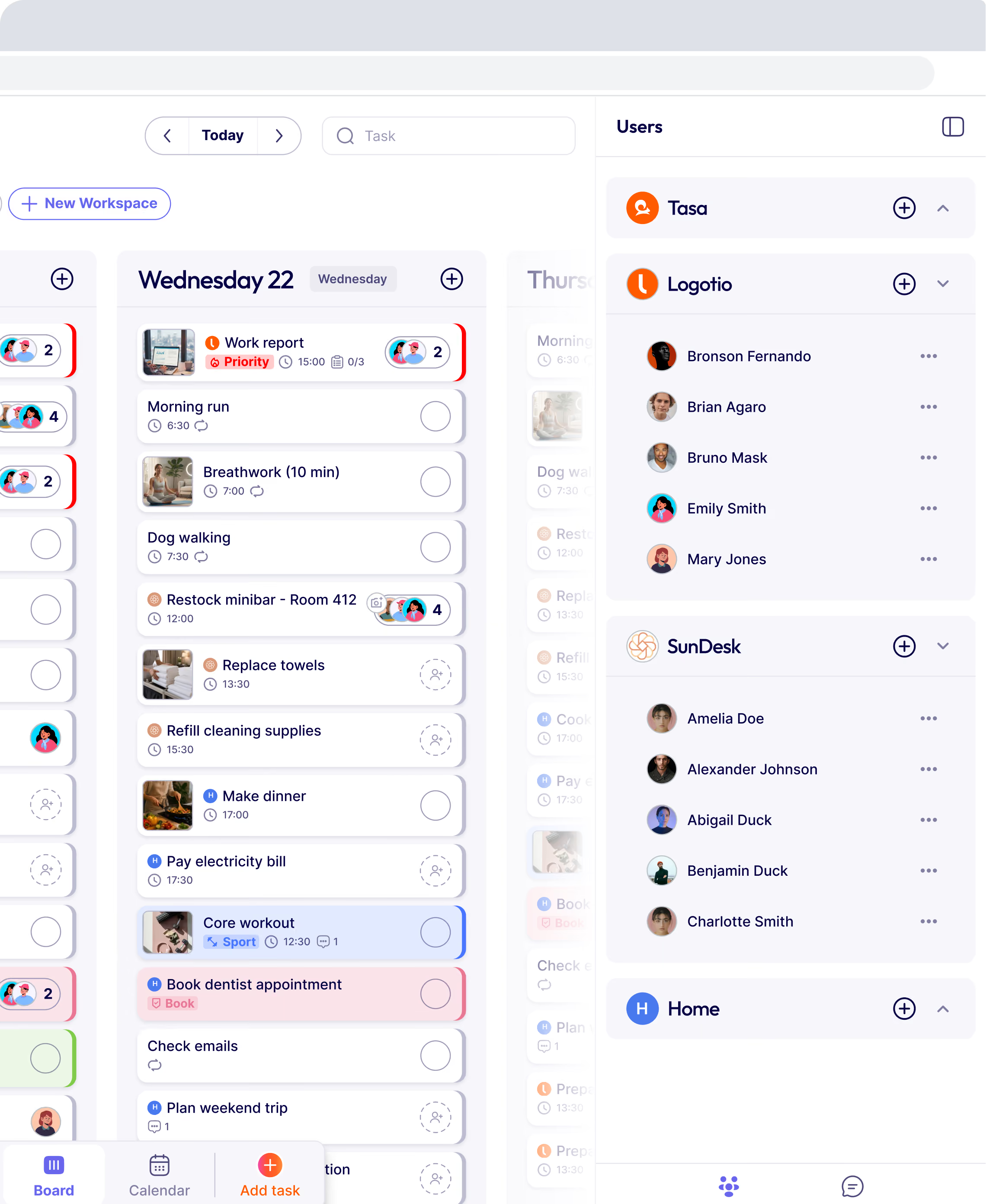
- Use task management software - assign tasks, track completion, verify work
The Tasa approach to faster turnovers:
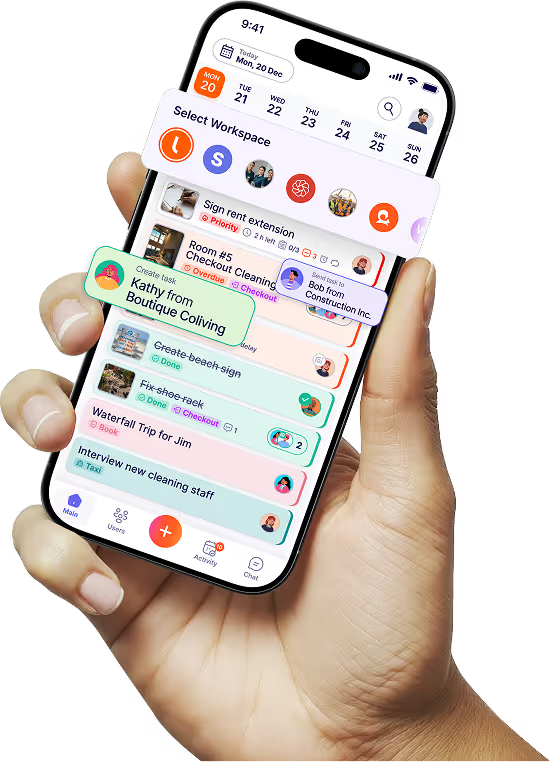
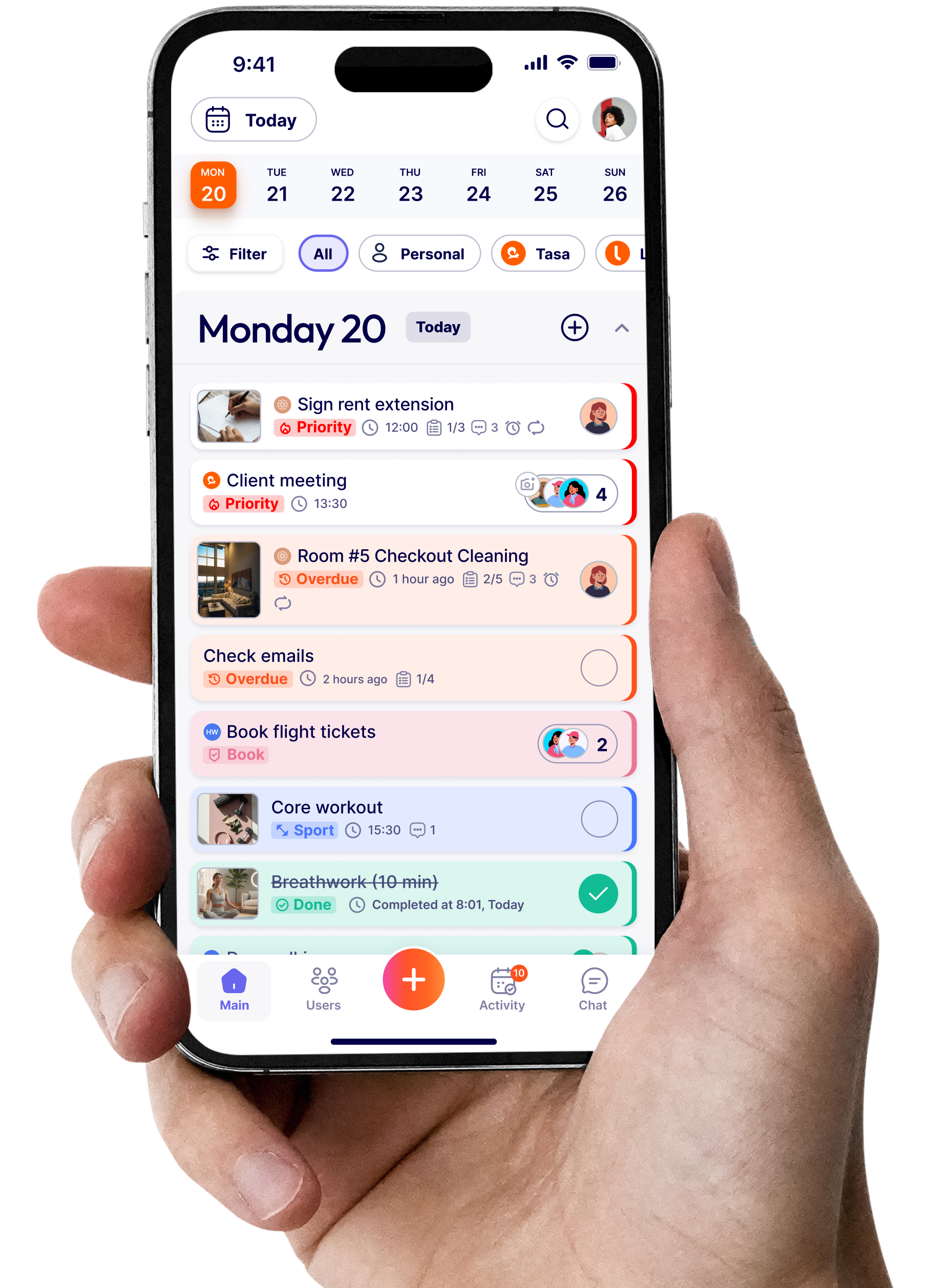
Tasa uses picture-based tasks, photo verification, and real-time translation to help Airbnb cleaning teams work faster.
- Cleaners know exactly what to do because they see it in the app.
- Managers verify work without visiting the property.
- Turnovers become faster and more consistent.
How to create a standardized Airbnb turnover process
Standardization removes variability from your operations. Here is how to build a process that works.
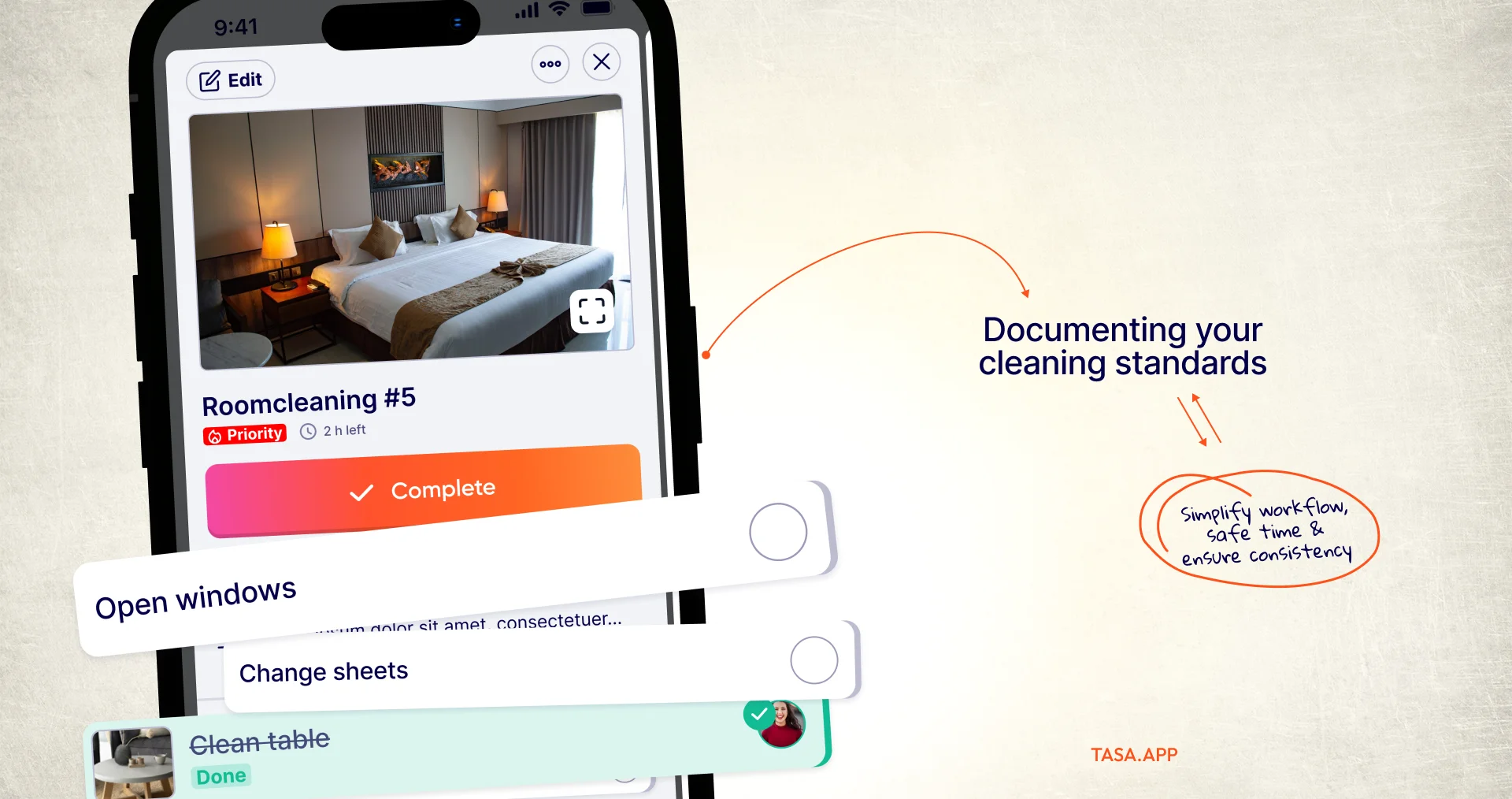
Documenting cleaning standards
Start by documenting what "good" looks like for your property.
What to document:
- Step-by-step cleaning instructions - Room by room, task by task
- Visual standards - Photos of a perfectly cleaned property
- Quality checkpoints - Specific items that must be inspected
- Inventory requirements - What must be stocked for guests
How to document:
- Visit your property when it's at its best
- Take photos of every room and surface
- Write descriptions of what's shown in the photos
- Create a standard digital guide
Pro tip: Use a cleaning app like Tasa to create digital visual instructions. Staff can access them on their phones.
Using visual instructions for consistency
Visual instructions outperform written instructions every time.
Why visual instructions are better:
- No language barrier (photos are universal)
- No reading ability required
- Show exactly what "done" looks like
- Easy to reference and compare
- Reduce training time significantly
How to create visual instructions:
- Take photos of a clean property - show every room, every surface, every detail
- Organize by room - bedroom photos together, bathroom photos together, etc.
- Show what to look for - photos of specific details that matter (fresh linen, clean toilet, stocked kitchen)
- Show before and after - demonstrate what a dirty surface looks like compared to a clean one
- Update as standards change - when you make improvements, update the photos
Building repeatable workflows
Once you have standards and visual instructions, create repeatable workflows.
Elements of a workflow:
- Checkout trigger - the turnover starts when guests check out
- Task assignments - who does what (bathroom, bedroom, kitchen, etc.)
- Time allocation - how much time is needed for each task
- Quality checks - verification steps at key points
- Completion - how the turnover is declared done
Training new cleaners quickly
Standardized processes make training faster and more effective.
The problem with traditional training:
- Cleaners shadow an experienced cleaner
- They learn by watching (which is inefficient)
- They don't have a reference to check
- Training is inconsistent
The better way:
- Show them the visual standards - they see exactly what's expected
- Assign practice tasks - they complete tasks with your oversight
- Require photo proof - they submit photos for review
- Provide immediate feedback - correct mistakes immediately
- Let them work independently - with the visual task app as their guide
Training time reduction:
Traditional training: 5-7 turnovers with an experienced cleaner
With visual task app: 2-3 turnovers with the app as a guide
New cleaners can start working independently faster because they have a reference to check.
Why Airbnb turnover cleaning is essential
Turnover cleaning is the most important operational process in short-term rental management.
First impressions shape guest satisfaction
Guests decide how they feel about your property within the first 90 seconds of walking in. That first impression is formed by what they see, smell, and touch.
Most guest's first 90 seconds:
- They walk through the door
- Notice the smell (fresh or stale)
- Check the bathroom (spotless or questionable)
- Sit on the bed (fresh linen or questionable)
If you pass all these tests, the guest relaxes and feels confident in their booking. If any of these fail, the guest starts looking for problems. They notice every small flaw to request a refund.
This is why turnover cleaning matters so much. It sets the tone for the entire guest stay.
Cleanliness affects occupancy and revenue
Cleanliness directly impacts your revenue in several ways:
- Higher ratings: Clean properties get higher ratings. Higher ratings mean more bookings.
- Better search placement: Airbnb's algorithm favors properties with higher ratings and fewer complaints. Cleanliness helps you rank higher.
- Premium pricing: Guests are willing to pay more for properties with excellent reviews. Cleanliness is a core driver of those reviews.
- Repeat guests: Guests who had a spotless experience are more likely to book again. They trust your property.
- Less vacancy: Properties with consistently high ratings experience fewer vacancy days. Occupancy rates can be 15-20% higher.
What happens during an Airbnb turnover?
A proper turnover follows a clear sequence of steps. Here is what happens during a complete turnover:
Guest checkout
The turnover begins when the guest checks out. There are two types of checkout:
- Self checkout: Guest leaves the key, locks up, and departs. The cleaning team accesses the property after checkout time.
- In-person checkout: A team member meets the guest to collect keys and check for any immediate damage or missing items.
What the cleaner should do at checkout:
- Check the guest property is empty
- Look for obvious damage or missing items
- Note any guest feedback
- Confirm checkout time was respected
Property inspection
Before cleaning begins, the property needs to be inspected for damage and to identify what needs attention.
What to look for during inspection:
- Damage to furniture or fixtures
- Missing items / Any broken items
- Stains on carpets, upholstery, or mattresses
- Appliances not functioning
- Pest or water damage signs
Take photos during inspection. This creates a record of the property's condition and helps with damage claims.
Cleaning and sanitization
This is where the actual cleaning happens. Every room is cleaned systematically.
General cleaning standards:
- Vacuum and mop all floors
- Dust all surfaces
- Wipe down counters, tables, and shelves
- Clean mirrors and glass
- Sanitize all high-touch surfaces (handles, switches, remotes)
- Empty all trash
- Check for odors
Other cleaning includes:
- Bathroom cleaning
- Kitchen cleaning
- Living areas
- Linen and towel replacement
- Inventory restocking
Final cleaning check for quality
The final check ensures nothing was missed. It should be systematic.
Final quality check steps:
- Walk through every room
- Check if all cleaning tasks were completed
- Verify supplies are stocked
- Inspect for anything out of place
- Take photos showing the property is ready
- Confirm the property meets your standards
The final check is your quality control. It catches missed items before guests arrive. Never skip the final check.

Maintaining consistency between property locations
Different properties need the same cleaning standards. Achieving this requires intentional effort.
The consistency challenge:
- Different property sizes and layouts
- Different equipment and supplies
- Different cleaners with different preferences
How to maintain consistency:
- Use the same visual standards for all properties - photos show what "clean" looks like regardless of location
- Create property-specific task lists - customize for each property
- Require photo proof from every turnover - compare across properties
- Review photos regularly - identify quality issues early
Pro tip: Create property-specific instructions with photos. One property might have a hot tub that needs cleaning. Another might have a fireplace. Each property's tasks are tailored to its features.
How to track cleaning turnover status remotely
Remote tracking gives you visibility into turnover completion.
What to track:
- Which turnovers are scheduled
- Which turnovers are in progress
- Which turnovers are completed
- Who completed each turnover
- What time each turnover was completed
How to track:
- Use a picture-based task management app - create tasks for each turnover
- Assign each turnover to a cleaner - staff see tasks relevant to them
- Require completion confirmation - staff mark tasks done
- Monitor in real time - check status from anywhere
- Review photos - verify quality
Tasa is a task management app built to help you run Airbnb cleaning turnover smoothly and easy execution for your team.
Latest News

Have questions?
.svg)
Team management, simplified.

“It affects my personal life a lot. I can manage my team and my work remotely, so I have more time being a mother.”
