.svg)
Manage Airbnb remotely: systems, checklists, & team management for hosts
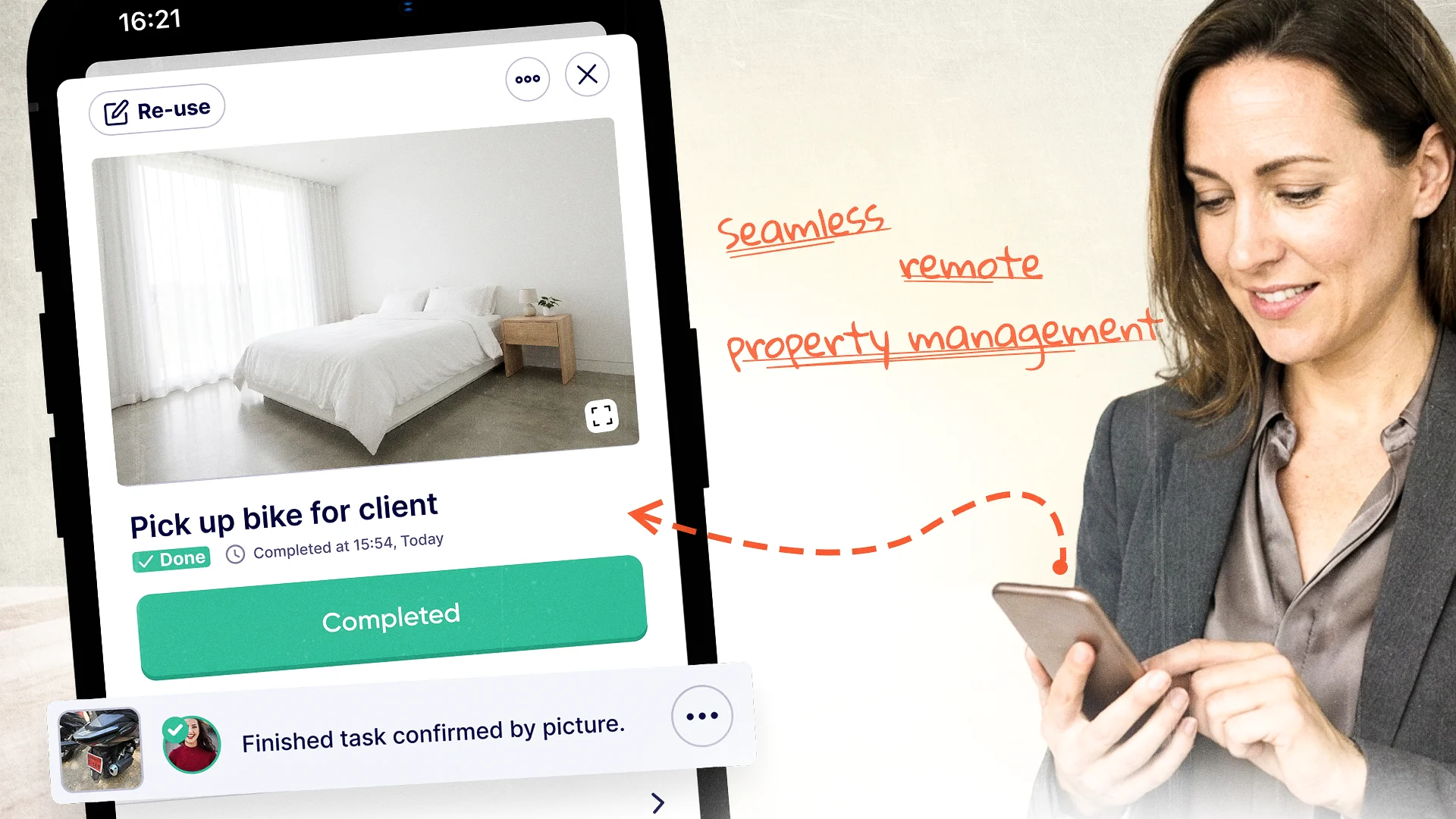
According to Airbnb data, properties with consistent 4.8+ star ratings earn significantly more than those with lower ratings. A single bad review about cleanliness can cost you thousands in lost bookings.
- 88% of guests say cleanliness is their top priority when booking
- 34% of negative reviews mention cleanliness issues
- Hosts lose up to 15% of potential revenue from poor reviews
These numbers are the reason why Airbnb remote management requires a proper operational system that works even in your absence.
Key Takeaways
- Remote Airbnb management requires systems that verify work, not just trust.
- Visual task instructions eliminate language barriers and miscommunication across multilingual teams.
- Photo proof of completed work creates accountability and maintains consistent standards.
- Small maintenance issues become expensive problems when you cannot verify they were addressed.
- Clear task assignments with photo confirmation reduce guest complaints and protect your reputation.
- A proper operational system scales across multiple properties in different locations without losing quality or oversight.
Why Airbnb remote management is different
Managing an Airbnb remotely is fundamentally different from being a local host. When you're on-site, you can spot problems before guests arrive. You can walk through the property and check. You can talk to staff in-person.
Remote hosts don't have this luxury.
You must create systems that:
- Give you visibility into what's actually happening
- Work across languages if your team speaks different languages
- Provide proof that work was completed correctly
- Scale to multiple properties without falling apart
This is why the best remote Airbnb management tools focus on visual proof and clear communication. You can't rely on trust alone. You need a system that verifies work and makes execution easy.
The remote Airbnb management system used by successful hosts
Successful remote hosts follow a repeatable system. Here are the steps that make remote Airbnb management work.
Step 1: standardize every recurring task
Every routine task should be documented and assigned. You shouldn't have to explain the same thing twice. New staff should be able to step in without extensive training.
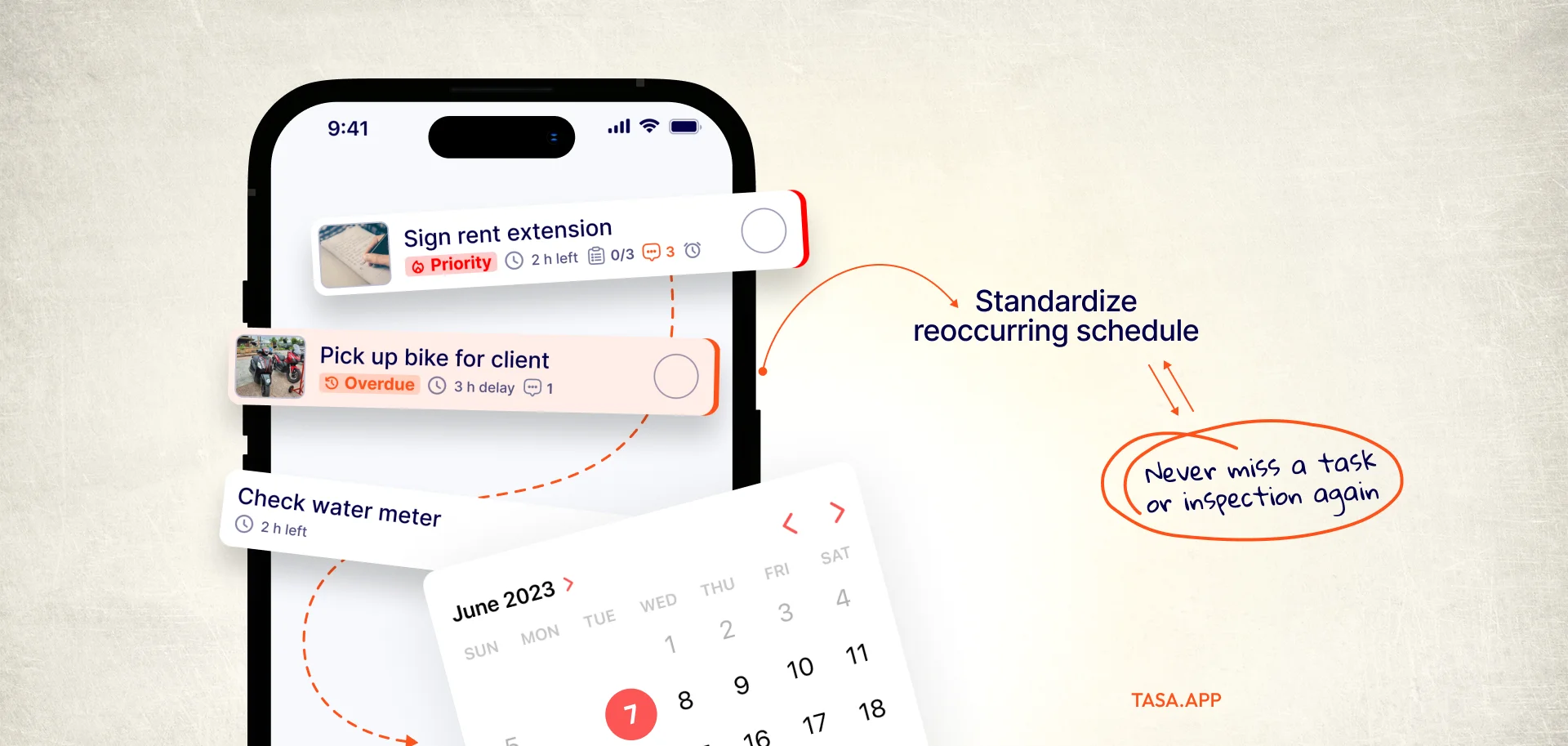
What to standardize:
Cleaning
- Room-by-room cleaning checklist
- Frequency of deep cleaning
- Supplies restocking schedule
- Seasonal cleaning tasks
Turnovers
Guest checkout to check-in process
- Time required for each task
- Roles for each team member
- Priority order of tasks
Inspections
- When inspections happen
- Who performs inspections
- What inspectors look for
- How issues get reported
Maintenance
- Routine maintenance schedule
- How to report issues
- Response time expectations
- Contractor coordination process
Step 2: Create visual operating procedures
Written instructions are often misunderstood. They're especially unreliable when staff speak different languages or have limited reading ability. Visual procedures solve this problem.
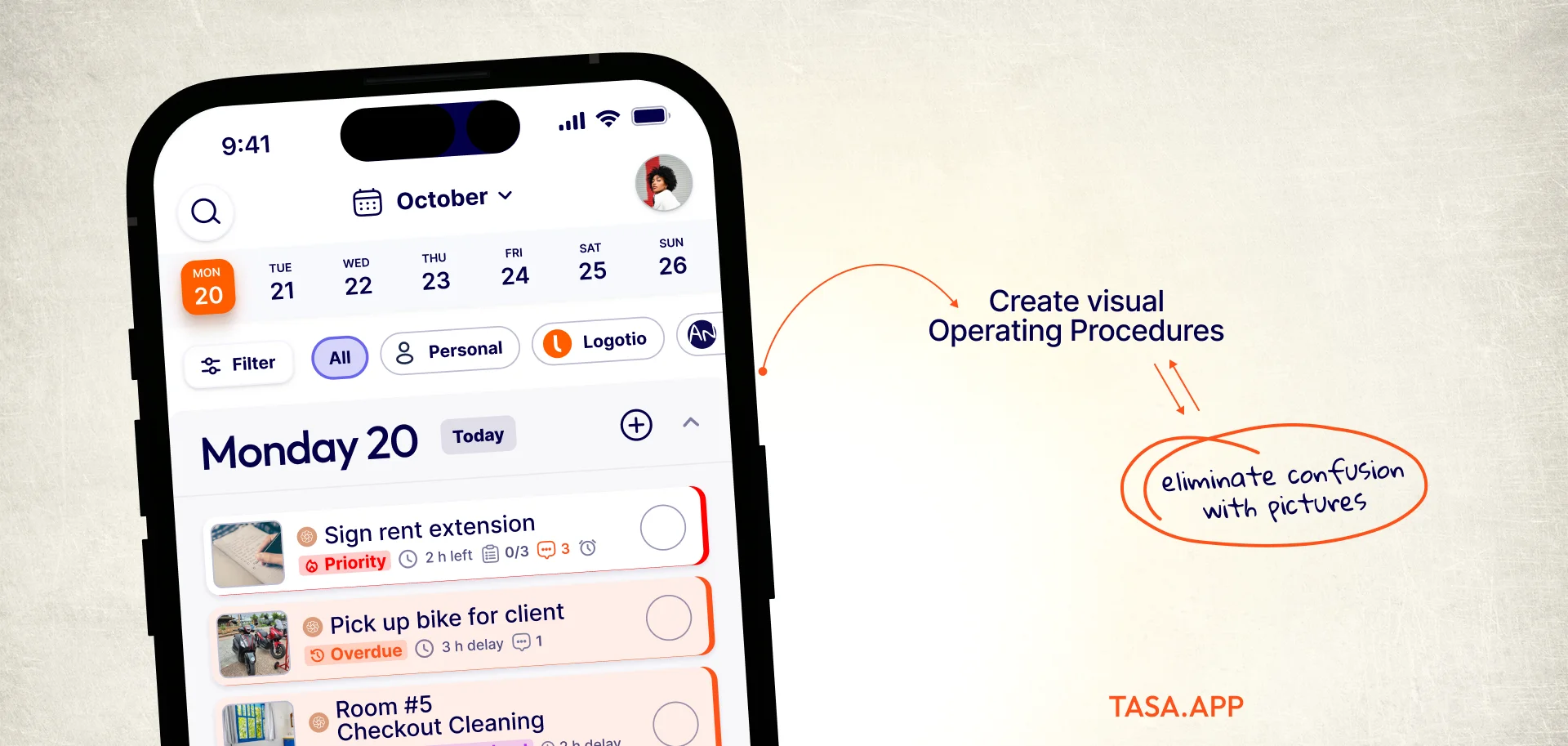
Add photo of expected outcome to every tasks:
- “Make the bed properly" - Photo of exactly how the bed should look
- “Clean the bathroom" - Photo of sparkling bathroom, step-by-step
- “Stock the kitchen" - Photo of properly stocked cabinets
This eliminate confusions.
Creating repeatable standards:
- Take photos of your property when it's perfect
- Use these as the baseline for all staff
- Include photos in every task description
- Update photos when changes are made
- This works for any language, any reading level
Step 3: Assign responsibility for every task
Every task needs an owner. You can't assume someone will do something. You need to explicitly assign responsibility.
How to do this effectively:
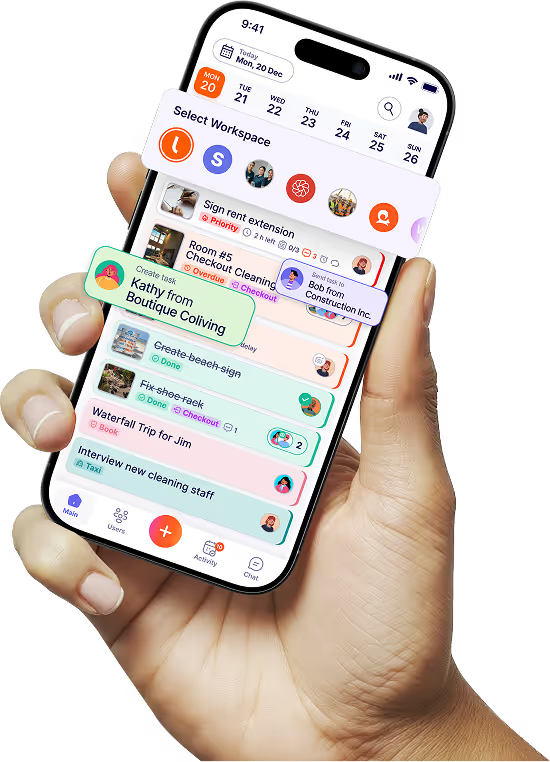
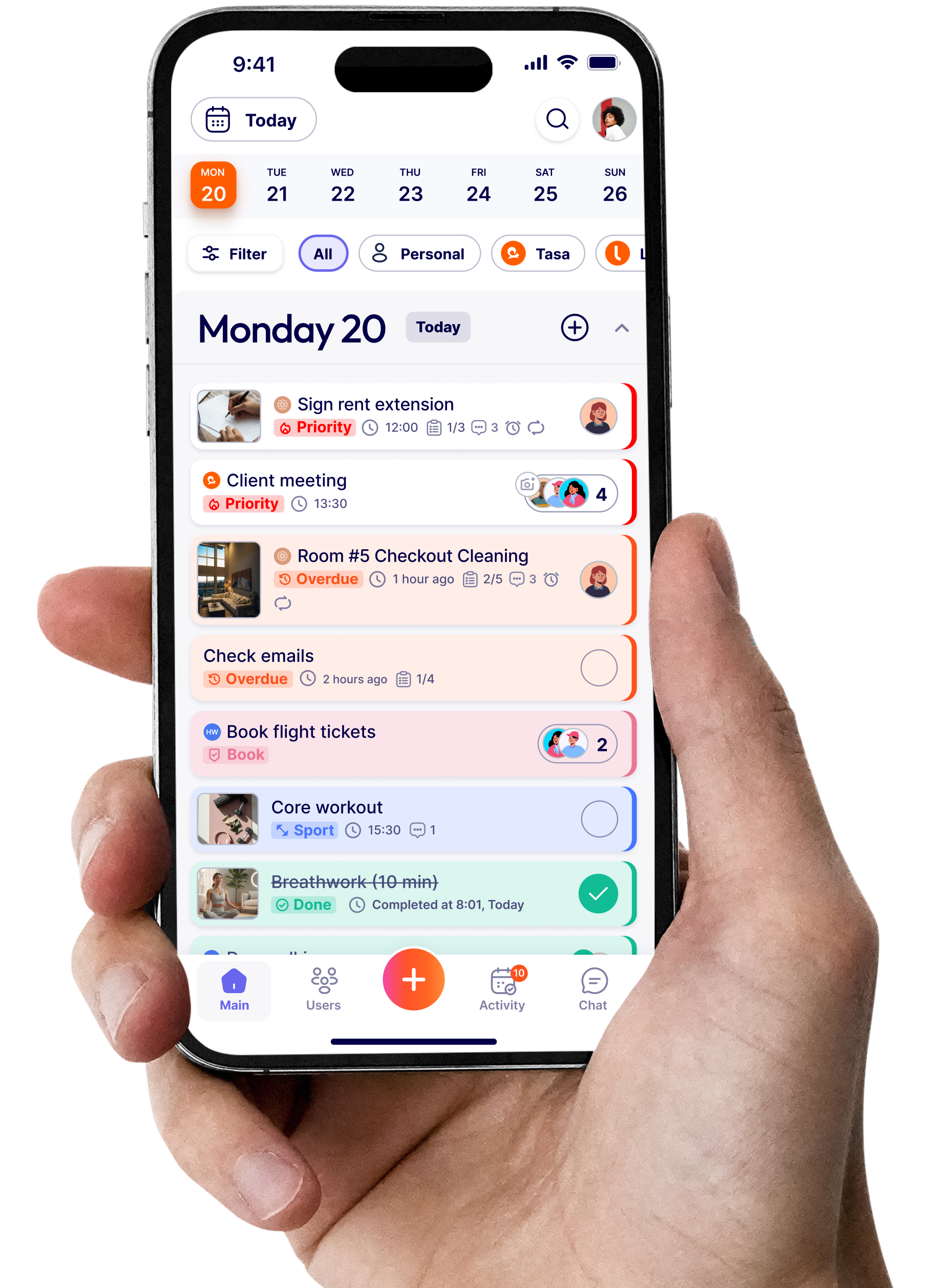
- Create tasks for each responsibility: use Airbnb task management app with picture instructions
- Assign each task to a specific person
- Set deadlines for completion
- Staff should verify when tasks are done
Step 4: Require proof of completion
This is where many remote hosts fail. They trust verbal confirmation. "Yes, I cleaned the apartment." But you don't know what "cleaned" means to that person and when its a misinformation
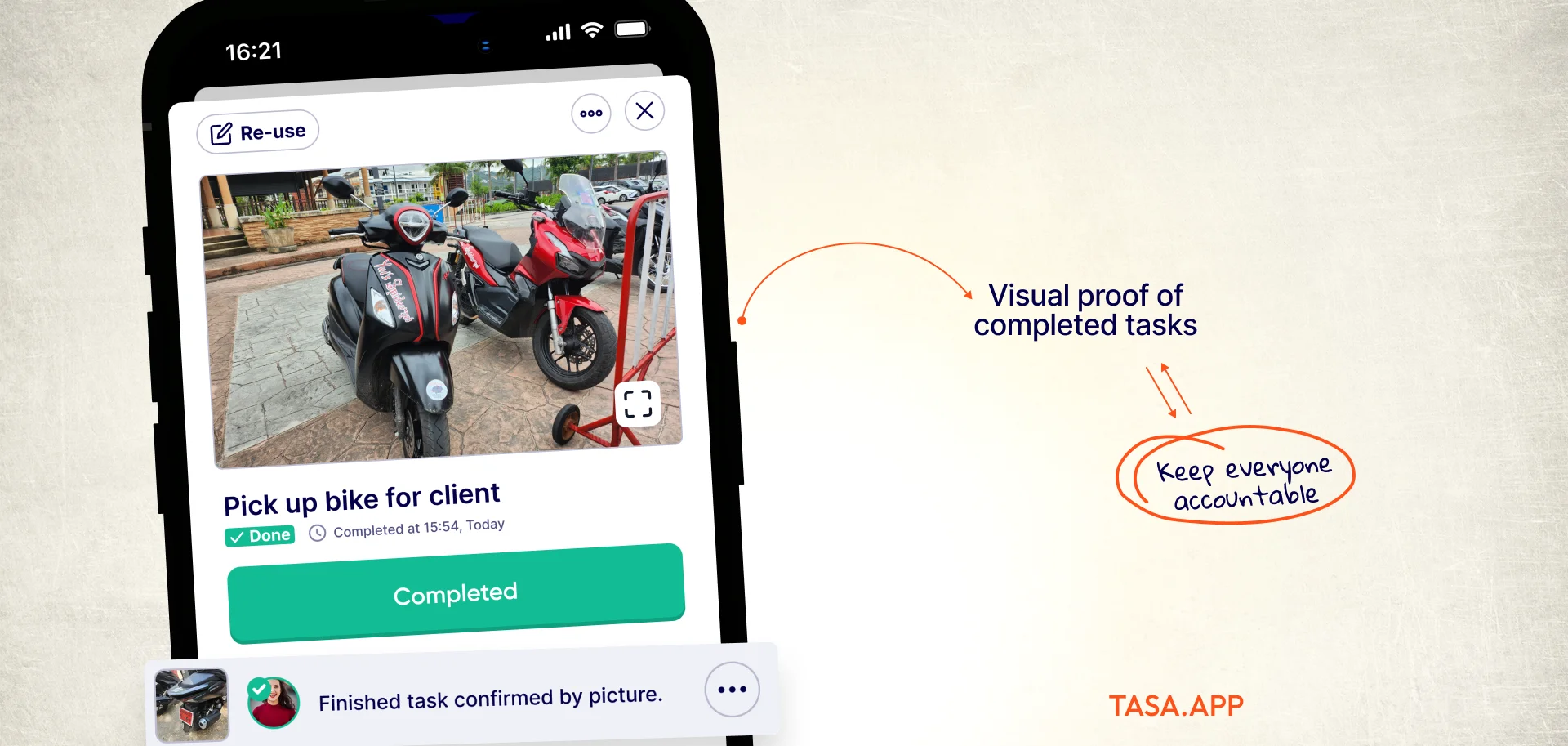
How to build accountability:
- Require photo proof: staff must take a photo of completed work
- Set standards: before and after photos for cleaning
- Review proof: you see the work from anywhere
- No proof, no payment: this creates accountability
Step 5: Use a communication system
Communication is the backbone of remote property management. You need to facilitate communication between everyone involved using one channel to avoid scattered information.
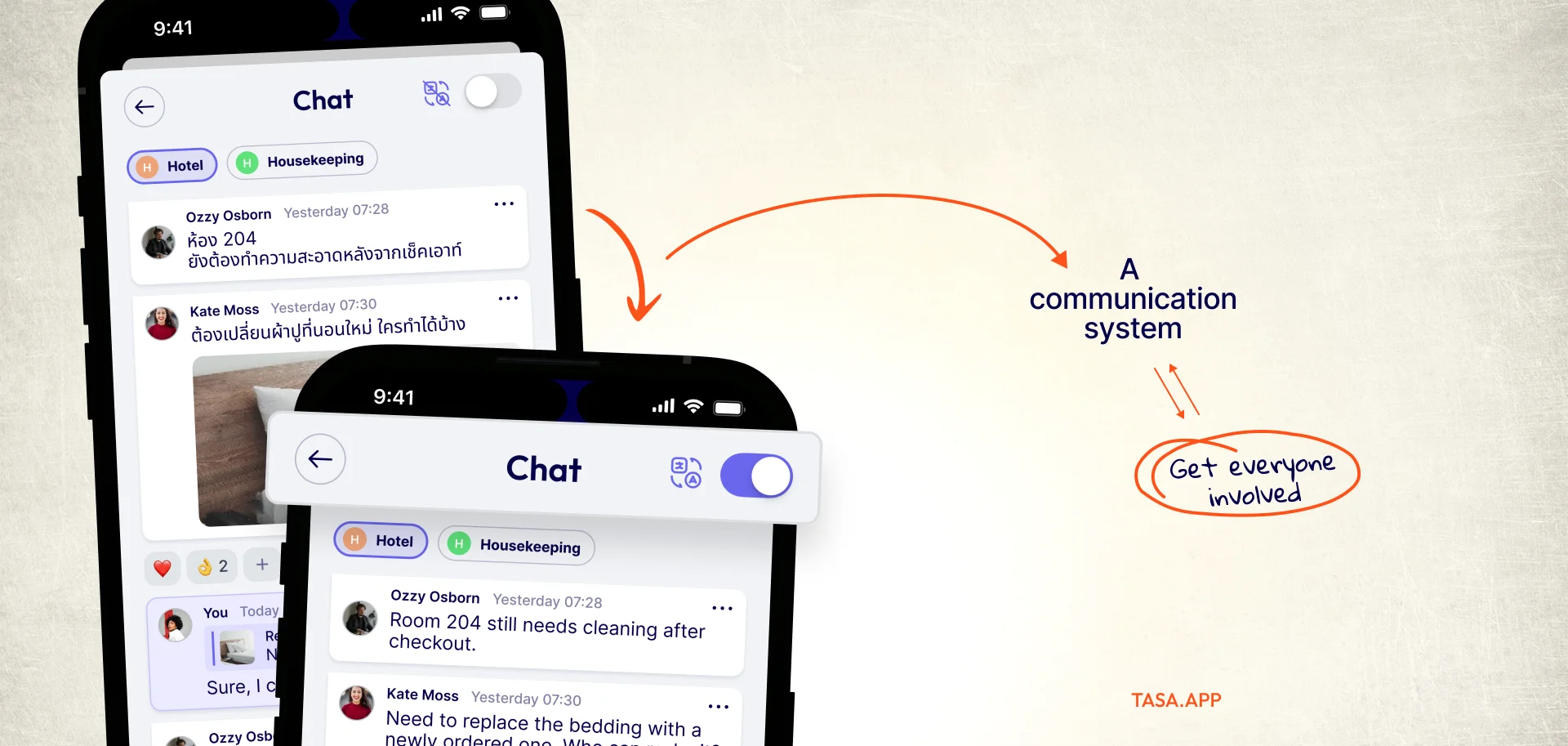
What a good Airbnb property management communication system includes:
- Team chat - all staff in one place with real-time translation
- Task comments - staff can ask questions about tasks
- Photo proof sharing - photos automatically attached to completed tasks
- Notifications - everyone knows when tasks are assigned or completed
- Guest communication - clear guest-handoff processes
How to training new Airbnb staff
Training new staff remotely can be challenging, but not with the right tools
Use visual documentation:
Take photos and videos of every step. Create a visual training manual. Staff can reference this anytime.
Create video training:
Show how to make the bed. Demonstrate how to clean the bathroom. Record the walkthrough. This is especially helpful for staff who don't read well.
Assign training tasks:
Use Tasa to assign training tasks. Create tasks for each aspect of the training. Staff complete them and show proof.
Provide resources:
Create a digital manual with photos. This can be accessed through the task app and translated to your crews’ preferred language.
Tasa a task management app built is to help you overcome this challenges and make execution easier
Manage an Airbnb from another country successfully
The idea of managing an Airbnb from another country sounds appealing. You own property in a desirable location. You earn passive income. You build a portfolio of assets.
The management is a bit complicated.
Successful hosts who manage multiple Airbnb properties remotely have cracked the code. They don't rely on hope. They rely on systems, processes, and the right execution tools.
What does it mean to manage an Airbnb remotely?
Remote Airbnb management means:
- You own or manage a property you don't visit frequently
- You rely on local staff including cleaners, property managers, maintenance workers, and occasionally co-hosts
- You coordinate through technology instead of being present
- You must handle check-ins, cleanings, maintenance, and guest communication from a distance
- You need proof that work is being done correctly since you can't check yourself
Managing Airbnb remotely is more than having a property manager but also having a complete operational system that ensures quality regardless of distance.
The difference between remote hosting and local hosting
The difference isn't just location. It's the entire approach to running the property.
The hosts who manage Airbnb remotely successfully accept that they need a different approach. They don't try to replicate the local hosting approach, instead they build a remote-first operational system you can get started with here.
The biggest challenges of managing an Airbnb remotely
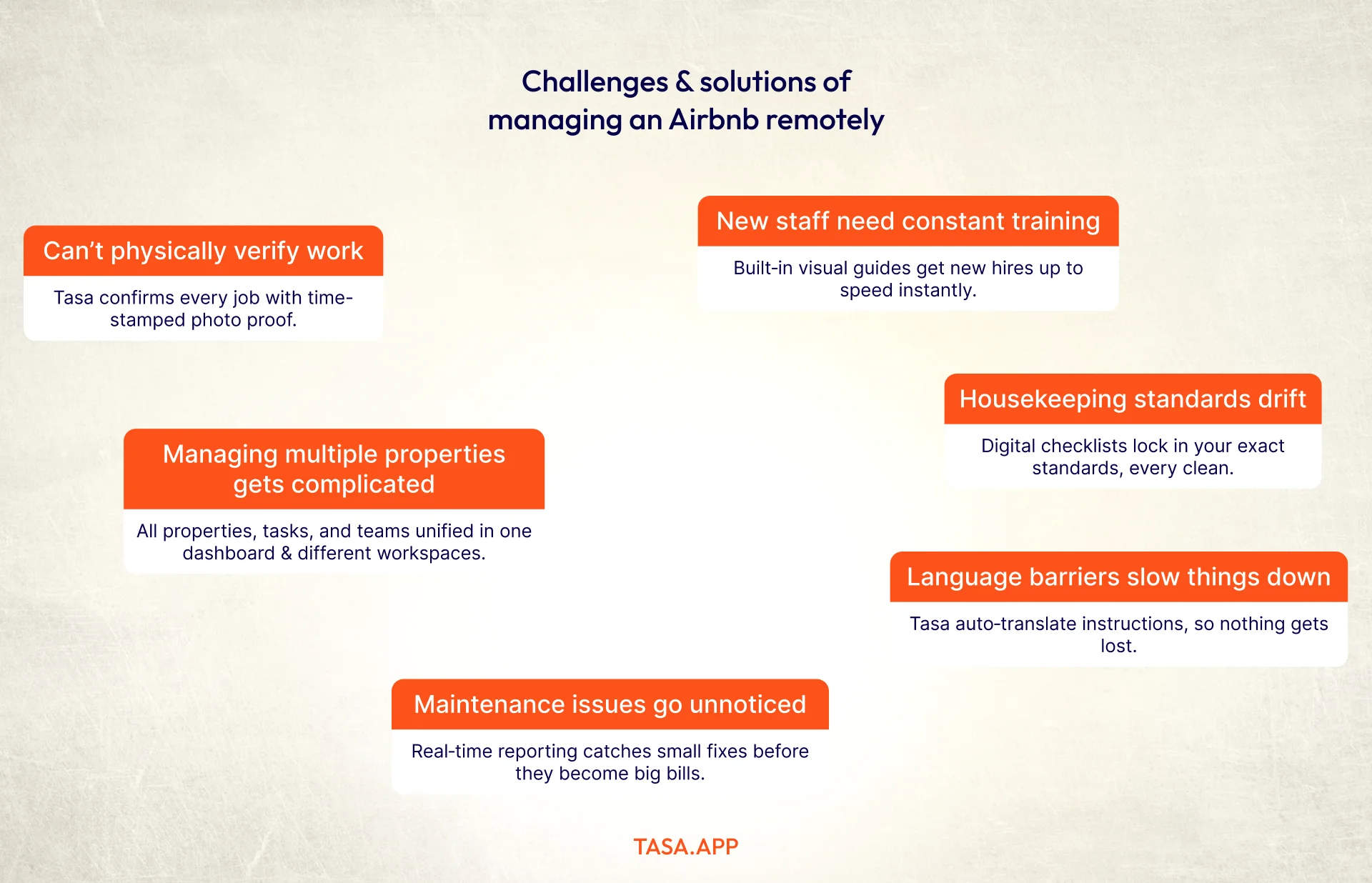
Understanding the challenges of managing an Airbnb remotely is the first step to solving them. Here are the nine biggest challenges remote hosts face:
You cannot physically verify work
This is the fundamental challenge. When you're not on-site, you can't see if the cleaning was done properly, maintenance was completed, or the property is ready for guests.
- You're relying on trust instead of verification
- Staff know you can't check, which can lead to lower standards
- You discover problems only when guests complain (or leave bad reviews)
When things go wrong, clients can leave bad reviews leading to poor reputation for future guests.
Housekeeping standards become inconsistent
When you're not there to demonstrate what good looks like, standards drift. One cleaner does a detailed job. Another rushes through. The same cleaner might do a great job one week and a poor job the next.
- Guests expect consistency
- Cleanliness is one the reasons for positive reviews
- Inconsistent standards mean unpredictable guest experiences
Maintenance issues are missed
Small maintenance problems become big ones when they go unnoticed. A leaking faucet becomes water issues. A clogged drain becomes a flooded bathroom. A broken window lock becomes a security risk.
- Minor repairs cost less than major ones
- Guests expect working amenities
- Undetected issues mean more expensive fixes later
Communication breaks down between team members
Remote property management requires coordination. The cleaner needs to know when guests check out. The maintenance person needs to know what needs fixing. The property manager needs to know both.
- Team communication is the backbone of operations
- Breakdowns mean missed tasks, confusion, and guest complaints
- You're not there to mediate or clarify
Language barriers slow down operations
Many hosts hire local staff who don't speak their language. This is especially common for expat hosts managing properties in countries where they don't speak the local language. Communicating tasks, priorities, and standards becomes difficult.
- Instructions get lost in translation
- Staff work with incorrect assumptions
- Problems take longer to solve
Guest problems require fast responses
Guests expect quick responses to issues. They're paying for your property, and they want a hotel-like experience. But when you're remote, you can't handle problems in person.
- Response speed affects reviews
- Some problems can't be resolved remotely
- Guests feel abandoned when they can't reach anyone
New staff need constant training
When you hire a new cleaner or property manager, you need to train them. This takes time and effort. Without good training systems, new staff struggle. They make mistakes which will affect work quality.
- Training materials need to be accessible and clear
- Staff turnover means repeated training efforts
- Without proper training, standards drop
Managing multiple properties gets complicated
One property is manageable, two or more properties require proper coordination and execution system.
- Each property has unique requirements
- Guests have different expectations
- Managing multiple staff across multiple locations is difficult
Tasks fall through the cracks
Checklists are easy to ignore. Staff might not know what's expected. Tasks might not be tracked properly. Important things get overlooked.
- Small tasks compound into big problems
- No tracking means no accountability
- Staff can't be held responsible if they don't know what to do
How to manage multiple Airbnb properties remotely
Airbnb property-based workflows
Managing multiple properties requires organized workflows. A property-based workflow means tasks are organized around each property.
How to set up property-based workflows:
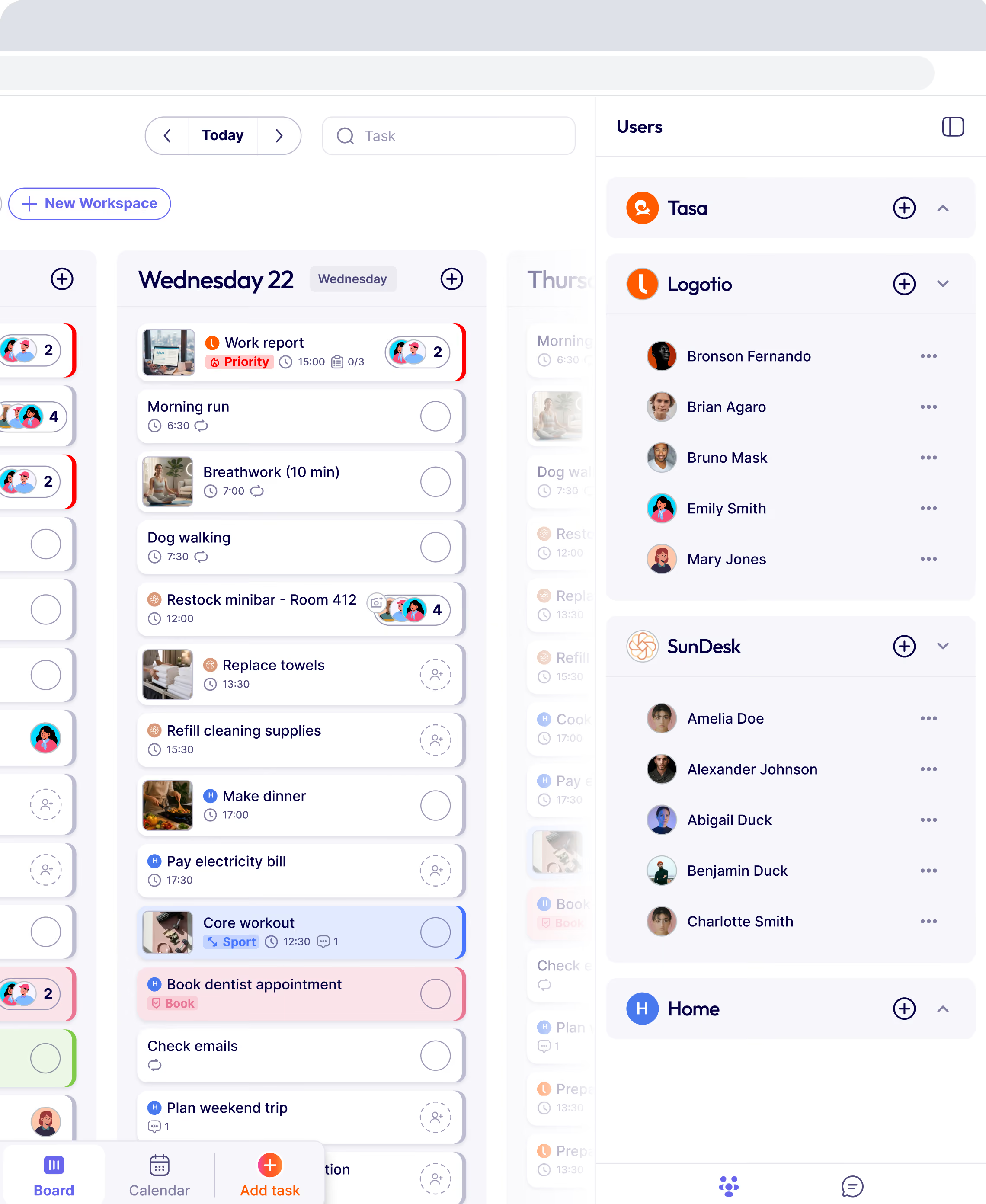
- Create a workspace for each property - staff see only relevant tasks
- Assign tasks to specific properties - tasks are property-specific
- Use property-specific instructions - each property might have different requirements
- Track property-specific metrics - know what's happening at each property
Airbnb team organization
A remote property management team might include:
- Lead cleaner - manages cleaning staff
- Property manager - coordinates operations
- Co-host - guest communication
- Handyman - handles repairs
- You - oversees everything
How to organize your team:
- Clearly define roles - everyone knows their responsibilities
- Create communication channels - use translation to facilitate
- Set expectations - clear performance standards
- Provide training - everyone knows how to use the tools
Scheduling systems
Scheduling is critical for managing either one or multiple properties.
What to schedule:
- Turnover times - when cleaning should happen
- Maintenance work - when repairs are scheduled
- Inspections - when quality checks happen
- Restocking - when supplies need to be replenished
Using Tasa for scheduling:
- Set tasks on a schedule - use repeat patterns for routine tasks
- Schedule maintenance - set periodic inspection and maintenance tasks
- Coordinate cleaning - cleaners assigned to specific times and days
- Track everything - see schedules and completions
Avoiding operational bottlenecks
Bottlenecks slow operations. Remote hosts need to identify and eliminate them.
Common bottlenecks in remote Airbnb management:
- Unclear instructions - staff don't know what to do
- No proof of work - you can't verify tasks
- Poor scheduling - tasks aren't assigned properly
- Language barriers - staff can't communicate fluently
How to avoid bottlenecks:
- Use a task management system - Tasa provides clarity
- Require photo proof - you can check if tasks were completed
- Set clear expectations - everyone knows what to do
- Monitor tasks - watch for delays
- Have backups - if someone is unavailable, someone else covers
Latest News
Have questions?
.svg)
Team management, simplified.

“It affects my personal life a lot. I can manage my team and my work remotely, so I have more time being a mother.”
