.svg)
Managing teams in developing countries vs. emerging markets

When people talk about developing countries vs. emerging markets, the conversation usually focuses on economics, GDP, or investment opportunities.
For entrepreneurs, expats, and managers, the difference translates directly into your daily reality: the tools you need, the challenges you face, and the strategies that will ensure your team succeeds.
In this guide you’ll learn how to adapt your approach and leverage modern tools to build productivity and accountability, whether you’re in a fast-paced emerging economy or navigating the complex realities of a developing nation.
What do the economic classifications mean for your daily operations?
While institutions like the World Bank and IMF use metrics like GDP per capita and the Human Development Index to classify economies, these numbers tell a story about your work environment.
- Developing countries often face significant infrastructure gaps, weaker institutional frameworks, and a larger informal employment sector.
For a manager, this might mean unreliable internet, complex local business customs, and teams with diverse literacy and tech-skill levels. - Emerging markets show stronger growth, more developed infrastructure, and greater integration into global trade.
Operationally, you’ll encounter faster business cycles, a more competitive talent pool, and higher expectations for process sophistication from both your team and clients.
Your management system must be as adaptable as you are. In a developing market, it needs to overcome structural gaps. In an emerging market, it must enable speed and scalability.
Understanding this context is first step in choosing the right methods to lead your team effectively.

Why this matters for team management
The way you manage teams must match the environment you operate in. A system that works for a fast-growing business in an emerging market may completely fail in a developing country where operational realities are different.
The biggest mistake managers make is assuming communication alone solves execution problems. It does not.
Managing teams in developing countries
In developing countries, managers often face operational challenges that go beyond productivity. The real challenge is maintaining consistency despite infrastructure and communication gaps.
Common challenges include unreliable internet access, multilingual teams, inconsistent training standards, paper-based workflows, staff turnover, limited operational visibility, and delayed reporting.
Many businesses also rely heavily on WhatsApp messages, calls, or verbal instructions.
Over time, this can creates confusion in which Instructions get buried, tasks are forgotten and managers constantly repeat themselves.
How to manage teams in developing countries
To manage team in developing countries, you need a system that ensure accountability. Successful teams often rely on systems that improve clarity and reduce dependency on constant supervision.
That usually means the use of visual instructions instead of long text, simple recurring checklists, clear proof of completed work
Managing teams in emerging markets
Emerging markets move faster. Businesses often expand quickly across multiple locations while trying to maintain operational quality.
The challenge is less about basic access and more about scale, speed, and consistency.
Common challenges often include:
- managing multiple locations
- inconsistent execution between branches
- staff coordination across shifts
- maintaining standards while scaling
- communication overload
In many emerging markets, businesses grow faster than their operational systems can handle.
This creates daily firefighting.
Managers spend too much time chasing updates, checking completed work, correcting avoidable mistakes when the right system is not in place.
Why communication apps alone are not enough
Many teams already use WhatsApp, email, spreadsheets or messaging platforms.
The problem is that communication tools are not execution systems.
A message saying “Please clean room 204 before 2 PM” that does not guarantee the task was understood or the work would be completed properly.
This becomes a major issue for hotels, cleaning companies and other frontline teams
Accountability becomes harder across markets
Whether operating in a developing country or an emerging market, one challenge stays consistent:
Managers need visibility without micromanaging.
That is difficult when operations rely only on verbal updates, phone calls, text messages and disconnected tools
Without accountability systems, managers often have to:
- physically inspect work
- repeatedly follow up with staff
- rely on trust instead of verification
- fix preventable quality issues
This wastes time and slows business growth.
Why visual task systems work better for both markets
It seamless to managing operational teams in developing and emerging markets with systems that keep them accountable, eliminate communication barriers and embrace all levels of literacy through visual, simple mobile-friendly that ensure easy to verification of work done without you being present in person.
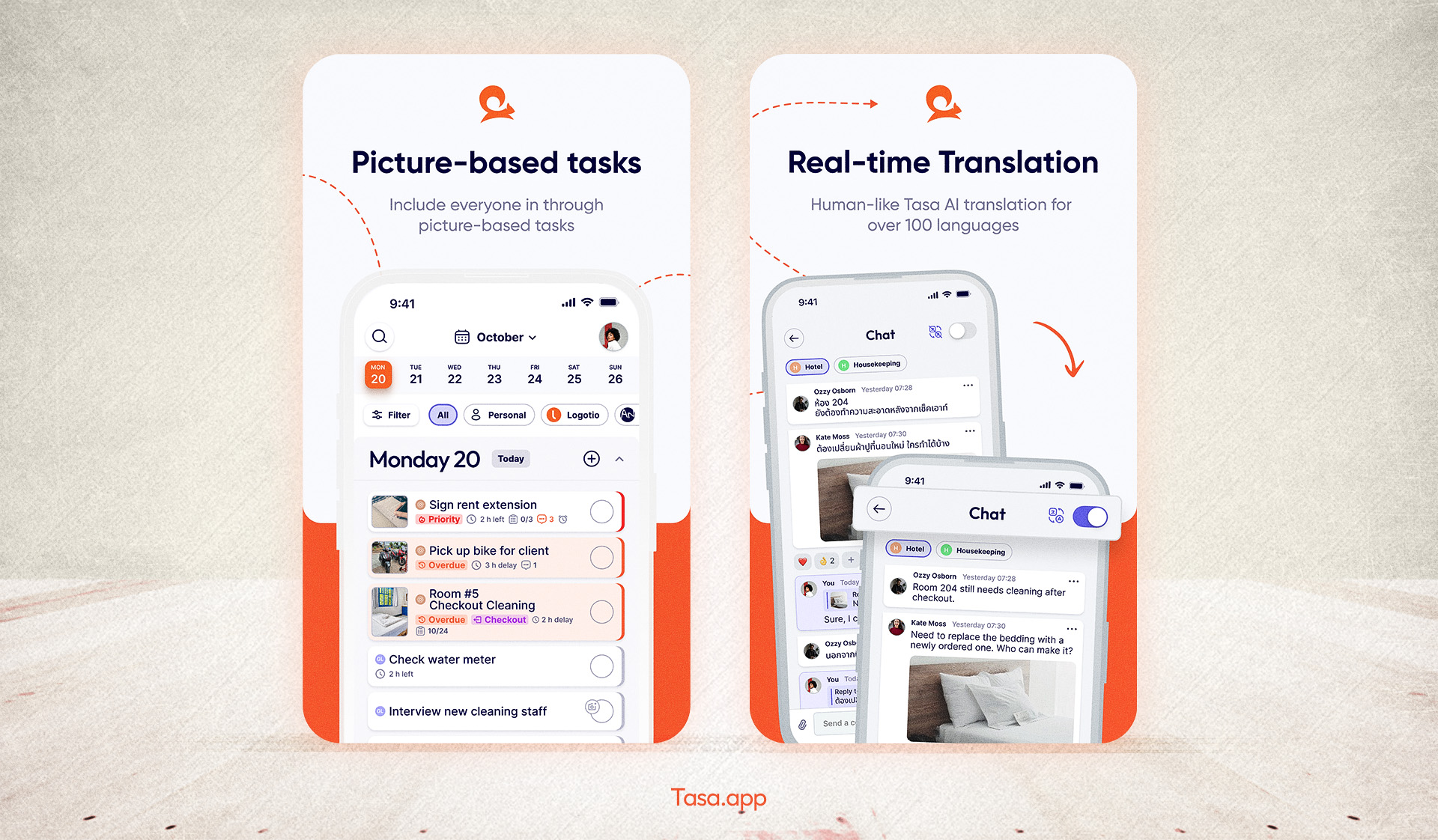
Visual workflows reduce misunderstandings, especially in multilingual environments.
Instead of relying on long written instructions, teams can see what needs to be done, how it should look and the expected standard.
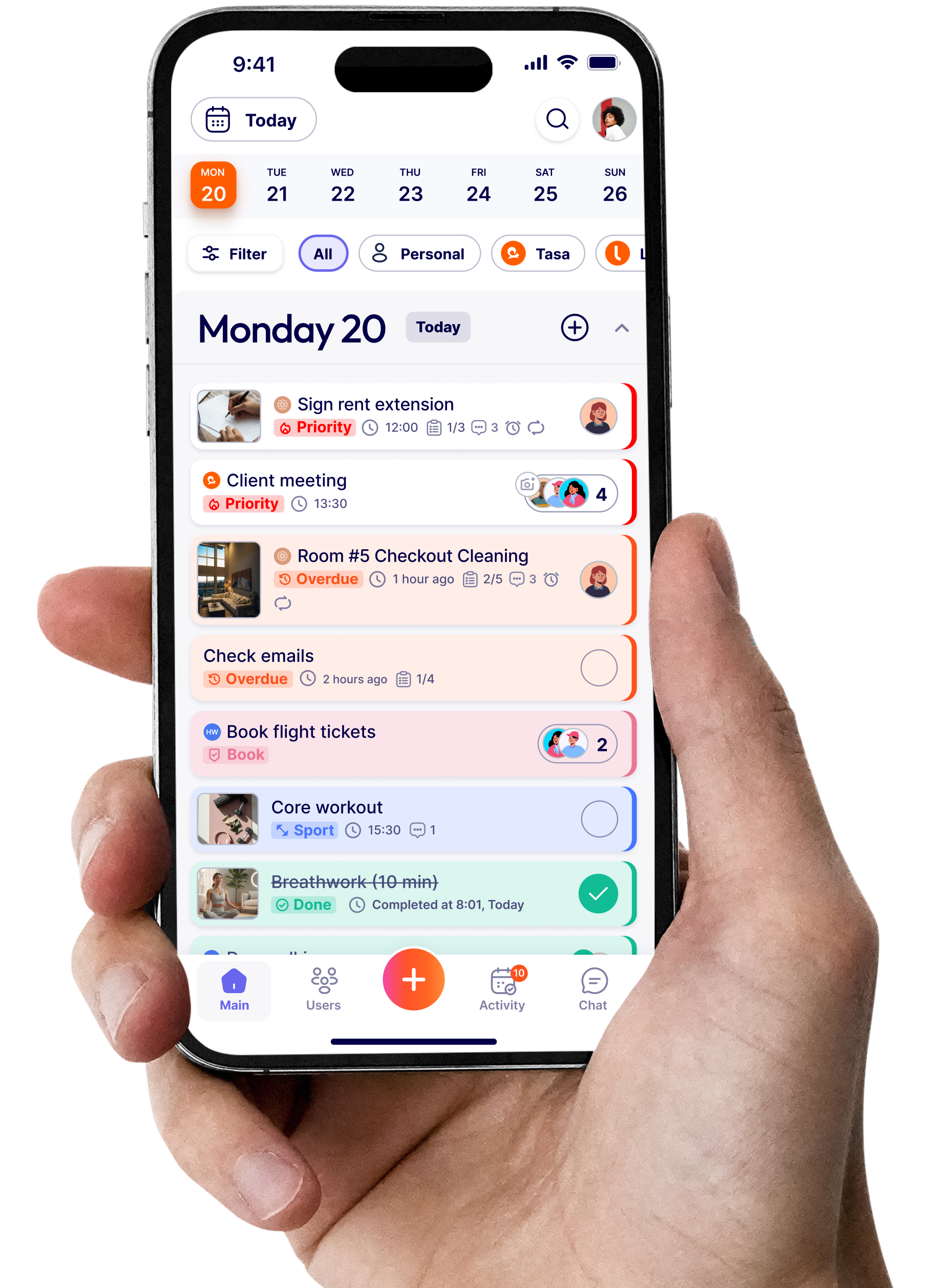
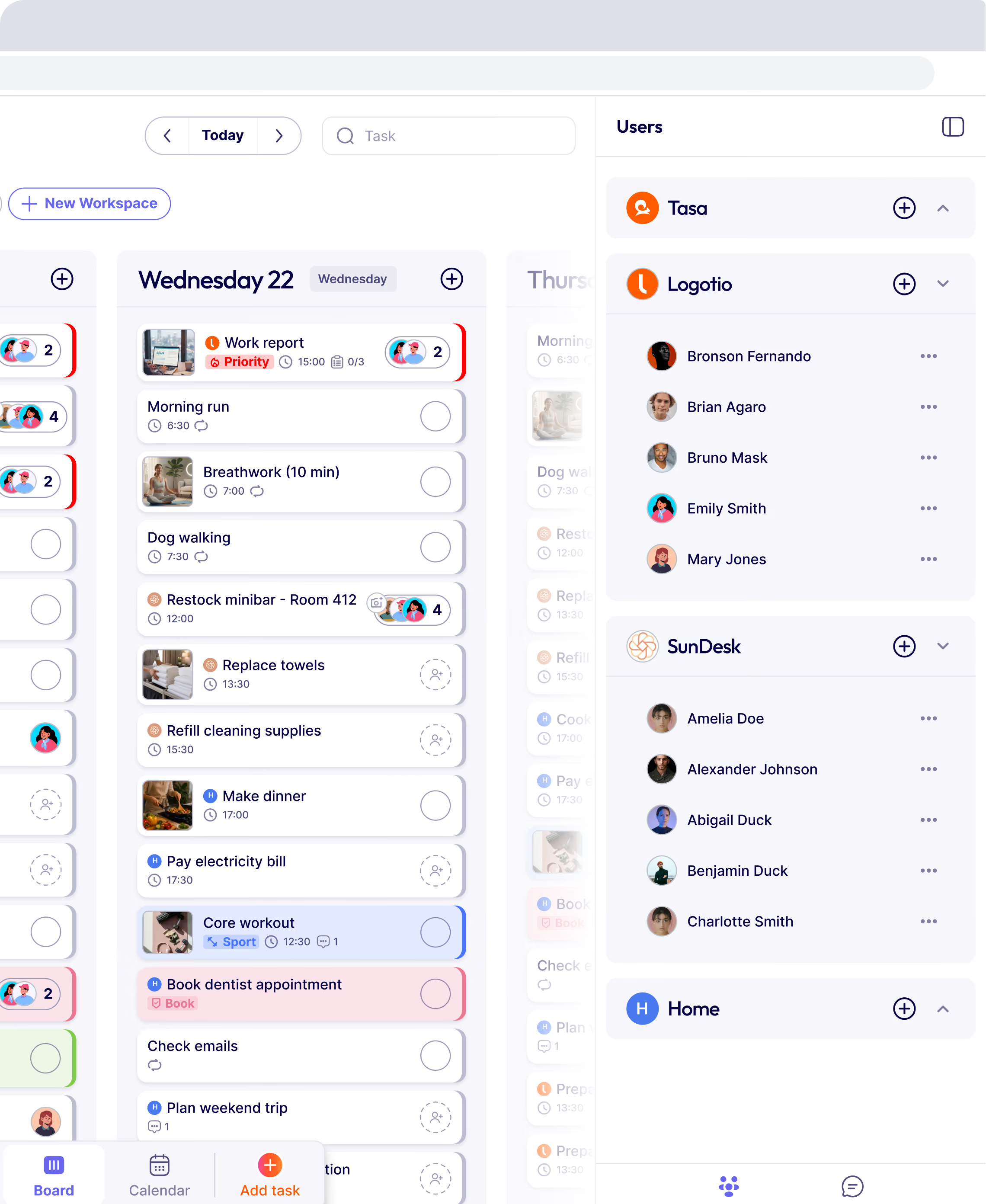
Tasa makes team management seamless for managers and task execution easy for frontline teams
Latest News



Have questions?
.svg)
Team management, simplified.


“It affects my personal life a lot. I can manage my team and my work remotely, so I have more time being a mother.”
