Moving to a new country presents both opportunities and complexities. You're managing career changes, cultural adjustments, and daily logistics—often simultaneously. With the right support, you can navigate these challenges systematically.
This guide explains what expat coaching offers, how to select a coach who fits your needs, and practical steps to make your time abroad productive. You'll also learn how digital tools can support your coaching journey and daily life.
Expats coaching key takeaways:
Expat coaching differs from general coaching by addressing the complete range of relocation challenges
Look for coaches with both credentials and personal expat experience
The coaching process works best when you participate actively between sessions
Digital tools help implement coaching insights and manage daily life across cultures
Real results include clearer career direction, smoother family adaptation, and stronger professional performance abroad
What is expat coaching and why is it essential
Expat coaching is a structured support process designed specifically for people living outside their home country. Unlike general life coaching, it addresses the complete set of changes that come with international relocation.
How does expat coaching differ from traditional coaching
Expatriate coaching is uniquely designed for global mobility and adaptation. Unlike traditional coaching, it addresses the full spectrum of life changes that come with an international move. Whether supporting expats before departure, during settling, or through career pivots, this coaching style is holistic and highly personalized.
Aspect
Traditional Coaching
Expat Coaching
Focus
Career, leadership, life
Global mobility, adaptation, identity
Target Audience
General population
Expats, partners, families
Key Challenges
Professional growth
Cultural transition, emotional resilience
Approach
Goal-oriented
Reflective, cross-cultural
For example, a traditional career coach might help you prepare for a job interview. An expat coach would also help you understand how interview expectations differ in your new country and how to present international experience effectively.
What unique challenges do expats face
Research indicates that approximately 70% of expats experience identity struggles during relocation. Partners face particular difficulties, with 45% reporting challenges re-entering the workforce after moving.
Typical situations where expat coaching helps include:
Work-related:
Navigating multicultural team dynamics
Understanding workplace communication norms
Managing remote teams across time zones
Handling career interruptions due to permit delays
Personal:
Building social connections in a new place
Helping children adjust to different school systems
Managing relationships with family back home
Creating daily routines in an unfamiliar environment
Cultural:
Understanding unwritten social rules
Adapting communication styles
Recognizing and working with cultural differences in professional settings
Why is coaching more relevant than ever for expats
Global mobility continues to increase, but support systems haven't always kept pace. Many companies provide logistical help with moves—shipping, housing, visas—but offer less assistance with the human side of relocation.
Studies show expats who work with coaches report approximately 33% higher satisfaction with their international experience. Coaching provides structured reflection and accountability during a period when daily life can feel unstructured and uncertain.
Expat coaching is more than advice—it is a path to resilience, adaptability, and thriving abroad.
How to choose the right expat coach
Selecting a coach is a practical decision that affects your experience. Here's what to consider.
Credentials and experience to look for
Professional certifications indicate a coach has completed training and adheres to ethical standards. Look for credentials from recognized bodies such as the International Coaching Federation (ICF) or equivalent organizations in your region.
Beyond certification, consider:
Personal relocation experience: Coaches who have lived abroad themselves understand the emotional and logistical realities you face. They've navigated housing searches, language barriers, and cultural confusion personally.
Cross-cultural expertise: Your coach should demonstrate understanding of your specific situation—whether you're moving from Asia to Europe, North America to the Middle East, or any other combination.
Language abilities: If you're more comfortable in your native language, a coach who speaks it removes a potential barrier to clear communication.
Industry knowledge: For work-related coaching, familiarity with your professional field in your destination country adds practical value.
Comparison table: credentials vs. experience in expat coaching
Credentials
Real-World Experience
ICF, ICA, EMCC, etc.
Lived as an expat
Ongoing professional dev
Has managed culture shock
Testimonials, reviews
Navigated global careers
Katharina von Knobloch, expat coach, notes:
“Expat coaching is about unlocking resilience and adaptability.”
Available coaching formats
Expat coaching adapts to your location and schedule. Common formats include:
1:1 virtual coaching via video or phone for personalized support.
Group or community-based coaching to connect with peers.
Self-coaching resources and workbooks for independent progress.
Hybrid models that blend in-person and digital sessions.
Approximately 80% of expat coaching now happens remotely, making it accessible regardless of your location or travel schedule.
How do you assess fit and value
Most coaches offer an initial discovery call. Use this time to evaluate:
Does the coach understand your specific situation?
Is their communication style clear and comfortable for you?
Do they ask questions that help you think differently?
Are their fees and package structures transparent?
A coaching relationship works best when you feel the coach listens well and challenges you appropriately. The discovery call gives you a sample of how sessions will feel.
What are the key steps to successful expat coaching outcomes
Getting value from coaching requires active participation. Here's what the process typically involves and how to make it work for you.
What the coaching process looks like
Expat coaching follows a structured but flexible pattern:
Assessment phase: Your coach helps you clarify what you want to achieve. This might include career goals, cultural adaptation targets, relationship objectives, or daily life improvements.
Action planning: Together, you break down goals into specific steps. What will you do differently this week? What will you try, learn, or practice?
Regular sessions: Scheduled meetings provide accountability and space to reflect on progress. Sessions might be weekly, bi-weekly, or monthly depending on your needs.
Ongoing adjustment: As your situation changes, your coaching focus shifts. What mattered in month one may be less relevant by month six.
How to maximize your coaching investment
Be specific about what you want. Before sessions, note what's working, what's not, and what you'd like to address. This helps your coach target their support effectively.
Complete agreed actions. Coaching works when you implement ideas between sessions. Treat action items as commitments.
Give feedback. Tell your coach what's helpful and what isn't. Good coaches adjust their approach based on your response.
Use tools consistently. Many coaches recommend journals, workbooks, or apps to track progress. Using these tools between sessions reinforces learning.
What are common obstacles and how can coaching help overcome them
Cultural adjustment: Your coach can help you understand the typical stages of cultural adaptation and develop strategies for each phase.
Career uncertainty: When work permits delay job searches or careers stall, coaching helps you identify productive ways to use the time and maintain professional confidence.
Family stress: Coaching provides space to think through family dynamics and develop communication strategies that work across cultural differences.
Identity questions: When you're no longer sure who you are professionally or personally in a new context, coaching offers structured reflection to clarify values and direction.
A coach helps you overcome limiting beliefs, especially around career options abroad. This is echoed in The Pattern That Breaks Expat Leaders And How To Stop It, which highlights the critical role of structured support in expat coaching. Building resilience through ongoing learning is key.
With the right expat coaching approach, you can turn setbacks into stepping stones and confidently shape your global journey.
Digital tools that support expat coaching and daily life
Technology makes expat coaching more accessible and helps you implement what you learn. Here's what to consider.
Why digital tools matter for expats
According to the Expat Insider 2025 survey, approximately 90% of expats use at least one digital productivity tool daily. These tools address practical realities of international life:
Working across time zones
Managing teams and families in multiple locations
Communicating across language barriers
Tracking progress on personal and professional goals
How task management apps support coaching goals
Task management tools help you implement coaching insights consistently. When you and your coach identify actions to take, having a system to track them increases follow-through.
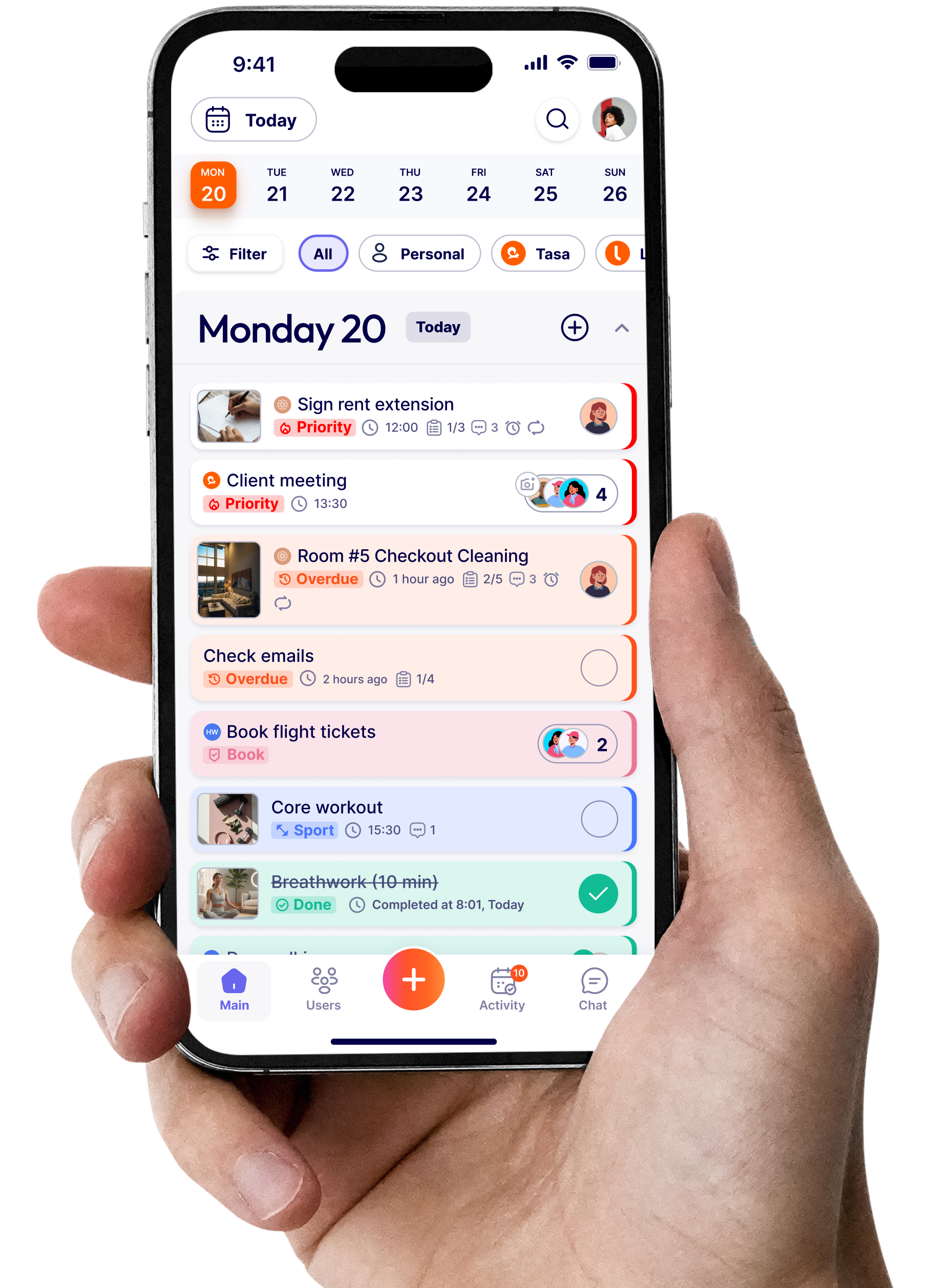
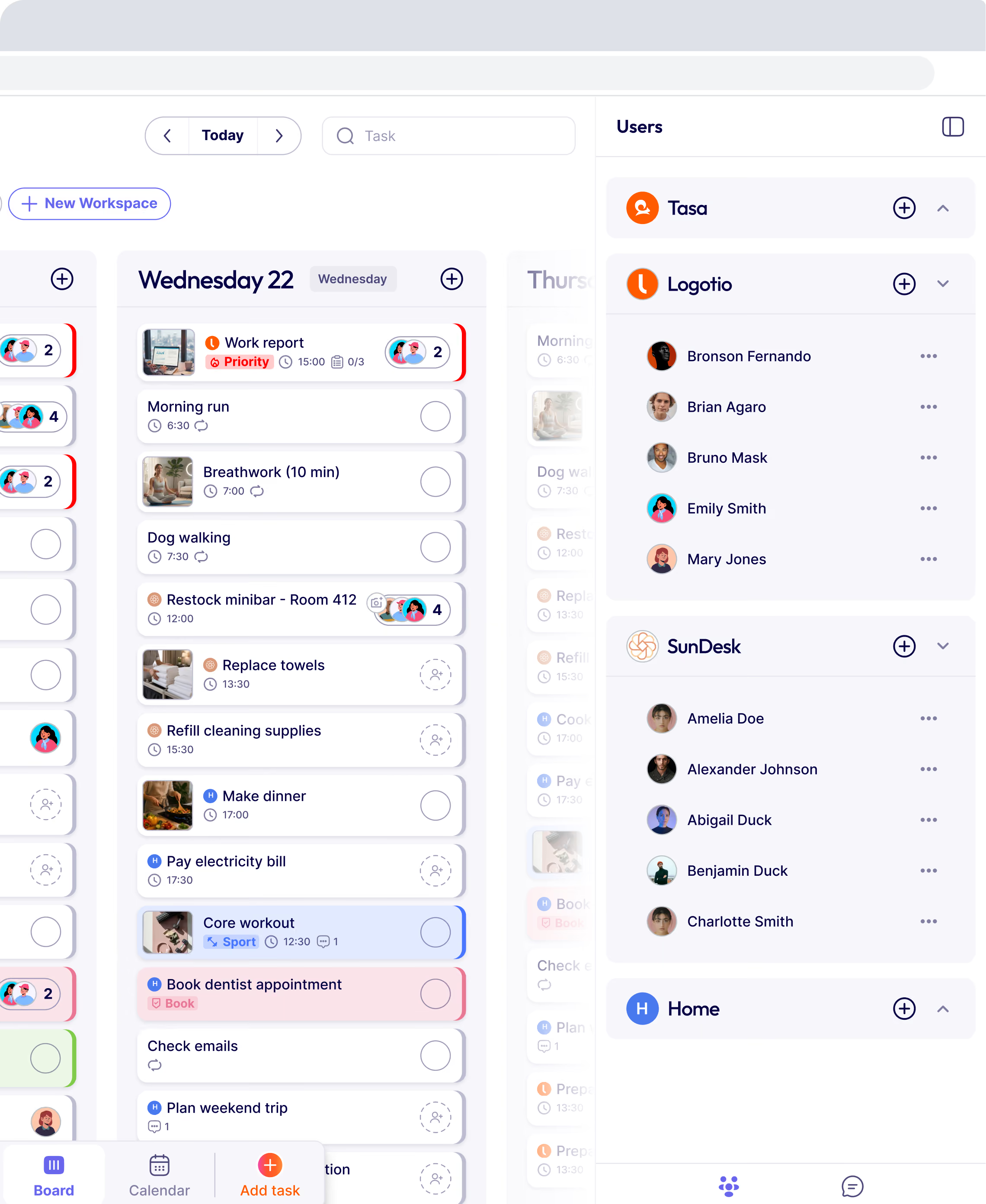
Tasa offers features particularly useful for expats and their coaches:
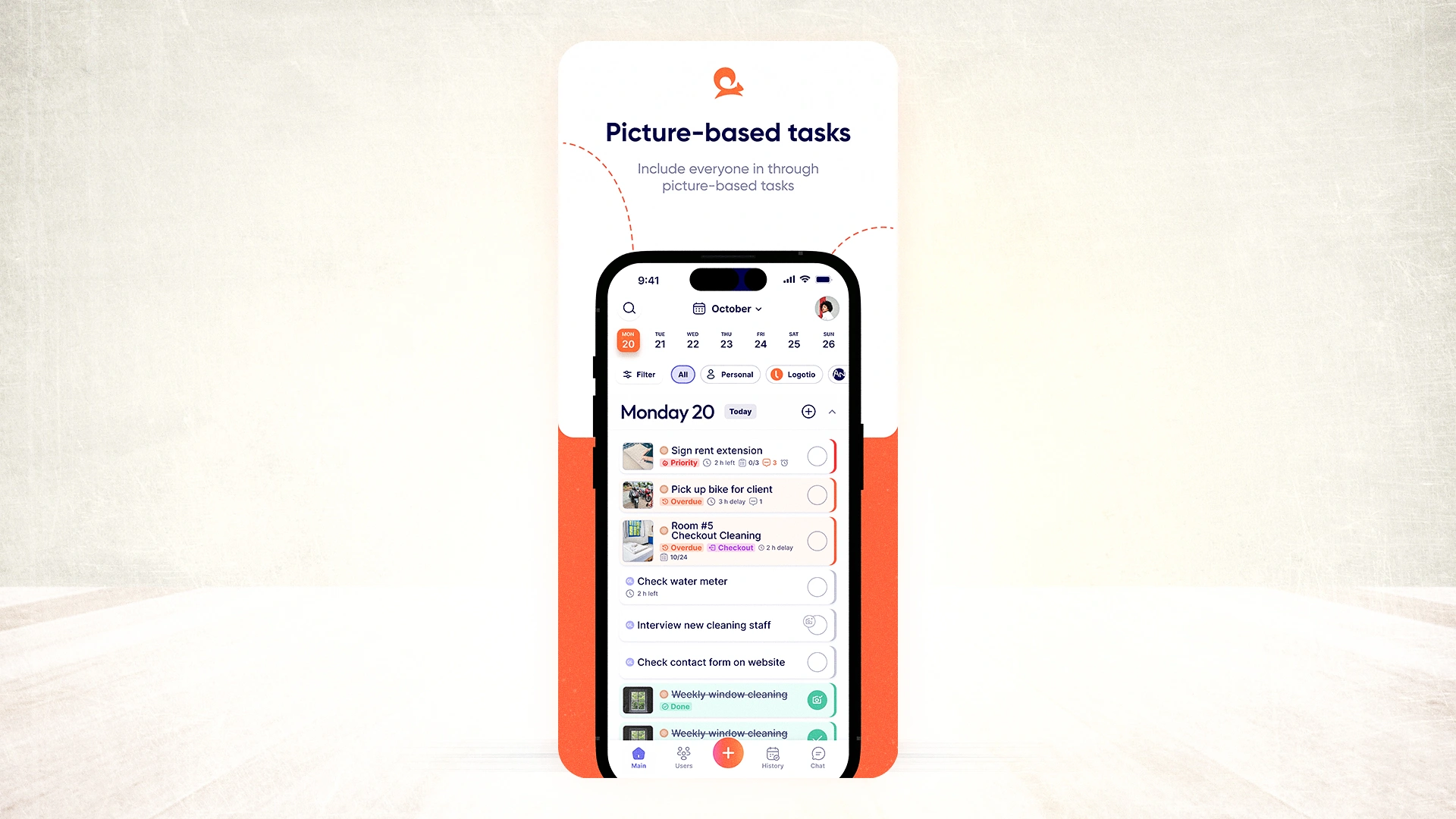
Picture-based tasks: Instructions use images, reducing language barriers for multilingual teams or family members
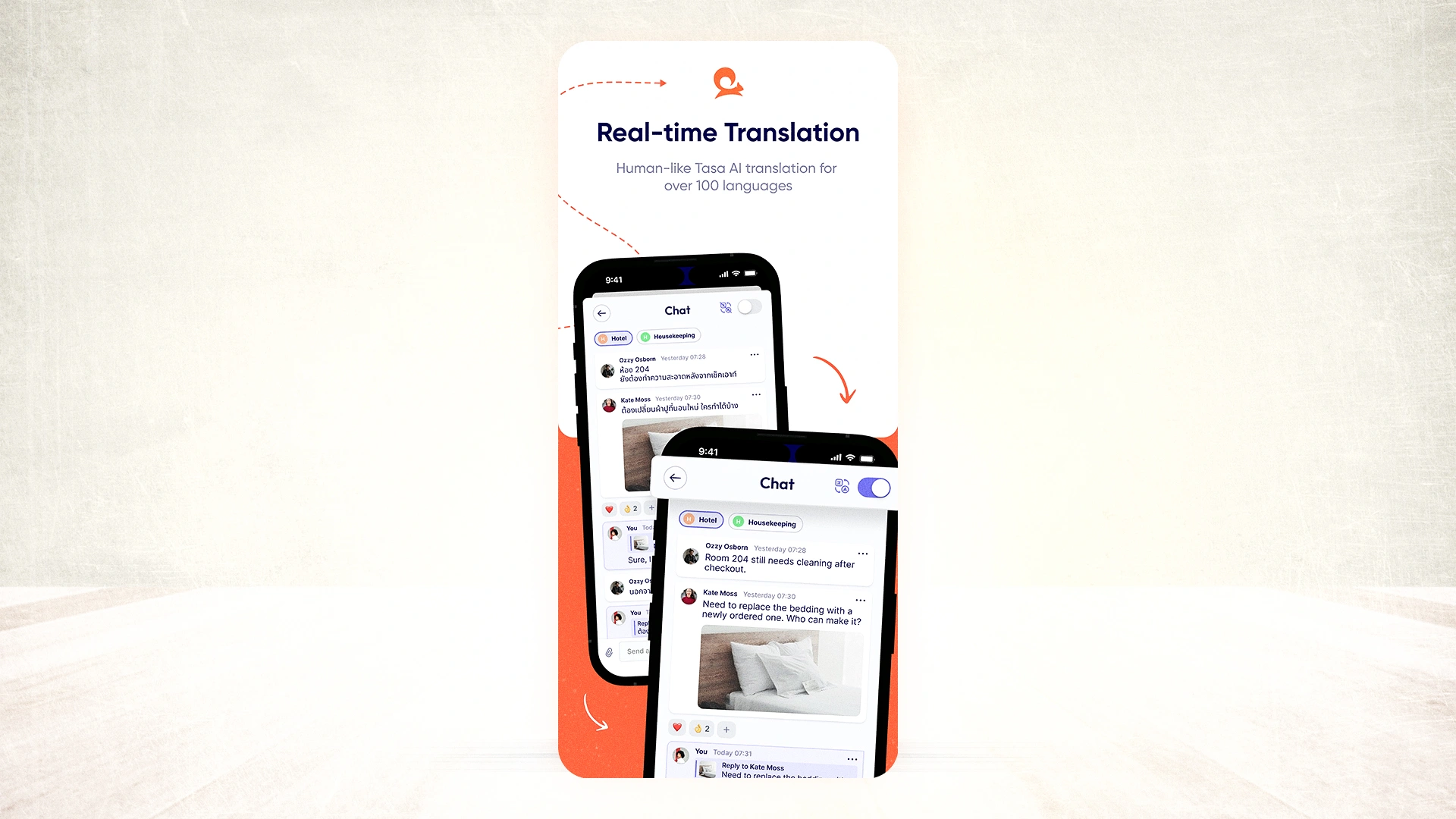
Real-time translation: Comments and chat translate across more than 100 languages
Visual confirmation: Staff or family members can send photos showing completed tasks
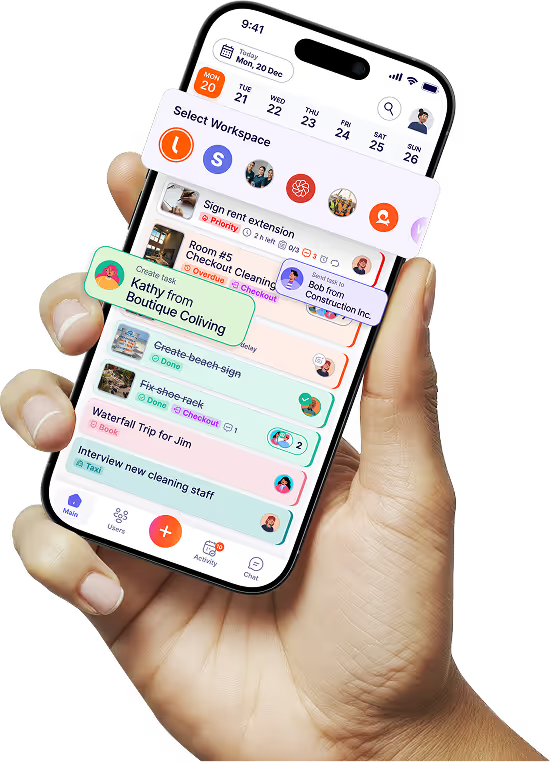
Separate workspaces: Keep different areas of life organized—work team, household, personal goals
For coaches working with expat clients, these features allow:
Assigning practice activities between sessions
Tracking client progress visually
Communicating clearly despite language differences
Building accountability through shared visibility
Managers using Tasa report approximately 60% reduction in manual communication time—time that can redirect to higher-value coaching and development work.
Mastering digital tools not only simplifies daily life but also transforms expat coaching into a more personalized, impactful experience for expats, coaches, and consultants.
What expat coaching success looks like: real examples
Understanding how coaching works in practice helps you envision what's possible.
Career transitions
One client, a marketing professional who relocated with her partner, found herself unable to work immediately due to permit processing. Through coaching, she:
Identified freelance projects that didn't require full work authorization
Built local professional connections while waiting
Developed a clear timeline for returning to full-time work
Maintained professional confidence during the gap
Family adaptation
A family with school-age children used coaching to navigate their move to a new education system. Coaching helped them:
Understand differences in teaching approaches
Develop consistent routines that worked across parents' work schedules
Communicate effectively with teachers despite language differences
Support children through the adjustment period
Leadership development
An expat manager leading a multicultural team used coaching to:
Recognize how his communication style translated (or didn't) across cultures
Adapt his approach to motivate team members from different backgrounds
Build stronger relationships with local stakeholders
Navigate corporate expectations in a new market
Making expat coaching work for you
Expat coaching provides structured support for the complex transition of living abroad. By choosing a qualified coach, participating actively in the process, and using digital tools to implement what you learn, you can navigate international life more effectively.
Your expat journey is unique. Coaching helps you shape it intentionally rather than simply reacting to circumstances.
Next steps: If you're currently managing a team or household across cultures, tools like Tasa can reduce communication friction and free up time for higher-value coaching and development work.
Tasa solves the repeated back and forth with understanding work in teams who don't share the same language or can't even read or write.
Instead of explaining it several times over and over again, we use pictures, colors and a simplified user interface to make it easy for everyone to understand and follow work.
This way we drastically reduce the time spent of managers and owners, while empowering the staff to collaborate more, which leads to higher satisfaction.
If you are missing a language you need, drop us a quick message and we’ll add it for free!
My biggest stress is my remote team, not my personal mindset. Can a coach really help with that?
Yes, but you need a coach who focuses on operational systems, not just psychology.
The right coach will help you build frameworks for delegation and communication.
What if my coach (or the coach) isn't tech-savvy? Can this still work?
Absolutely. The goal isn't to use every app, but to strategically adopt one or two that solve the biggest communication or accountability gap. The most effective tools for this space are designed for simplicity.
The focus should be on the outcome (clear communication, verified tasks), not the technology itself. A good starting point is implementing a single, shared visual checklist system.
Team management, simplified.
Start your free team plan
Sync your local and international team with visual tasks and built-in AI translation.