Essential guide to manage rental property successfully (2026)

April 7, 2026
Min Read

Content table

Managing rental property from another country is entirely possible with the right systems and tools. Whether you're an expat landlord, a frequent traveler, or an investor building a portfolio in a different market, the challenges are real, also are the solutions.

This guide covers the practical steps you need to find and screen reliable tenants, handle maintenance and emergencies, manage finances remotely, and build a local team you can trust. We'll also explore the specific digital tools that make remote property management not just feasible, but efficient and stress-free.

Key Takeaways

  • Remote management is absolutely possible when you replace guesswork with systematic processes for tenant screening, maintenance, and finances.
  • Your greatest challenge will be communication specifically, giving clear instructions to local teams and confirming work is done correctly, especially across language barriers.
  • Picture-based task apps (Tasa) solve this by letting you assign work with photos, receive photo proof of completion, and translate comments automatically across 100+ languages.
  • A reliable local network of pre-vetted contractors and inspectors is just as important as your digital tools.
  • Automating rent collection and financial tracking reduces late payments, eliminates accounting errors, and makes tax season painless.

How to find and screen reliable tenants from abroad

Tenant screening is your first and most important line of defense. When you cannot meet applicants in person, a systematic, verifiable process is essential to protect your investment.

Building a remote tenant selection process

1. List on established platforms.
Start where renters are already looking. Use major listing sites like Zillow, Zumper, Realtor.com, or their local equivalents. These platforms generate traffic and often provide built-in tools for managing applications.

2. Use digital pre-screening.
Create a standardized online form to quickly qualify applicants. Ask consistent questions about:

  • Monthly income and employment
  • Desired move-in date
  • Number of occupants
  • Reason for moving
  • Pet ownership

This filter helps you focus only on serious, qualified candidates.

3. Conduct thorough virtual tours.
Schedule video calls using Zoom or WhatsApp to walk applicants through the property. Be deliberate: show each room, open closets, demonstrate appliances. Answer questions in real time. For applicants in different time zones, consider recording a high-quality video tour you can send.

4. Require complete digital applications.
Use a service that collects applications online with e-signatures. Many property management platforms include this feature.

Establishing clear screening criteria

Applying the same objective standards to every applicant is not only fair—it's a legal necessity to comply with fair housing laws. Document your criteria and share them with applicants so the process is transparent.

Standard screening should include:

  • Credit check: Services like TransUnion SmartMove allow applicants to pay for their own credit report. Look for a history of on-time payments. A common benchmark is a credit score of 600 or above.
  • Background check: This should reveal any prior evictions or criminal history that would pose a risk to your property or other tenants.
  • Income verification: Request recent pay stubs or bank statements to confirm stable income. The standard benchmark is gross monthly income of at least three times the rent.
  • Rental history: Contact previous landlords. Ask specific questions: Did they pay on time? Did they take care of the property? Would you rent to them again?

Red flags to watch for

  • Reluctance to provide documentation
  • Inconsistent information about employment or previous addresses
  • Pressure to waive steps in your process
  • Unwillingness to participate in a video tour
"Effective screening is your first line of defense against costly vacancies." — Ben Luxon, Landlord Studio

Data consistently shows that remote landlords who use structured, digital screening processes experience fewer late payments and lower turnover rates.

Digital tools that streamline remote property management

The right technology stack is the foundation of successful remote management. Modern tools allow you to handle nearly every aspect of property operations from your phone, no matter where you are.

Comprehensive property management software

These platforms serve as the central hub for your rental business. They integrate leasing, accounting, maintenance, and communication.

Leading platforms include:

  • Buildium: Comprehensive solution for portfolio management. Good for landlords with multiple properties or plans to scale.
  • Landlord Studio: Focuses on the essentials for individual landlords: income and expense tracking, rent collection, and tenant screening.
  • AppFolio: Full-featured platform that scales from small portfolios to large property management firms.

Key features to prioritize for remote management:

  • Online rent collection with automated reminders
  • Maintenance request portal with photo upload capability
  • Financial reporting and expense tracking
  • Secure document storage for leases and receipts
  • Mobile app access for management on the go
According to industry data, landlords who adopt digital management tools report approximately 60% fewer accounting errors and significantly higher operational efficiency.

Solving the communication gap with picture-based task management

Even with excellent property management software, one persistent challenge remains for expat landlords: clear communication with multilingual teams.

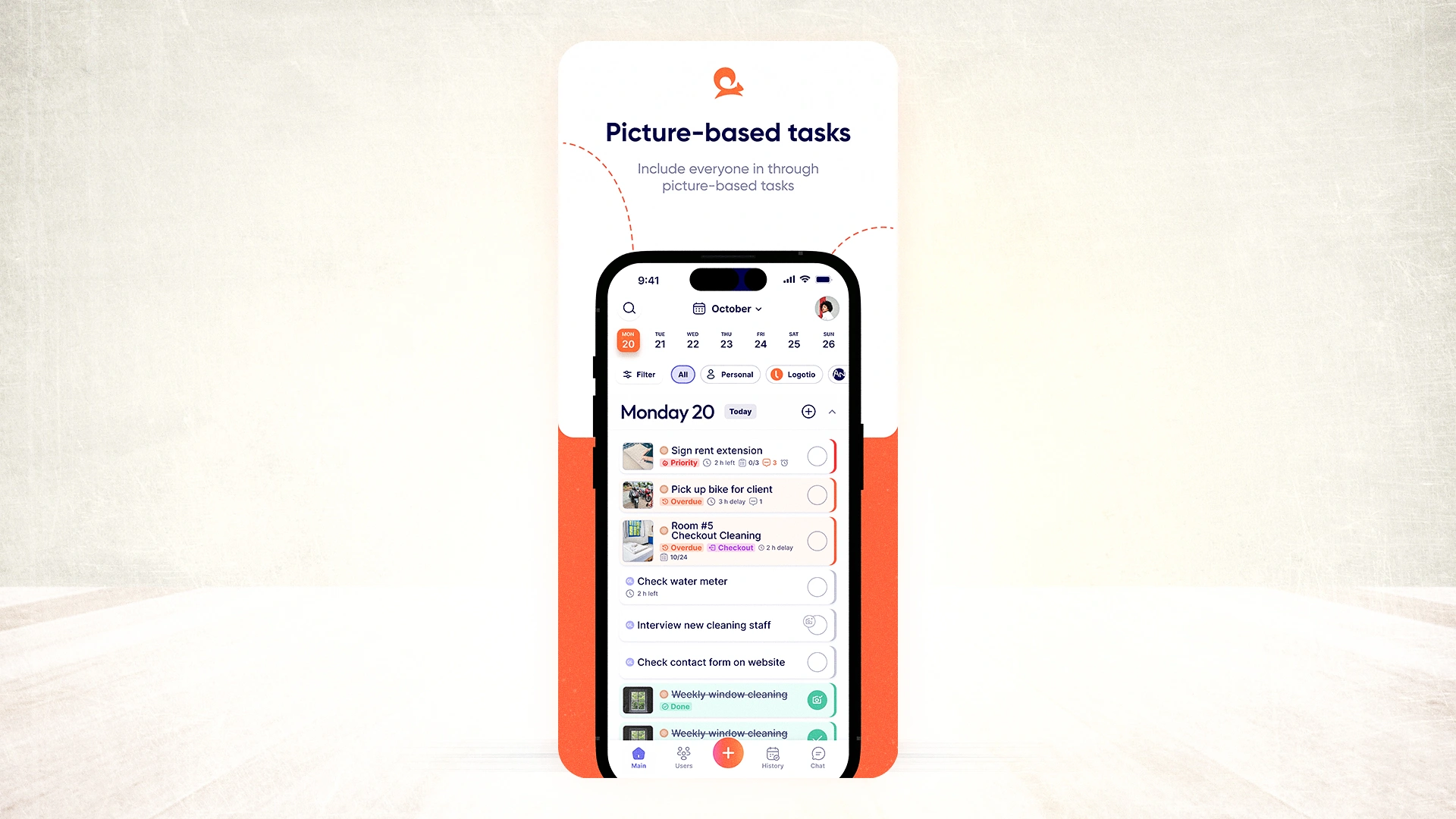
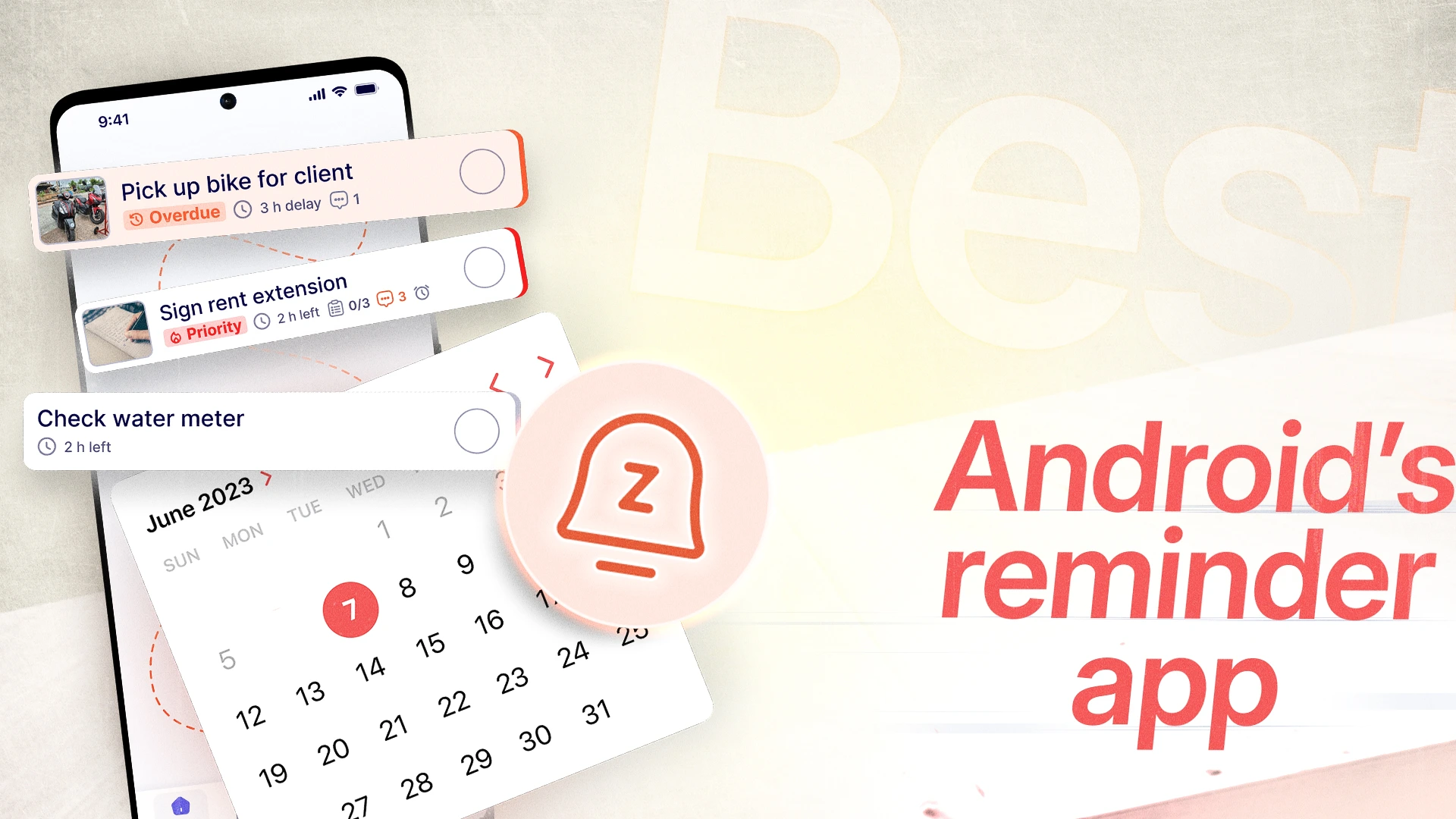
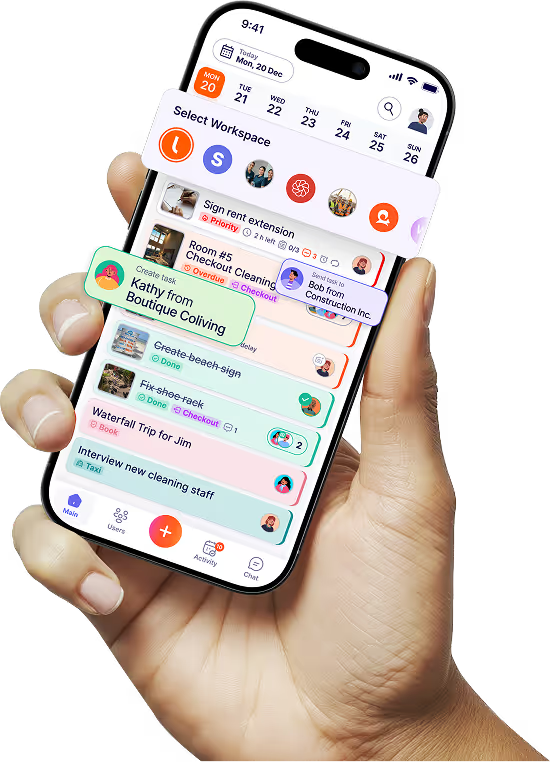
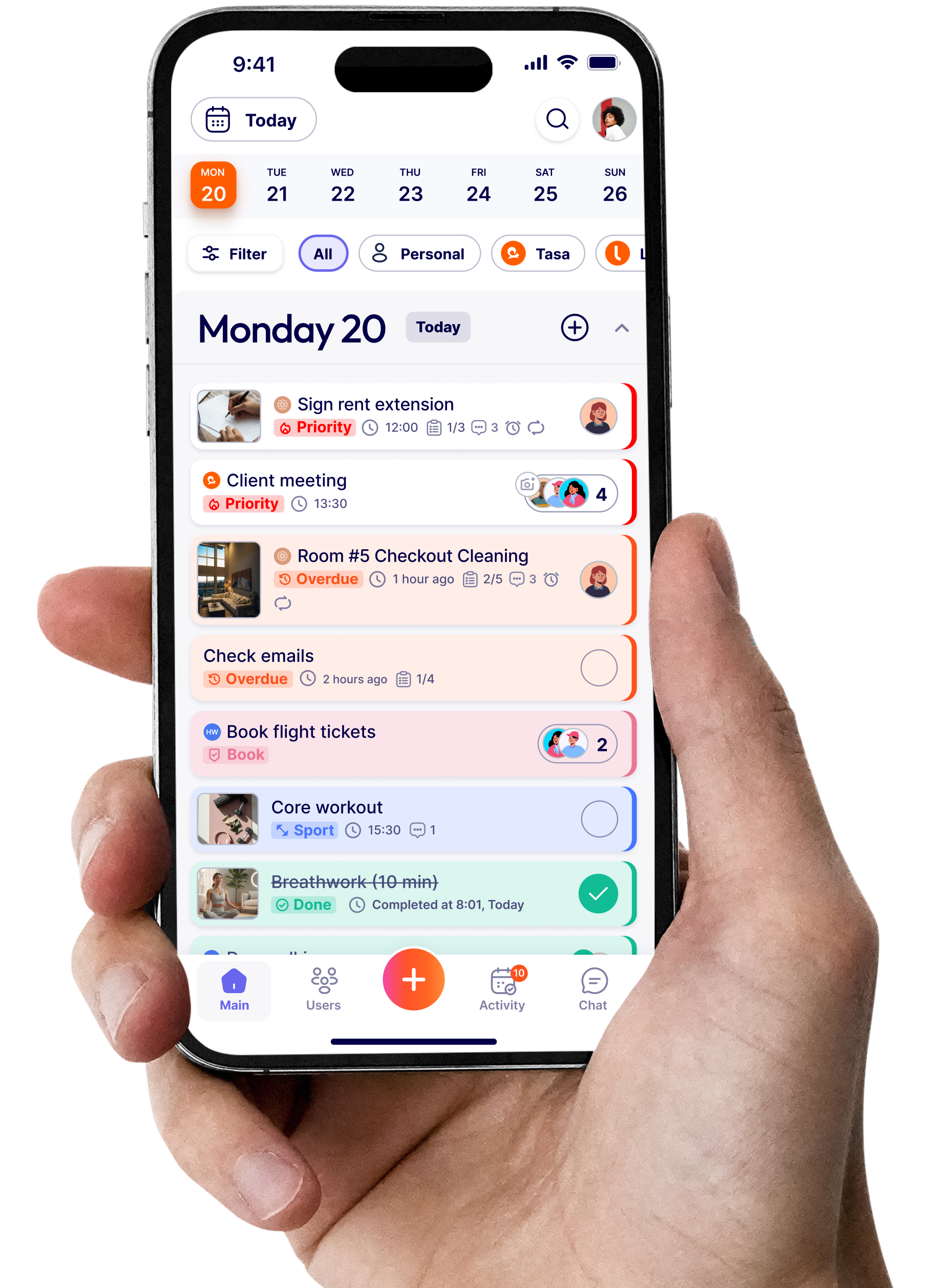
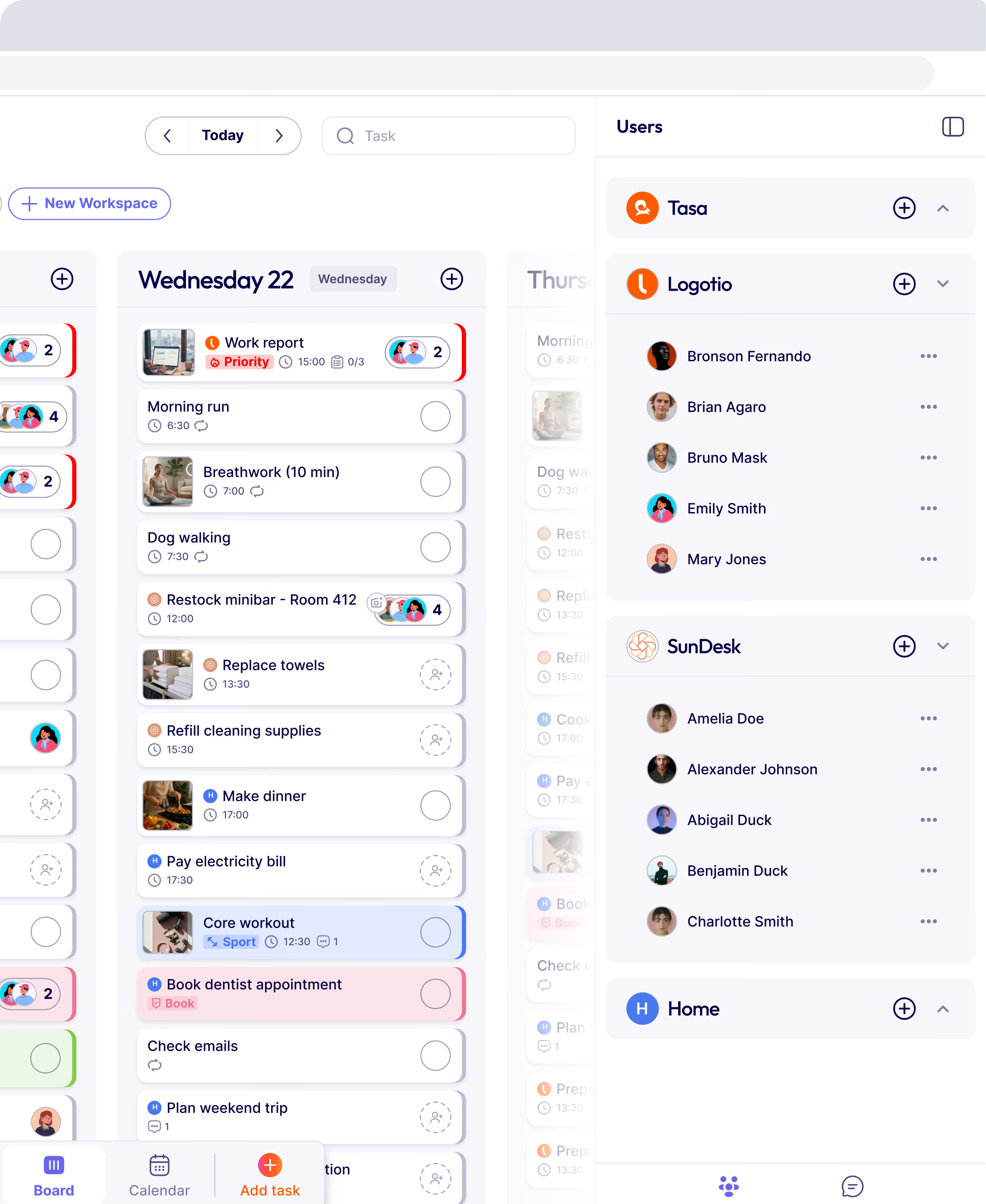
visual interface of picture-based app - Tasa

Telling a plumber the exact leaking pipe, instructing a cleaner on the specific areas that needs attention, or explaining a repair to a handyman is difficult over text. This challenge is magnified when language barriers exist between you and your local contractors. Tasa helps you manage all forms of communication in one app.

Tasa is a picture-based task app designed specifically for multilingual teams and expats operating local businesses. Instead of relying on words that can be misunderstood, you use images to give clear instructions.

How Tasa works for remote landlords:

  • Assign tasks with pictures: Take a photo of the issue (a cracked tile, a leaking faucet, a specific shelf that needs dusting. Circle or highlight the exact area and assign the task. Your team sees what to be done, no language barriers or guesswork.
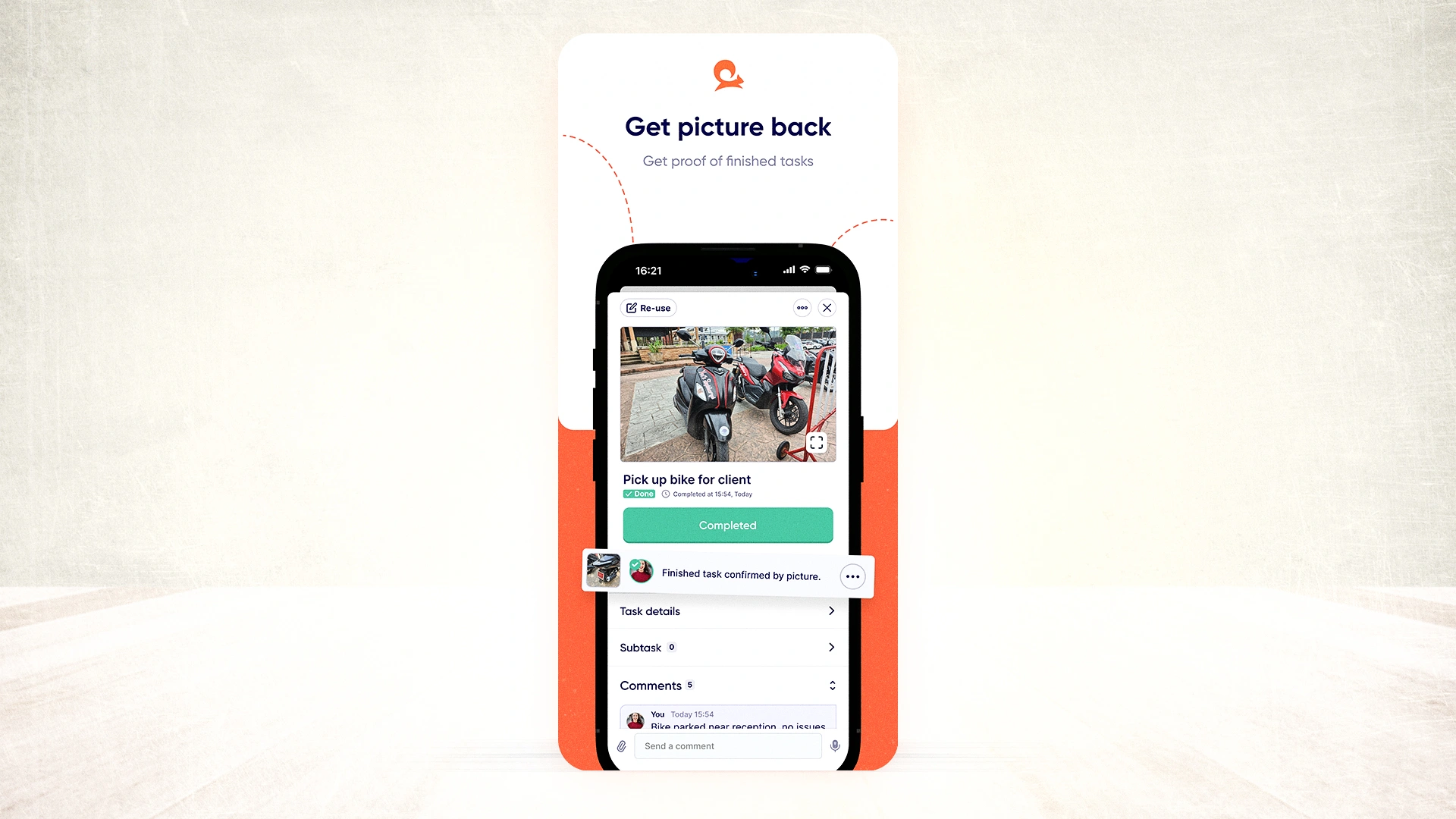
  • Receive photo confirmation: Staff send a picture back when each task is done. You get instant visual proof without needing to inspect in person. Don't rely on words: get visual proof.
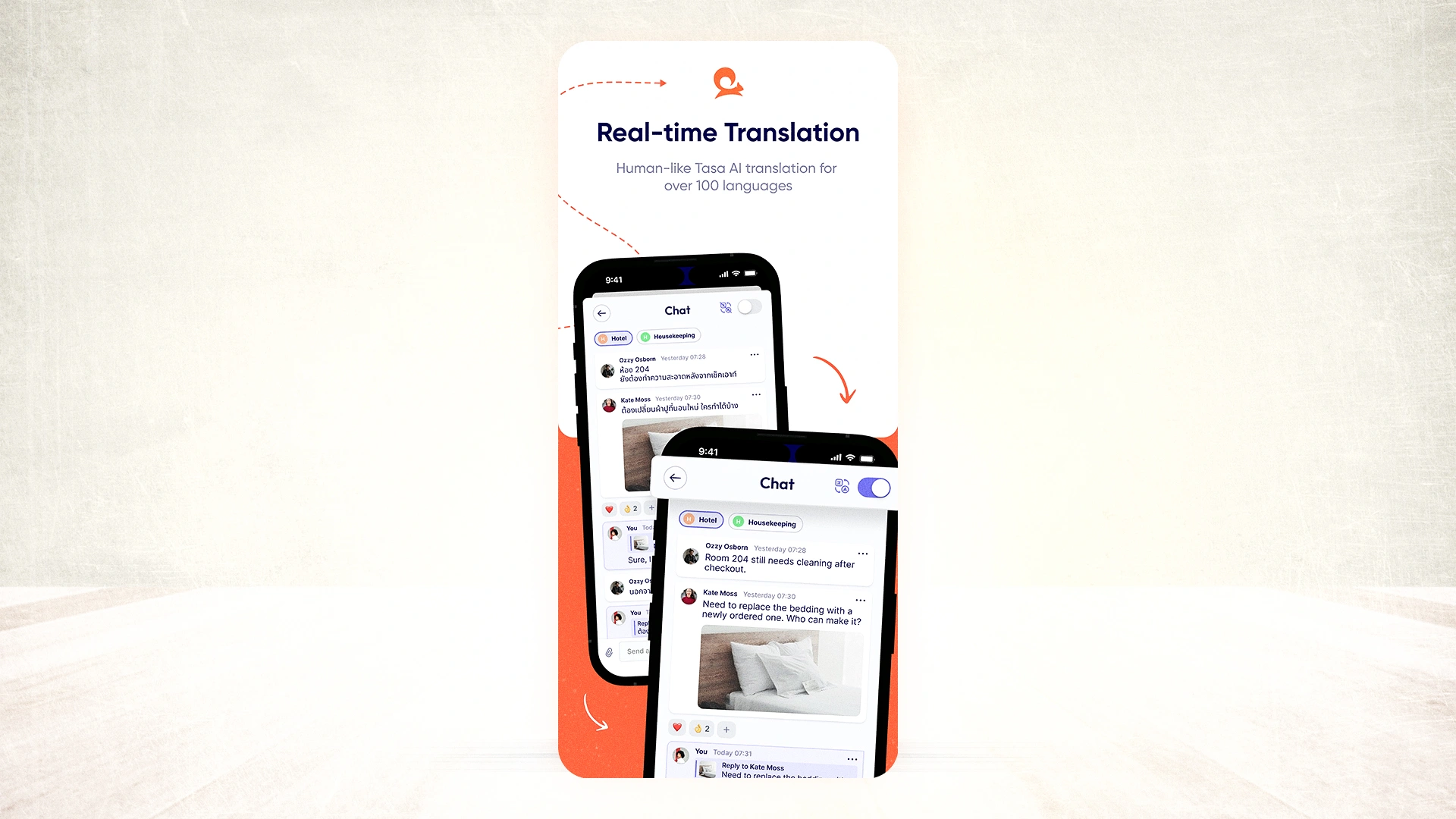
  • Communicate across languages with AI translation: Comments and chat are translated in real time for over 100 languages. A contractor can ask a question in Spanish; it appears to you in English. Your reply is translated back instantly.
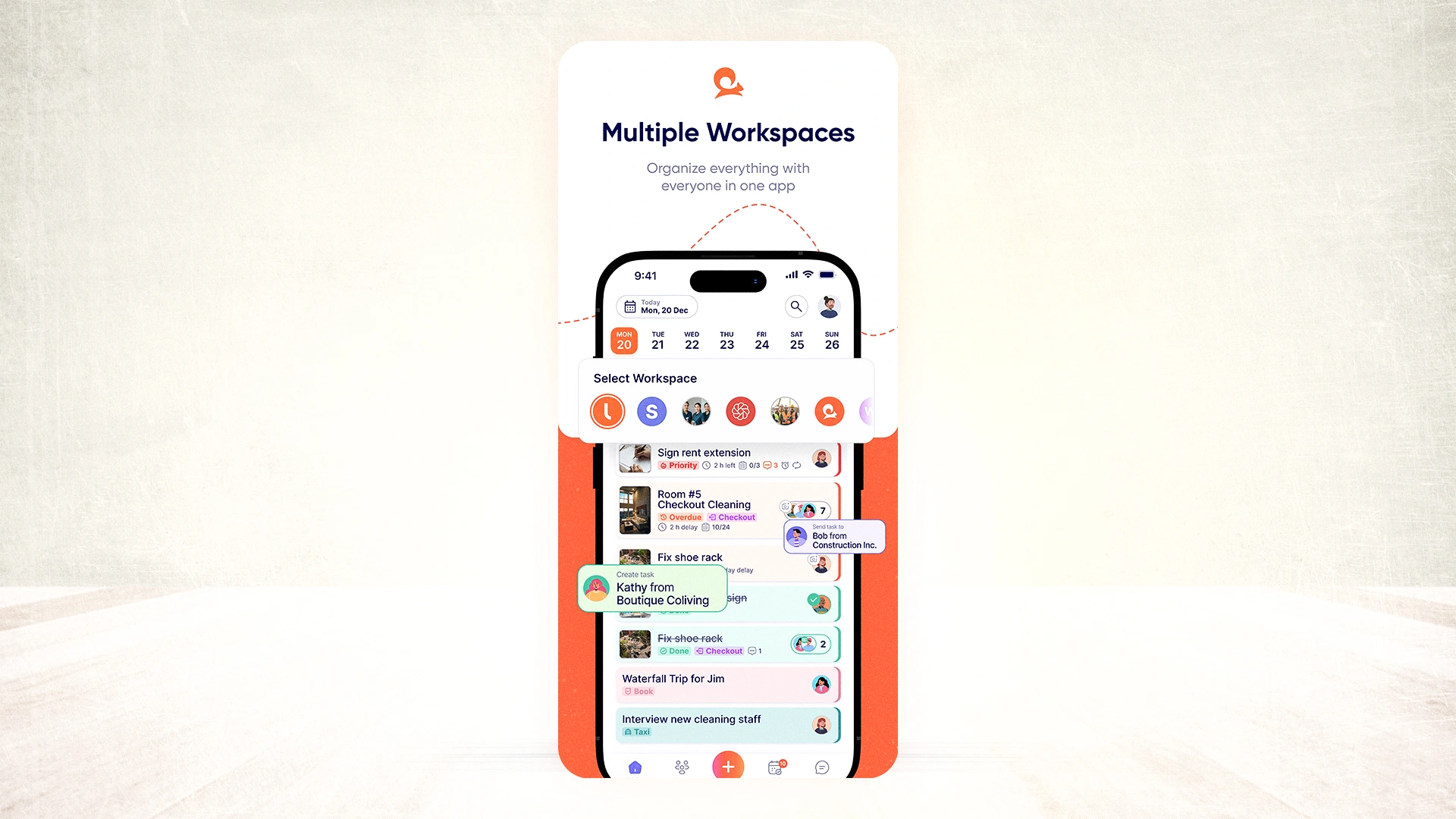
  • Keep teams organized with separate workspaces: Create different spaces for each property or each type of worker (cleaners, repairmen, landscapers). Each team works from their own tailored checklists.
  • Onboard new staff in minutes: With picture-based instructions, new cleaners or handymen can get started right away. No manuals, no hand-holding. Just tap, follow, clean.

Real-time example with Tasa: Magdalena Herrmann, founder of SunDesk, shares:

"Instead of asking someone on my staff to translate and going back and forth, I'm now sending pictures of work to my foreign-language speaking staff directly. This allows me to work remotely and spend more time with my family."

Research indicates that picture-based task management can reduce miscommunication by up to 60% in property operations. For landlords managing multilingual teams, this approach is not just helpful—it's transformative.

Handling maintenance and emergencies remotely

Maintenance is the most urgent and potentially stressful challenge for remote landlords. Without a proactive system, small issues quickly become expensive emergencies.

Building a reliable local vendor network

Your most important asset is a team of trusted local professionals. You need to identify and vet these vendors before an emergency occurs.

Essential contacts to establish:

  • Licensed plumber
  • Licensed electrician
  • HVAC technician
  • General handyman
  • Cleaning crew
  • Landscaper

How to find and vet vendors:

  • Ask other local landlords for referrals. Join local landlord associations or online forums.
  • Interview candidates about their experience with rentals, response times, and pricing.
  • Check licenses and insurance.
  • Start with a small job to evaluate quality before trusting them with larger issues.

Keep all vendor contact information accessible, ideally stored within your property management software or in a dedicated Tasa workspace.

Implementing a maintenance request system

A structured system for receiving and tracking requests ensures nothing falls through the cracks.

Your system should allow tenants to:

  • Submit requests through a dedicated portal or app
  • Upload photos of the issue
  • Indicate urgency
  • Track repair status
  • Confirm completed work

This creates a clear paper trail and gives tenants confidence their concerns are being addressed.

Preventive maintenance: The key to fewer emergencies

A proactive maintenance schedule is your best defense against costly emergency repairs. Use your digital calendar or Tasa's advanced repeat patterns to set recurring reminders:

  • Quarterly: Change HVAC filters
  • Bi-annually: Schedule pest control
  • Annually: Clean gutters, service HVAC, check smoke detectors, inspect roof
  • Seasonally: Arrange landscaping or snow removal

Industry data shows landlords who implement digital maintenance workflows experience up to 30% fewer emergency repair calls.

Creating clear emergency protocols

Emergencies will happen. Have a clear, documented plan.

Your emergency protocol should include:

  1. A clear definition of an emergency vs. a routine request.
  2. Emergency contact numbers for tenants to call your pre-vetted plumber, electrician, or HVAC tech directly.
  3. Vendor authorization to handle urgent issues up to a pre-determined dollar amount without prior approval.
  4. Photo documentation required from both tenants and vendors.
  5. Follow-up to confirm the issue is fully resolved.

Remote rent collection and financial management

Consistent cash flow is the lifeblood of your business. Automating your financial systems is essential for reducing stress and staying organized.

Ensuring reliable, on-time rent collection

Digital rent collection is faster, more reliable, and creates a clear electronic record of every transaction.

Best practices for remote rent collection:

  • Mandate online payment through your property management platform.
  • Automate reminders a few days before rent is due.
  • Enforce late fees consistently as stated in your lease.
  • Offer multiple payment methods while preferring ACH for lower fees.

Properties using automated rent collection systems report up to 40% fewer late payments.

As Ben Luxon notes, "Digital rent collection is your safety net for consistent cash flow."

Bookkeeping, tax preparation, and financial reporting

Strong financial habits throughout the year make tax season simple.

Essential financial practices:

  • Maintain separate bank accounts for each rental property.
  • Use digital expense tracking and upload receipts immediately.
  • Generate monthly profit and loss statements to spot trends.
  • Work with an accountant who understands out-of-country ownership.

Store all financial records securely in the cloud for access from anywhere.

Building your local support network and staying ahead

Successfully managing rental property from abroad requires more than software. It demands local relationships and staying current with technology.

Creating your local team

Digital tools are powerful, but they cannot replace trusted human eyes on the ground.

Essential local partners:

  • A reliable property manager or leasing agent for showings and inspections
  • Vetted, responsive contractors
  • An independent property inspector for unbiased reports
  • Local legal and accounting professionals

Invest time in building these relationships before you urgently need them.

Emerging technologies to watch

The tools available to remote landlords are evolving rapidly:

  • AI-powered tenant screening predicts reliability and risk
  • Predictive maintenance uses data to forecast system failures
  • Smart home technology enables remote monitoring of security, leaks, and energy use
  • Picture-based task management (like Tasa) eliminates communication gaps

As Liz Holubec of Emerson Property Management says,

"Technology is transforming the way landlords operate, making remote management not just possible, but preferable."

Manage rental property from stress to simplicity

Managing rental property from another country presents unique challenges, but none are insurmountable. By implementing rigorous tenant screening, a robust digital tool stack, proactive maintenance, automated financial systems, and a trusted local network, you can protect your investment and achieve peace of mind.

The journey from stressed remote landlord to confident property manager starts with the right foundation. It begins with acknowledging that communication is often the weakest link and choosing tools specifically designed to strengthen it.

Language barriers, unclear instructions, and constant follow-up drain your time and energy. But with a picture-based, AI-powered approach to task management, you can communicate clearly with anyone, anywhere, in any language. You can assign work with a photo, get confirmation with another photo, and know every detail is understood and executed correctly.

Tasa helps expat landlords and their teams stay aligned with picture-based tasks and real-time translation. Get Tasa for your team—free to get started.

What is the main problem Tasa solves?
How many languages does Tasa support?
How do I screen tenants from a distance without meeting them?
How do I handle short-term vacation rentals differently from long-term leases?
Is hiring a local property manager better than going it alone with apps?

Team management, simplified.

Start your free team plan
Sync your local and international team with visual tasks and built-in AI translation.

“It affects my personal life a lot. I can manage my team and my work remotely, so I have more time being a mother.”

Magdalena from Sundesk
Magdalena Herrmann
Founder of SunDesk

Book a demo

Thank you! Your submission has been received!
Oops! Something went wrong while submitting the form.