7 local service business strategies for 2026 growth

April 7, 2026
Min Read

Content table

Your competitor down the street just got a Google Guaranteed badge. They show up first in every voice search, and customers leave 5-star reviews automatically. Meanwhile, you are still manually scheduling appointments and hoping for the best.

In 2026, this gap isn't just frustrating but fatal. Here is exactly how to close it with seven strategies that turn local challenges into growth.

Why does local service business growth require new strategies in 2026

Technology is at the heart of this evolution. Artificial intelligence, automation, and emerging advertising platforms are leveling the field, but also raising the stakes. According to recent projections, local services are expected to grow by over 15% this year, but only for those who can adapt. Platforms like Google Local Services Ads, voice search, and reputation management tools are no longer optional, but the baseline for staying competitive. As highlighted in Local Business Digital Strategies, adopting digital-first strategies is now a must for survival.

Competition has never been fiercer. With more entrepreneurs entering the market, standing out is essential. As Jane Smith, Local Business Consultant, puts it:

“Local businesses that adapt to tech and customer trends will lead their markets.”

Those who stick to old methods risk falling behind, while early adopters of new systems are capturing customer loyalty.

Consider this: A neighborhood dry cleaner ignored online reviews and lost foot traffic to a newcomer who embraced digital bookings and automated reminders. Meanwhile, a pet grooming service grew rapidly by using social media and automated scheduling to delight tech-savvy customers.

Omnichannel presence is no longer optional for local service providers.

Let’s compare market trends:

Year

Consumer Expectation

Tech Adoption

Competition Level

Growth Potential

2022

Basic online presence

Low

Moderate

Steady

2024

Mobile-first, reviews

Medium

High

Moderate

2026

Seamless omnichannel

High (AI, voice)

Intense

High (if adaptive)

The message is clear: to thrive, every local service business must embrace new strategies, leverage technology, and tune in to what today’s customers want.

7 local service business strategies for growth in 2026

Adapting to the evolving landscape is essential for any local service venture aiming to thrive in 2026. From AI-driven search to new advertising platforms, the rules of growth are changing fast. Below, discover seven future-proof strategies that help your business stand out, win more customers, and build lasting revenue.

1. Optimize for hyperlocal search and voice assistants

Showing up in the right place at the right time is crucial for any local service business. Most customers search for services with location-based and voice queries.

  • Claim and fully optimize your Google Business Profile
  • Keep local citations accurate and consistent
  • Use conversational keywords for voice searches (e.g., “best plumber near me”)
  • Ensure your website is mobile-friendly and loads quickly

A dental clinic, for example, increased walk-in appointments by targeting “dentist near me” voice searches. According to BrightLocal, 58% of consumers use voice search for local business info.

Hyperlocal SEO Essentials Checklist:

  • Google Business Profile optimized
  • NAP (Name, Address, Phone) consistent everywhere
  • Local keywords in titles and content
  • Schema markup for local businesses
  • Positive review acquisition strategy

Staying visible in local packs and maps puts your local service business ahead of competitors.

2. Leverage LSAs and pay-per-lead platforms

Advertising is evolving, and Local Services Ads (LSAs) are transforming how local service businesses connect with customers. LSAs appear at the top of search results and are pay-per-lead, not pay-per-click.

Pros:

  • Higher intent leads
  • Pay only for actual contacts
  • Enhanced trust with Google Guarantee badge

Cons:

  • Can get expensive in competitive markets
  • Requires diligent budget tracking

A home repair local service business doubled bookings by prioritizing LSAs and managing bids carefully.

Tips to Maximize Ad ROI:

  • Set clear service areas
  • Respond to leads promptly
  • Track lead quality, not just volume

Testing different platforms helps your local service business find the best channel for growth.

3. Build trust with online reviews and reputation management

Trust is currency for every local service business in 2026. Reviews shape decisions, 93% of consumers say reviews impact buying choices (Podium).

Strategies:

  • Automate review requests after service
  • Display reviews prominently on your website and profiles
  • Respond to all feedback, positive and negative

A cleaning service can grow rapidly by launching a 5-star review campaign and replying to every customer.

Tools for Automation:

  • Review management software
  • Email and SMS follow-ups
  • Templates for personalized responses

Consistent, authentic reviews make your local service business the obvious choice.

4. Create recurring revenue with service subscriptions and memberships

Predictable income is a game-changer for local service businesses. Subscriptions and memberships turn one-time clients into loyal regulars.

Benefits:

  • Steady cash flow
  • Increased customer retention
  • Easier forecasting and staffing

Subscription Ideas:

  • Landscaping: Monthly maintenance packages
  • Pet care: Weekly or monthly grooming
  • Salons: Blowout or color memberships

A salon offering monthly hair care packages saw revenue stabilize and customer loyalty soar.

Tips for Success:

  • Offer tiered membership options
  • Provide exclusive perks for members
  • Market with urgency and clear value

Recurring models help your local service business weather seasonal ups and downs.

5. Automate scheduling and client communication

Automation reduces admin headaches and helps local service businesses grow efficiently. Using modern tools, you can manage more clients with less effort.

Benefits:

  • Fewer missed appointments
  • Faster payments
  • Better customer experience

Seamless onboarding and clear communication keep your local service business running smoothly. Want to streamline workflow? Workflow management for local teams offer a step-by-step tactics.

6. Expand reach with localized content and social media campaigns

Content tailored to your neighborhood or city makes your local service business relatable and visible.

Tactics:

  • Create blog posts about local events or issues
  • Run geo-targeted ads on Facebook and Instagram
  • Partner with community groups for joint campaigns

A real estate agent boosted leads by sharing neighborhood stories and video tours.

Content Ideas:

  • Local guides (“Best parks in [Your Town]”)
  • Customer spotlight stories
  • Q&A sessions about local regulations

With 72% of consumers following local businesses on social media (Sprout Social), your next customer is likely already online.

7. Develop partnerships and cross-promotions with complementary businesses

Collaboration is a powerful growth lever for any local service business. Smart partnerships drive referrals and cut marketing costs.

Examples:

  • Plumber teams up with electrician for bundled home repairs
  • Pet groomer cross-promotes with a dog walker
  • Landscaper partners with a pool cleaner

How to Start:

  • Identify non-competing businesses serving your audience
  • Set clear expectations and tracking methods
  • Launch joint offers or referral programs

A cross-promotion between a cleaning service and property manager led to 40% more leads for both.

Omnichannel presence is no longer optional for local service providers. Strategic partnerships help your local service business grow without extra ad spend.

Omnichannel presence = local service growth

What systems help you scale your local service business from anywhere

Scaling a local service business in 2026 is not tied to a single location. With technology and remote work, expats, contractors, and entrepreneurs can run teams and serve customers from anywhere. The right systems make it possible to manage operations, communication, and quality—across languages, time zones, and skill levels.

This section unpacks the critical challenges of remote service management and how specialized tools like Tasa empower modern business owners.

Why do expats, contractors, and entrepreneurs need remote-friendly systems

Managing a local service business across multiple locations brings unique hurdles. Expats and contractors often work with dispersed teams, face language barriers, and juggle inconsistent workflows. Traditional methods like spreadsheets or endless group chats, fall short in ensuring accountability and real-time updates.

Why do these challenges matter in 2026?

  • Service teams are often multilingual and may have varying literacy levels.
  • Owners need instant visibility on job status, regardless of where they are.
  • Consistency in quality and communication builds trust with clients.

According to business consultant Mark Lee,

"The ability to manage a local service business remotely is now a competitive must, not a luxury."

Adopting cloud-based tools for scheduling, task tracking, and communication is key.

For practical strategies, managing dispersed teams guide breaks down proven approaches for remote service operations.

Tasa streamline team management for local service businesses

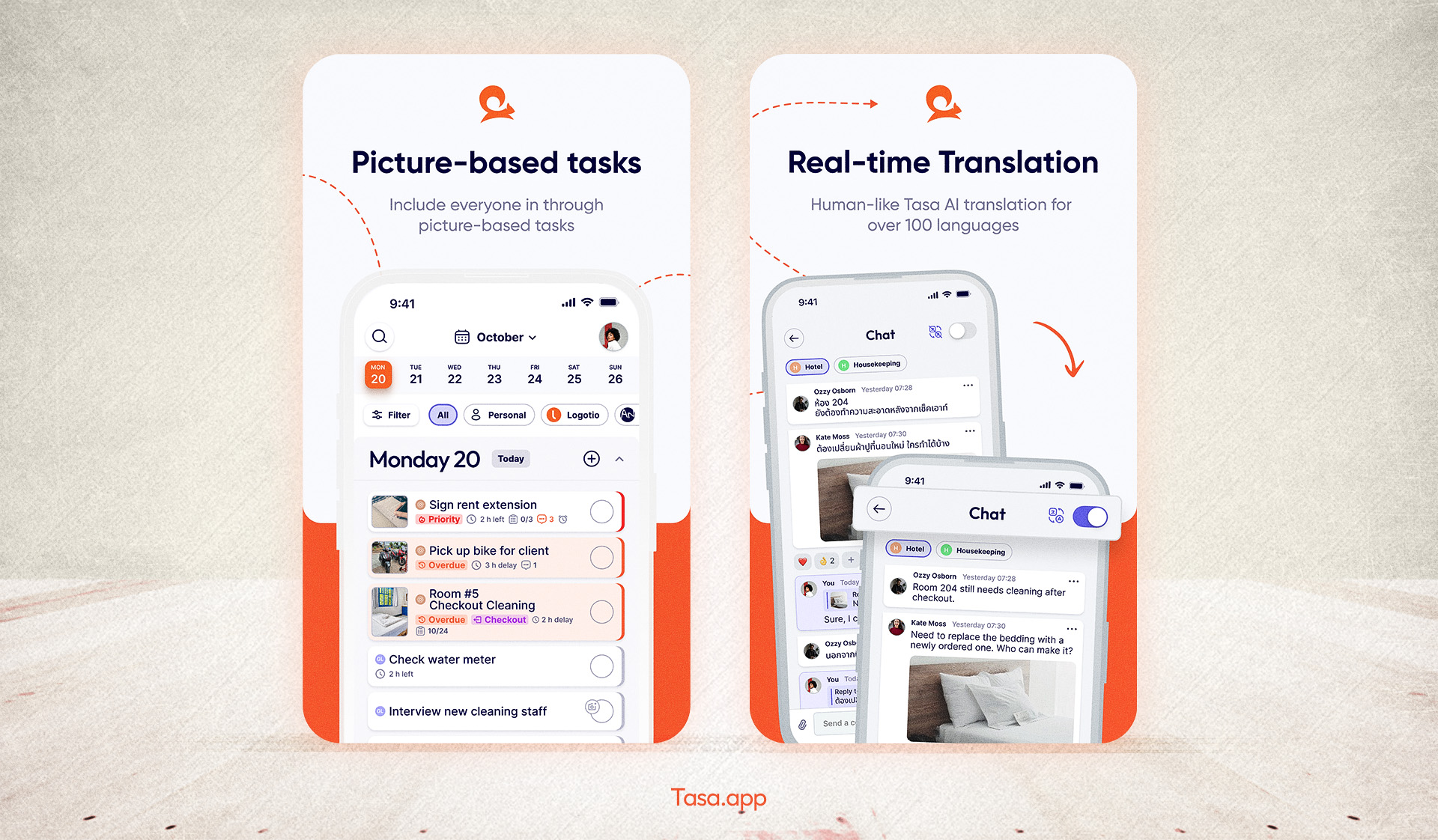
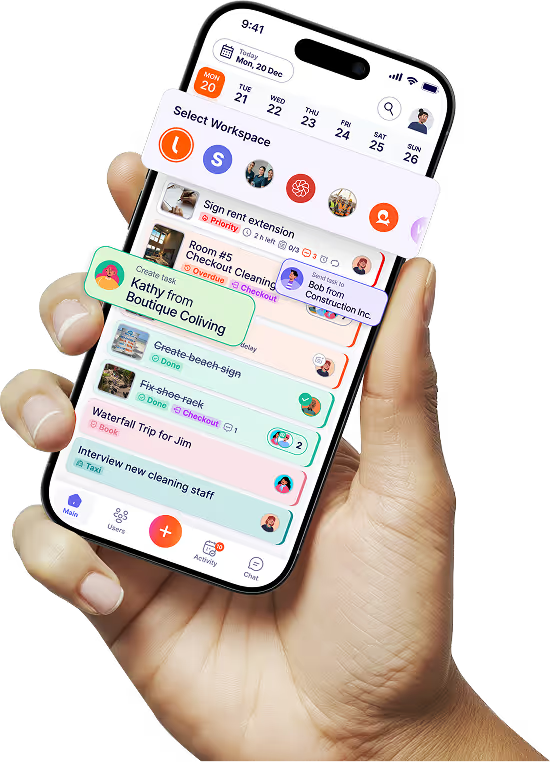
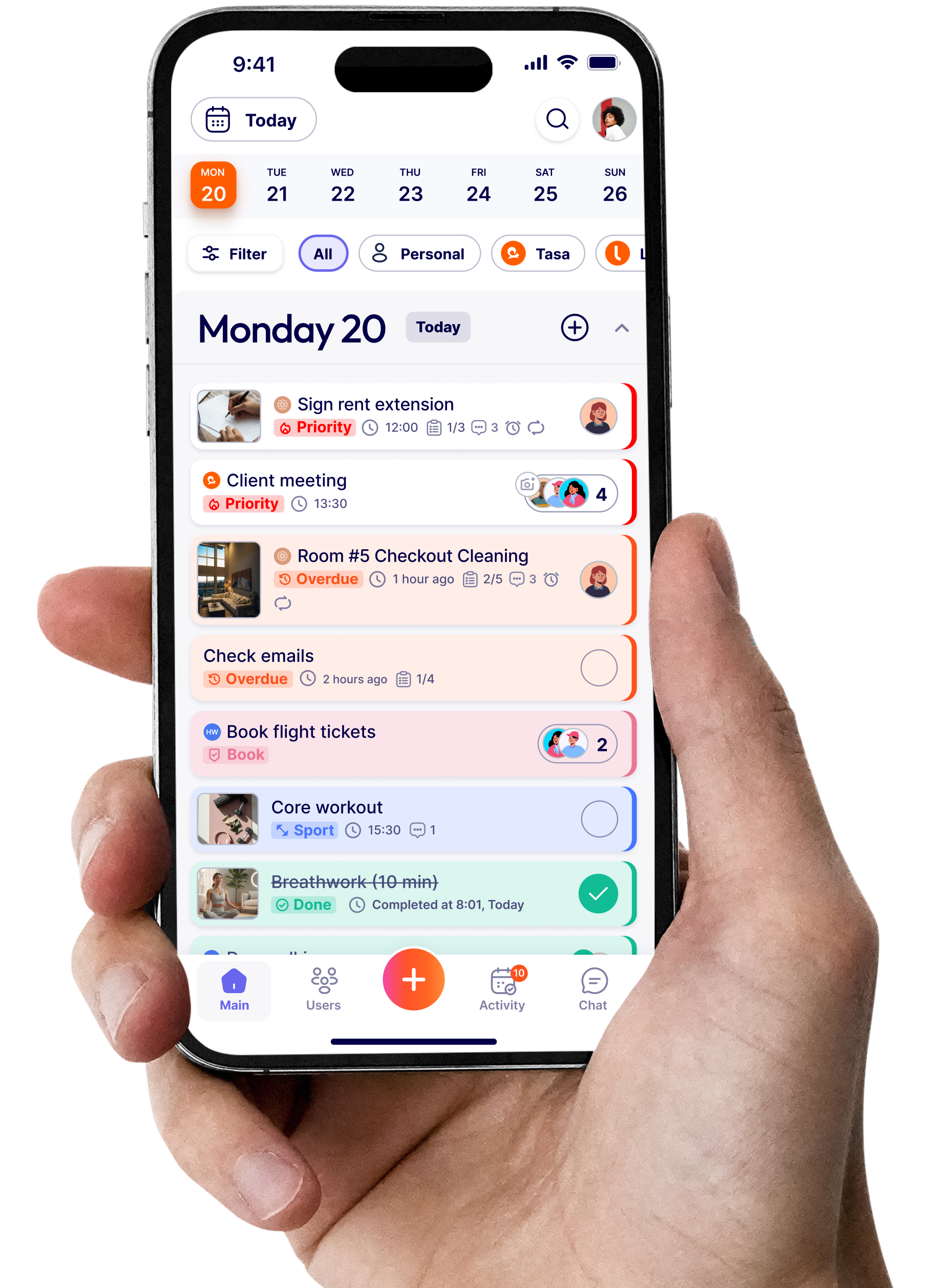
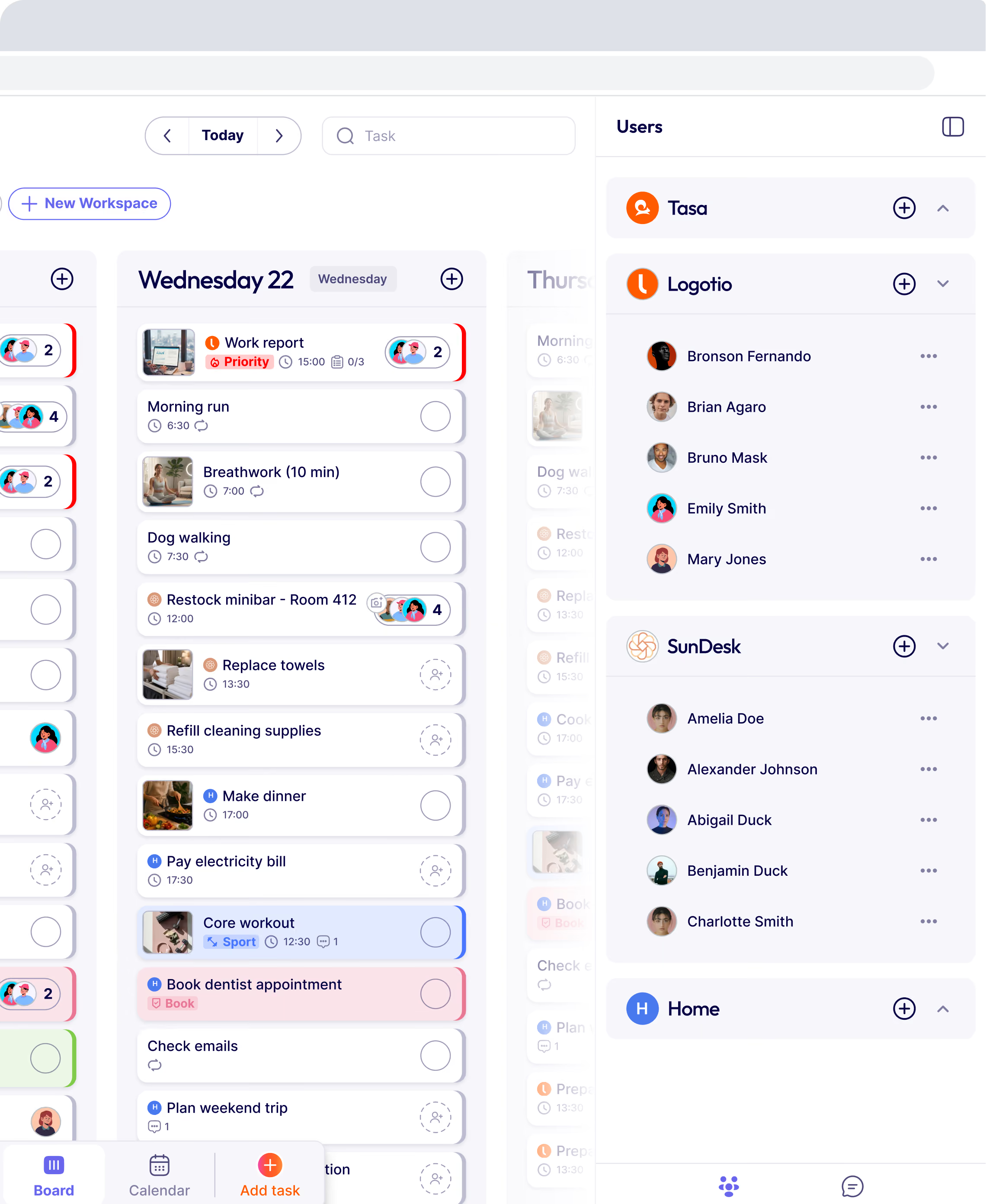
Tasa is designed for modern local service venture owners who need clarity and control from anywhere. Its picture-based instructions and real-time AI translation bridge language gaps, making it ideal for hospitality, property management, cleaning, and construction.

Tasa visual interface, picture-based tasks, real time translation
Tasa visual interface: picture-based tasks, real time translation

Top features include:

  • Visual task tracking for quick status checks
  • AI-powered translation for seamless multilingual communication
  • QR onboarding to simplify training for new staff
  • Automated reminders and a simplified interface for low-literacy teams

Quantified benefits:

  • 60% less manual communication
  • 2+ hours saved per manager, daily
  • 33% better collaboration

Use case: An expat entrepreneur scaled a cleaning local service business by automating task assignments and tracking with Tasa, freeing up time for business growth.

Comparison table: Tasa vs. Traditional Tools

Feature

Tasa

Traditional Tools

Visual instructions

Yes

No

AI translation

Yes

No

QR onboarding

Yes

No

Real-time updates

Yes

Sometimes

Low-literacy friendly

Yes

Rare

Empower your team to execute flawlessly, even across languages.

Scaling your local service business is about more than tools, it is about freeing yourself to lead and grow from anywhere.

The biggest mistakes to avoid when implementing growth strategies?

Growth for any local service business in 2026 demands more than great ideas, it demands flawless execution. Yet, even the most ambitious plans can stall if avoidable mistakes creep in. Let’s break down the most common pitfalls that hold back local service business owners and how you can sidestep them.

1. Failing to adapt to local market nuances

Every community is unique. A local service business that copies generic strategies risks missing subtle but critical differences in customer needs, culture, or seasonal trends. What works in one city may flop in another.

2. Ignoring customer feedback and online reputation

In 2026, reviews and customer comments are public currency. Not listening or responding can damage trust and limit growth. Make reputation management a daily habit.

3. Overlooking automation and digital tools

Manual processes slow you down. Automating scheduling, payments, and team communication frees time and reduces costly errors. The best apps for remote team accountability to boost consistency and keep your local service business running smoothly.

4. Relying solely on one marketing channel

Putting all your energy into a single platform makes your local service business vulnerable to algorithm changes or shifting customer habits. Spread your presence across several digital and local touchpoints.

5. Not tracking KPIs or ROI for new initiatives

If you don’t measure it, you can’t improve it. Regularly review key metrics like leads, conversion rates, and customer retention. Use dashboards and analytics tools to stay informed.

6. Trying to do everything alone:

The most successful owners know when to delegate, whether to staff, tools, or a marketing agency. Spreading yourself too thin leads to burnout and missed opportunities.

How to ensure your local service business is ready to scale:

  • Adapt tactics to local market research
  • Monitor and respond to online reviews
  • Embrace automation for admin and client tasks
  • Diversify your marketing efforts
  • Track and analyze performance data
  • Pilot new strategies before full rollout
  • Refine based on results and feedback

Is your local service business ready to grow?

  • Do you understand your local market’s unique needs?
  • Are you actively managing your online reputation?
  • Have you automated key admin processes?
  • Is your marketing diversified?
  • Are you tracking and acting on performance metrics?

Avoid these mistakes, and your local service business will be set to thrive in the evolving 2026 landscape.

How can you measure the impact of your growth strategies in 2026

Tracking the results of your growth strategies is essential for any local service business aiming to thrive in 2026. With new tools and shifting customer habits, knowing what’s working (and what isn’t) helps you invest wisely and outpace competitors.

What metrics matter most for measuring growth

To gauge the effectiveness of your local service business strategies, track these key metrics:

  • Lead volume: Number of new inquiries or potential customers.
  • Conversion rate: Percentage of leads that become paying clients.
  • Customer retention: How many clients return for repeat services.
  • Recurring revenue: Monthly or annual income from subscriptions or memberships.
  • Review scores: Average ratings and review trends across platforms.

Focusing on these metrics reveals both strengths and blind spots, making your path to growth clearer.

Which tools and data sources should you use

Modern platforms have made tracking easier than ever for local service business owners. Use these tools to monitor your performance:

  • Google Analytics: Measures website traffic and conversions.
  • CRM dashboards: Track leads, follow-ups, and sales pipeline.
  • Reputation management tools: Aggregate and analyze online reviews.
  • Automation and scheduling software: Monitor bookings, payments, and churn.
  • Ad platform dashboards: Check ROI for Local Services Ads and pay-per-lead platforms.

Adopting advanced analytics, as highlighted in AI's Impact on Business Models, ensures you adapt to new measurement standards and stay ahead of trends.

How does data-driven tracking transform results

Consider a landscaping local service business that used analytics to double membership signups in just one season. By monitoring KPIs weekly, they identified which campaigns brought in the most loyal clients and shifted their budget accordingly.

Sample KPI tracking table

KPI

Recommended Frequency

Lead Volume

Weekly

Conversion Rate

Weekly

Customer Retention

Monthly

Recurring Revenue

Monthly

Review Scores

Ongoing

Regularly tracking these metrics helps your local service business spot opportunities, fix weak points, and sustain long-term results.

For support that drives exponential growth, logotio.agency, the brand behind Tasa, is a design-driven agency that accelerates your business, delivering significant ROI within a year.

What is the main problem Tasa solves?
How many languages does Tasa support?
How do I compete with bigger companies that have larger marketing budgets?
What's the single fastest way to get more 5-star reviews from GMB?
What's the biggest mistake local businesses make with AI tools?

Team management, simplified.

Start your free team plan
Sync your local and international team with visual tasks and built-in AI translation.

“It affects my personal life a lot. I can manage my team and my work remotely, so I have more time being a mother.”

Magdalena from Sundesk
Magdalena Herrmann
Founder of SunDesk

Book a demo

Thank you! Your submission has been received!
Oops! Something went wrong while submitting the form.