App for farmers: Manage farm operations from anywhere


Running a farm across language lines feels like managing chaos with a notebook and prayer.
You're dealing with seasonal workers who speak three different languages. Field tasks that change with the weather. The constant anxiety of not knowing whether your crew perform the tasks properly.
For expat entrepreneurs managing agricultural operations in developing countries, traditional management tools fail spectacularly. Paper checklists blow away in the wind. Text messages get lost in translation. You're driving two hours plus just to verify the completed tasks as expected.
The right app for farmers changes everything, replacing communication chaos with visual clarity and verified accountability all in one app.
Why traditional farm management tools fail multilingual teams
Most farm management software assumes everyone reads English fluently and sits at a computer. Reality looks different on working farms.
Your morning crew speaks Spanish, your afternoon team speaks Portuguese, and your irrigation specialist speaks neither. You've tried WhatsApp groups, but instructions get misunderstood. You've printed laminated checklists, but they don't account for changing conditions or special circumstances.
The core problems hitting farms hardest:
- Labor shortages make hiring difficult
- Language barriers create expensive mistakes
- Remote verification is nearly impossible
- Seasonal complexity overwhelms simple tools
You end up micromanaging, which defeats the purpose of hiring help in the first place.
What makes an effective app for farmers different
Agricultural technology is evolving rapidly, with new agriculture technology transforming how farms operate in 2026 and beyond. But the most sophisticated drone mapping system won't help if your field workers can't understand basic daily tasks.
An effective app for farmers serving multilingual teams needs fundamentally different capabilities than conventional farm software.
Visual communication over text
Pictures eliminate translation errors. Workers knows what to look for, regardless of reading level.
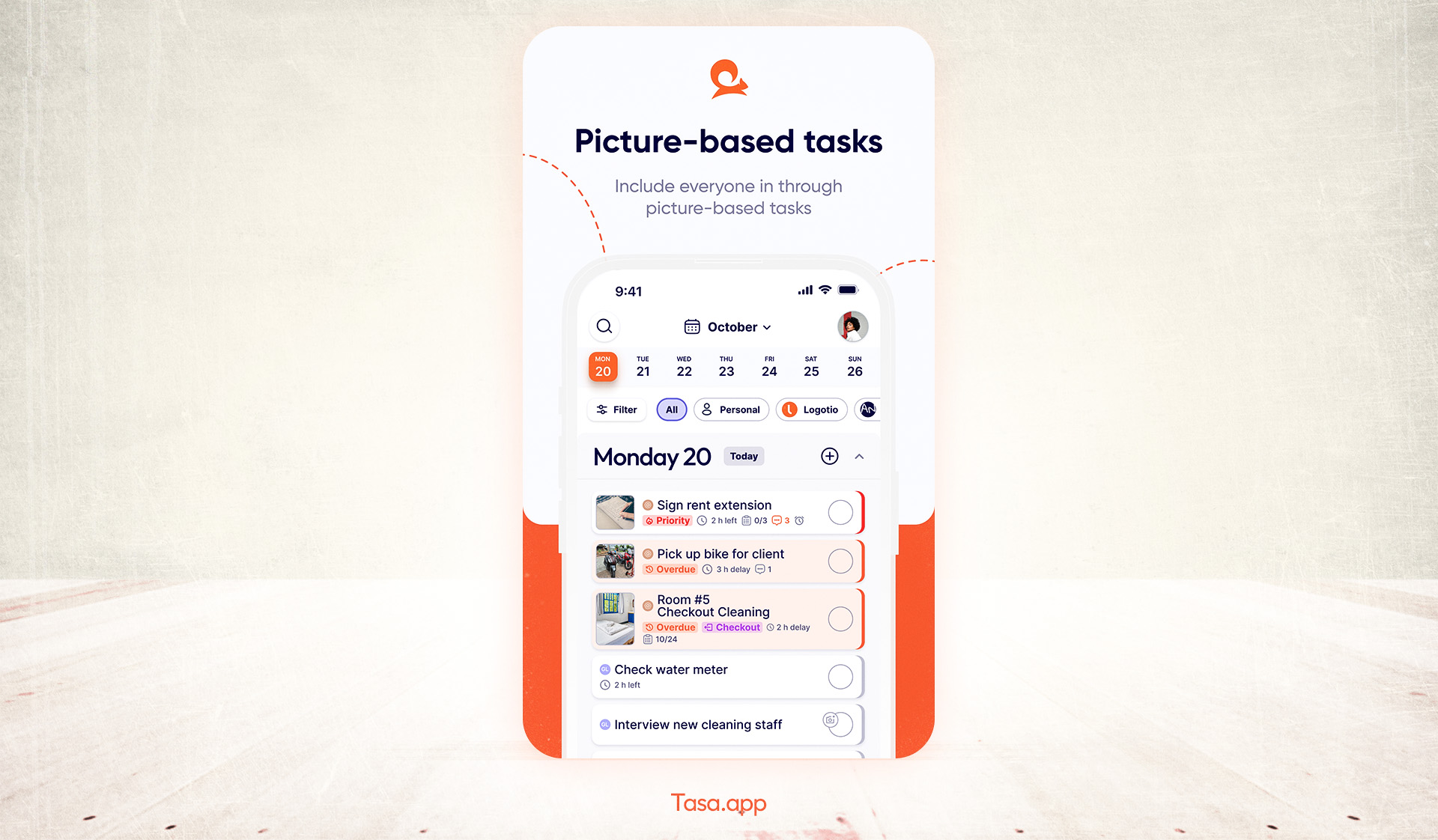
Picture-based task systems deliver:
- Instant comprehension across language barriers
- Reduced training time for new seasonal workers
- Consistency in task execution
- Clear quality standards everyone can see
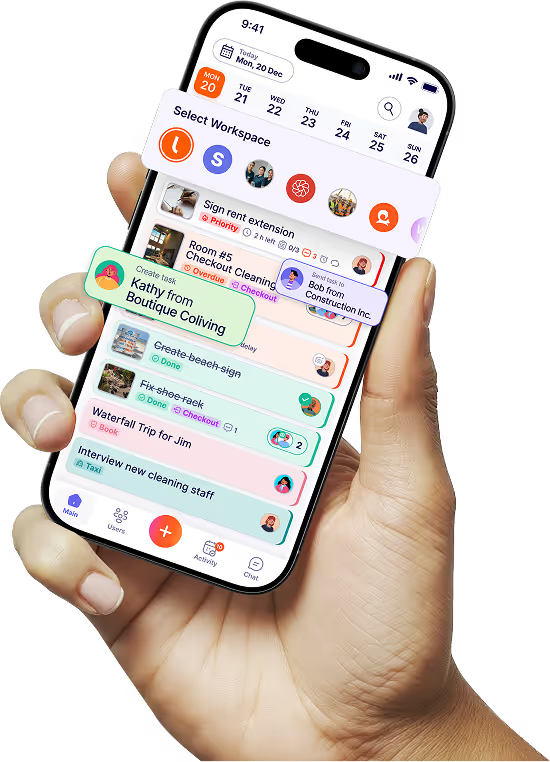
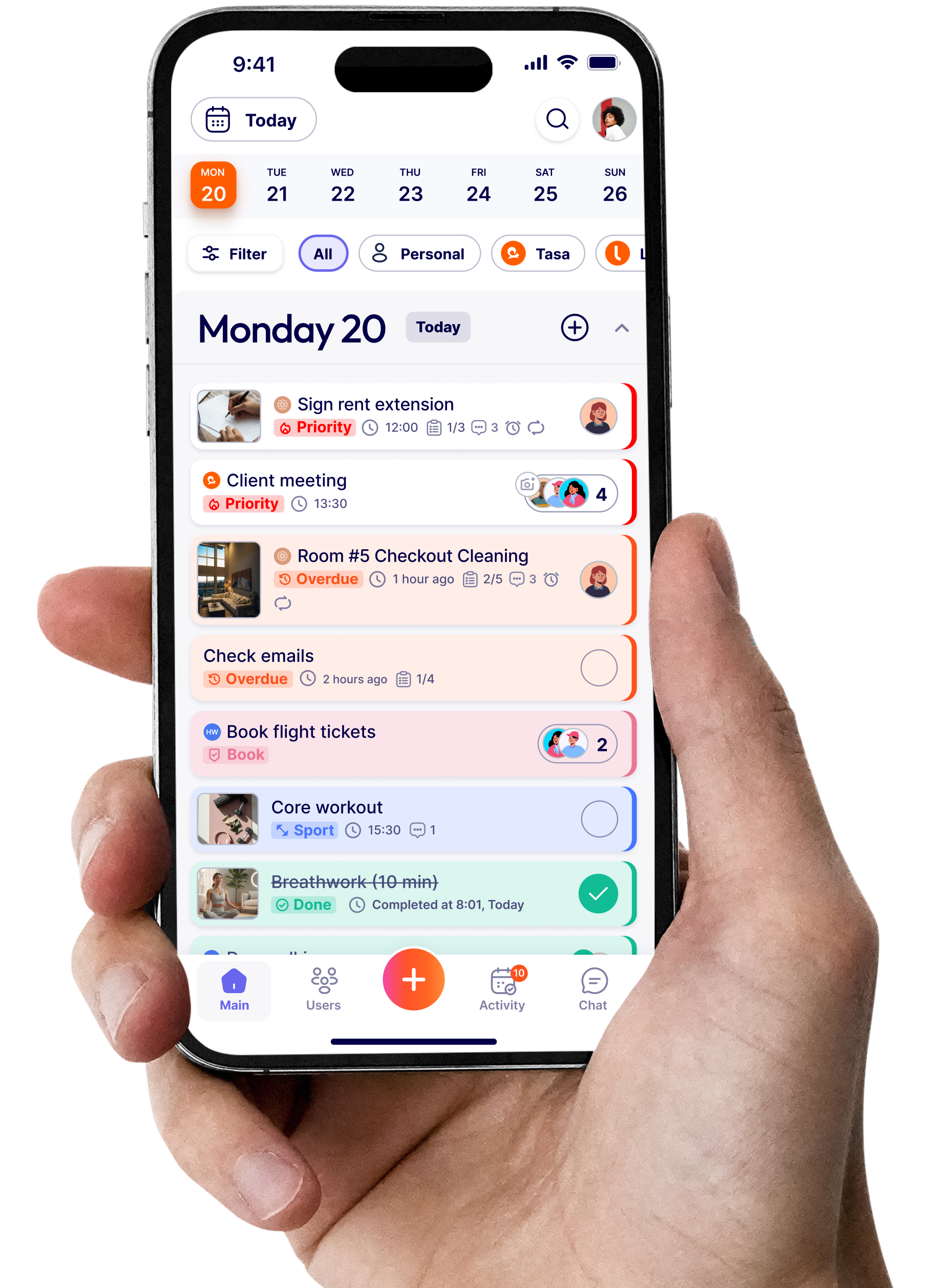
Tasa specializes in this visual-first approach, designed specifically for teams that don't share a common language.
Photo verification creates accountability
Remote farm management requires proof, not promises. Photo verification transforms "I did it" into "here's the evidence."
This matters especially for expat entrepreneurs managing operations from a distance.

Paper checklists and texting fall short because they offer:
- No completion proof
- Language-dependent instructions
- Lost or damaged records
- Manual status updates
- One-language-only communication
- Generic task lists
Visual farm management apps provide:
- Photo verification of every task
- Universal picture-based guidance
- Cloud-based, always accessible records
- Real-time progress tracking
- AI-powered multilingual translation
- Custom templates for specific farm operations
How do you set up tasks for diverse farm operations
Farm work isn't uniform. Livestock care, crop management, equipment maintenance, and harvest operations each require different task structures.
Creating picture-based task templates
Start with your most repeated operations. Livestock feeding routines, daily greenhouse checks, irrigation monitoring—these happen consistently and benefit most from standardization.
Build templates that include:
- Reference photos showing the correct end state (properly fed animals, watered plants, clean equipment)
- Step-by-step images for complex procedures (mixing fertilizer ratios, equipment startup sequences)
- Location markers so workers know exactly where tasks occur
- Timing indicators for time-sensitive operations
Managing seasonal patterns and crop cycles
Farming operates on cycles that standard weekly task lists can't handle. Planting schedules shift based on weather, harvest timing changes with crop maturity, and irrigation needs fluctuate with rainfall.
The best app for farmers handles custom repeat patterns that match agricultural reality.
Seasonal task automation includes:
- Planting schedules that trigger based on calendar dates or weather conditions
- Harvest task sequences that activate when crops reach maturity
- Irrigation routines that adjust frequency based on season
- Equipment maintenance reminders timed to usage hours, not arbitrary weekly schedules
This eliminates the daily mental load of remembering what needs doing when. Similar to how construction teams manage project phases, farm operations benefit from automated workflow triggers.
Can I manage farm workers who don't share my language
Absolutely, but only with the right approach. Traditional management assumes common language and literacy. That assumption collapses in real agricultural settings.
AI translation bridges communication gaps
Modern AI translation has reached practical usefulness for work instructions. You write tasks in English, workers receive them in Spanish, Portuguese, or whatever language they need.
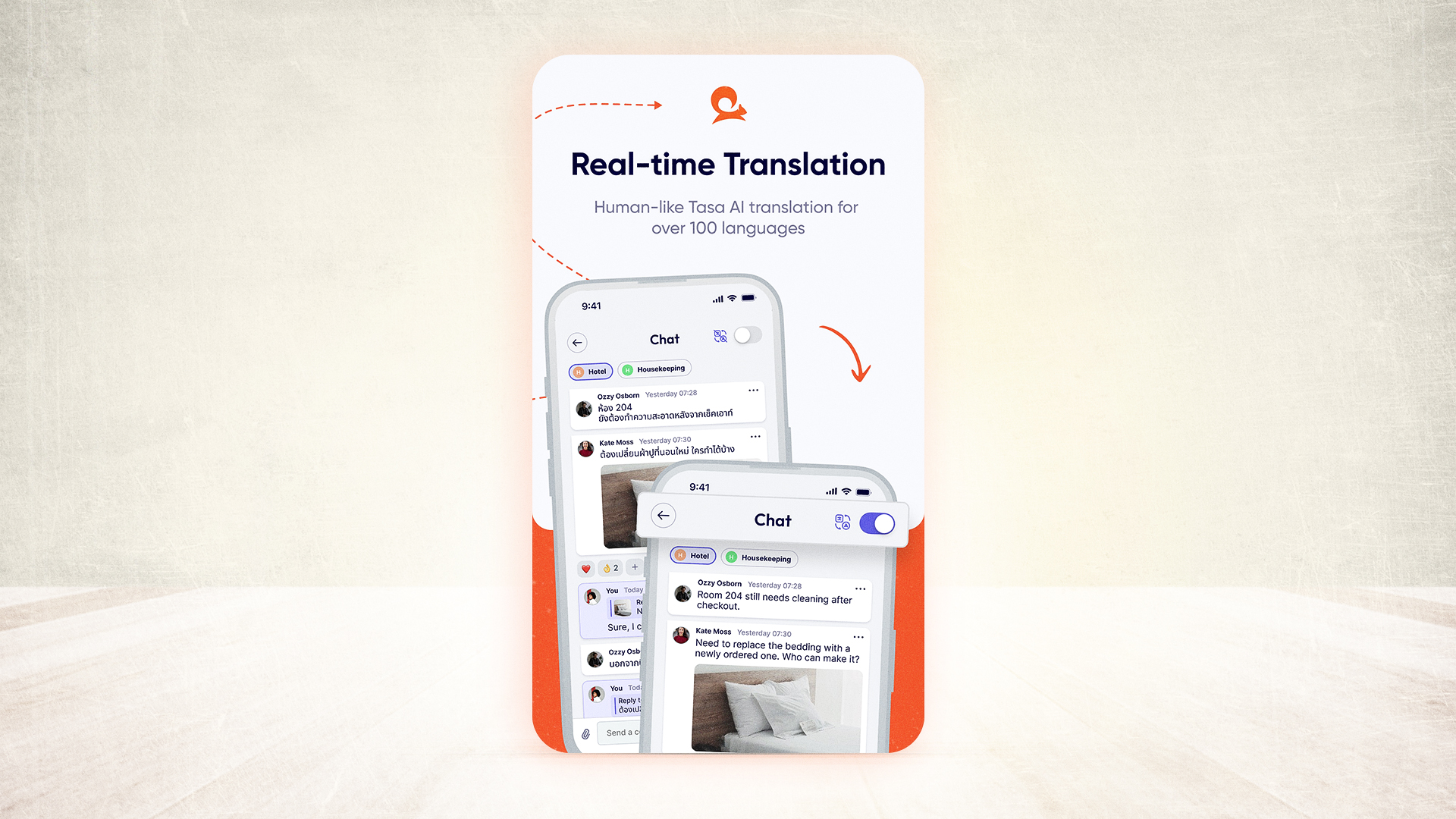
Translation features that actually work:
- Automatic conversion of written instructions to worker's preferred language
- Voice-to-text for workers who prefer speaking over typing
- Photo-first design that minimizes reliance on text altogether
- Simple language parsing that focuses on action verbs and concrete nouns
Several apps for farmers now incorporate translation, but picture-based systems prove most reliable because images communicate universally.
Building inclusive work environments
Language accessibility isn't just practical—it's ethical. When workers can fully understand expectations and contribute feedback, everyone benefits.
Workers report problems more readily when they can photograph issues and attach simple notes. You catch irrigation failures before they destroy crops, equipment problems before they cause breakdowns, and quality issues before they reach customers.
This inclusive approach mirrors the philosophy behind multilingual communication tools that prioritize clarity over complexity.
What farm operations benefit most from visual task management
Nearly every aspect of farm work improves with visual coordination, but certain operations see dramatic transformation.
Daily livestock care and monitoring
Animal agriculture demands consistency. Feeding schedules, health checks, and facility maintenance directly impact animal welfare and productivity.
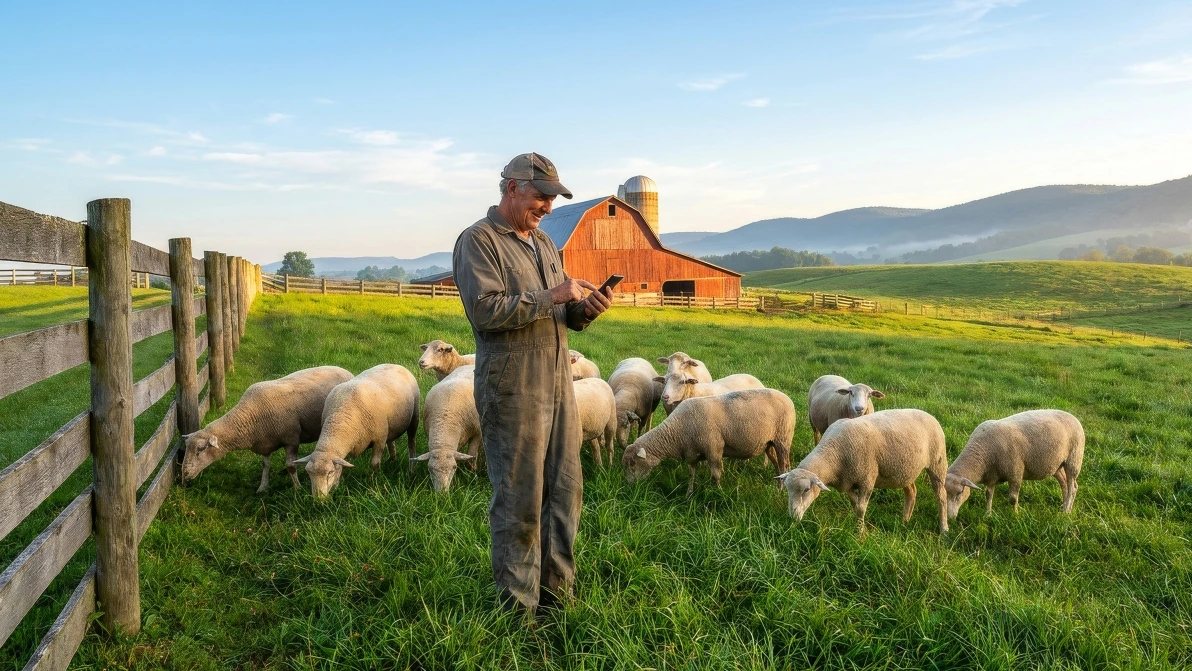
Visual livestock management addresses:
- Feed portion control through reference photos showing correct amounts
- Health monitoring with visual symptom guides workers can reference
- Facility cleanliness standards demonstrated through before/after photos
- Breeding records with photo documentation of individual animals
Workers without veterinary training can identify concerning symptoms when they have visual reference guides showing normal versus abnormal conditions.
Harvest operations and quality control
Harvest timing determines crop quality and market value. Pick too early or too late, and you lose money.
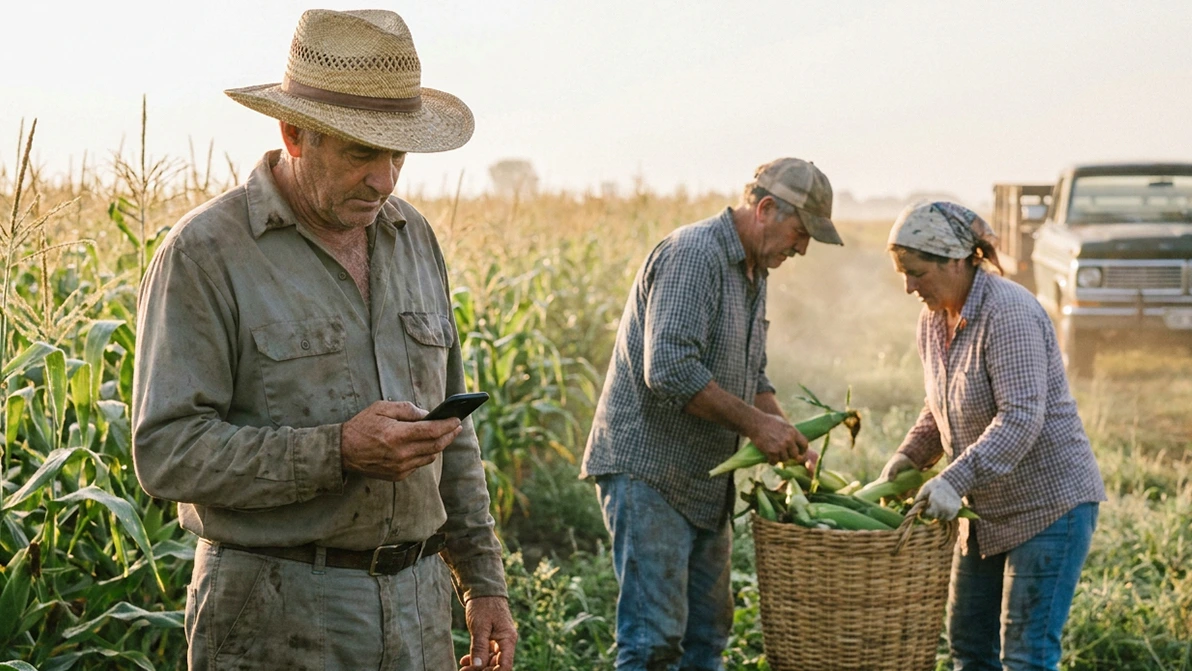
Picture-based harvest coordination includes:
- Maturity indicators showing when crops are ready (color, size, texture)
- Proper harvesting technique demonstrations to minimize damage
- Sorting and grading standards with visual examples of quality tiers
- Quantity tracking through photographed collection containers
- Damage documentation to identify training needs
Workers verify their understanding by comparing their harvest to reference images, reducing waste and improving consistency.
Equipment maintenance and field preparation
Tractors, irrigation systems, and processing equipment require regular maintenance. Missed maintenance leads to expensive breakdowns during critical periods.
Visual maintenance workflows ensure:
- Pre-use equipment checks following standardized photo checklists
- Lubrication and adjustment procedures shown step-by-step
- Parts replacement guides that eliminate wrong-part installations
- Safety verification with required PPE and procedure photos
This approach works similarly to how field teams manage distributed operations, ensuring consistency regardless of who performs the task.
How do you handle emergency situations and changing conditions
Farms face constant variability. Weather changes, equipment breaks, animals get sick, and pests appear unexpectedly. Rigid task systems crumble under agricultural reality.
Flexible task assignment and priority shifts
The right app for farmers allows immediate task reprioritization without complicated interfaces.
Emergency response features include:
- Push notifications for urgent tasks (broken irrigation, escaped livestock, storm preparation)
- Priority levels that workers recognize visually through color coding
- Quick task creation from the field using photos and voice notes
- Team-wide alerts when situations require all-hands response
When a storm approaches, you can instantly create shelter preparation tasks, photograph what needs securing, and assign them to available workers. Everyone sees updates in real-time.
Weather-dependent task automation
Some operations only make sense under specific conditions. You can't spray pesticides in heavy wind, irrigate during rain, or harvest in mud.
Conditional task triggers based on:
- Weather forecasts (postpone tasks when rain expected)
- Temperature thresholds (livestock care adjustments for heat/cold)
- Soil moisture levels (irrigation holds until conditions appropriate)
- Daylight hours (time-sensitive harvest operations)
This intelligence layer prevents wasted effort and improves decision-making.
What results should you expect from visual farm management
Switching from chaotic text-based coordination to visual task systems produces measurable improvements, usually within weeks.
Quantifiable operational benefits
Expat entrepreneurs managing farms in developing countries report specific gains after implementing picture-based task management.
Documented improvements include:
- 40–60% reduction in miscommunication errors leading to crop damage or livestock issues
- 30–50% decrease in verification drive time since photo proof eliminates unnecessary site visits
- 25% faster onboarding for seasonal workers due to visual training materials
- 20–35% improvement in task completion rates from clearer expectations
Long-term strategic advantages
Beyond immediate efficiency gains, visual management systems enable business growth that would otherwise require your constant physical presence.
Strategic capabilities include:
- Scaling operations without proportional management overhead—you can manage twice the land with the same supervision time
- Hiring workers based on capability rather than language—expanding your labor pool dramatically
- Building institutional knowledge through visual documentation—new workers learn from your photo library
- Creating compliance records for certifications—organic, fair trade, and safety certifications require extensive documentation
Similar to remote business opportunities in other industries, effective farm management technology enables location independence.
Which features matter most when choosing an app for farmers
The farm management software market offers everything from enterprise-level solutions requiring extensive training to simple apps that barely handle complexity. Finding the right fit depends on your actual operational needs.
Essential vs. nice-to-have capabilities
Focus first on features that solve your daily pain points, not impressive technology you'll never use.
Must-have features for multilingual farm teams:
- Picture-based task instructions that eliminate language dependency
- Photo verification requiring proof of completed work
- Offline functionality (farms often lack reliable internet)
- Simple interface that workers with minimal smartphone experience can navigate
- Custom repeat patterns matching seasonal agricultural cycles
- Multi-language support with automatic translation
Valuable secondary features:
- Weather integration for conditional task automation
- GPS tracking for large properties with distant work zones
- Equipment maintenance logs tied to usage hours
- Harvest tracking and yield analysis
- Integration with accounting or inventory systems
Technology trends in agriculture are expanding rapidly, with innovations ranging from AI-powered crop diagnostics to autonomous equipment, but operational coordination remains the foundational challenge for most farms.
Evaluating software for your specific operation
Different farm types have different priorities. A livestock operation needs different tools than a vegetable farm or orchard.
For expat-run operations, overcoming language barriers typically ranks as the highest priority, making visual-first design essential.
Is visual task management worth the investment for small farms
Small farms operate on tight margins. Every expense must justify itself through increased revenue or reduced costs.
Cost-benefit analysis for small operations
Consider what you currently spend on communication inefficiency and verification overhead.
Hidden costs of manual management:
- Fuel and time for verification drives (average 10–15 hours weekly for 50+ acre operations)
- Crop losses from miscommunicated instructions (one irrigation mistake can destroy thousands in produce)
- Worker turnover from poor communication and unclear expectations (rehiring and retraining costs)
- Your own time spent repeating instructions and checking work (opportunity cost of not focusing on business growth)
A visual task management system typically costs less than one wasted day per week while delivering multiple efficiency improvements.
Your next step: From farm chaos to verified clarity
Managing farm operations across language barriers and physical distances doesn't require constant physical presence or expensive bilingual supervisors. Visual task management systems transform chaotic remote oversight into verified, inclusive operations where every worker understands expectations regardless of their native language.
Tasa provides the picture-based templates, multilingual coordination, and photo verification infrastructure purpose-built for expat entrepreneurs running agricultural operations with diverse crews.
Get Tasa for your team: free to get started
Latest News
Have questions?
Tasa solves the repeated back and forth with understanding work in teams who don't share the same language or can't even read or write.
Instead of explaining it several times over and over again, we use pictures, colors and a simplified user interface to make it easy for everyone to understand and follow work.
This way we drastically reduce the time spent of managers and owners, while empowering the staff to collaborate more, which leads to higher satisfaction.
Tested and approved.
Arabic, Burmese, English, French, German, Spanish, Indonesian, Italian, Portuguese, Polish, Russian, Thai, Ukrainian, Vietnamese.
If you are missing a language you need, drop us a quick message and we’ll add it for free!
Hiring non-English speaking workers is common in agriculture, but managing them requires a visual-first system. Focus on demonstrated skills rather than language during hiring, use picture-based task demonstrations. For daily management, rely on photo checklists and in-app translation rather than written instructions. Tasa allow you to assign tasks using reference images, and workers receive instructions in their preferred language automatically.
Yes, if you choose an offline-first app. Many farms have dead zones in fields or remote storage areas. The right app stores tasks and checklists locally on the device, allows workers to complete tasks and take verification photos without internet, and automatically syncs when connectivity returns. This is critical for large properties where Wi-Fi doesn't reach every corner. Tasa is designed with offline functionality, ensuring your team stays productive regardless of signal strength.
Yes, with the right app. Look for a platform that provides a single dashboard view of all your locations, showing task completion status, pending issues, and photo verification across properties. You should be able to assign tasks to specific crews at specific sites without switching between different logins or apps.
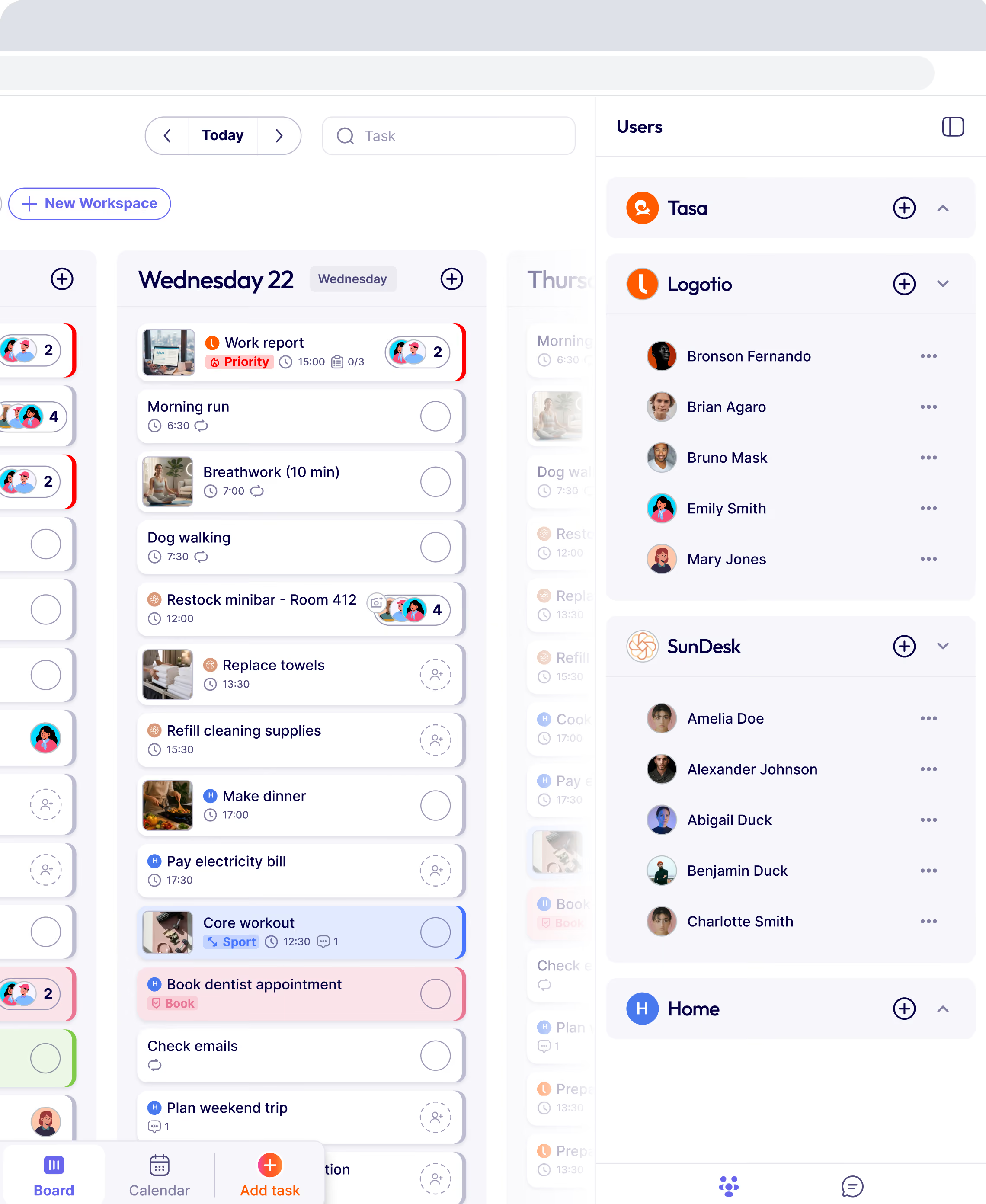
Tasa supports multiple workspaces, allowing expat owners to manage an orchard in one region, a vegetable operation in another, and livestock facilities elsewhere all from one interface.
Team management, simplified.

“It affects my personal life a lot. I can manage my team and my work remotely, so I have more time being a mother.”